
Conversation: "Mick Gordon" on Childhood, Life, Fame, Creativity, and His Work Process
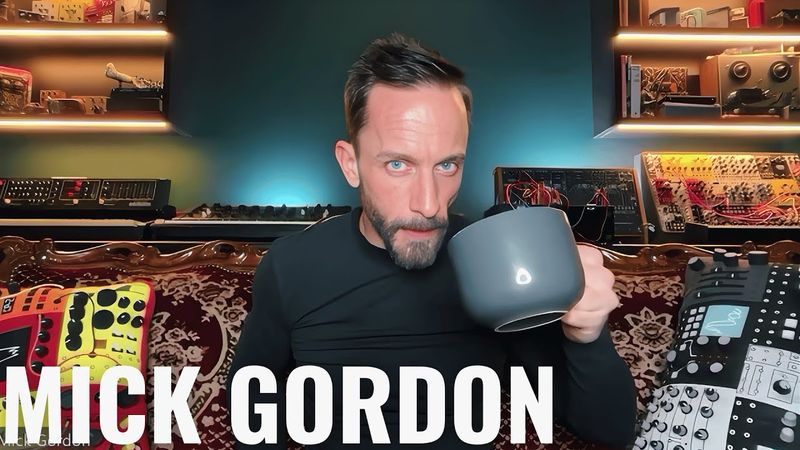
اطلاعات دانلود و جزئیات ویدیوی Conversation: "Mick Gordon" on Childhood, Life, Fame, Creativity, and His Work Process
آپلود کننده:
Bonfire Conversationsتاریخ انتشار:
۱۴۰۴/۱۰/۱۴بازدیدها:
14.1Kتوضیحات:
At 0:00 the host welcomes listeners to Bonfire Conversations, then at 0:07 Mick Gordon gives an overview of his career, followed by a discussion at 1:46 of the phenomenon surrounding his work. He reflects on his childhood in Australia at 2:06, describing how the landscape sparked his imagination at 3:17 and how play and exploration shaped his creativity at 4:10. The conversation moves to 5:06 where he explains how video games served as an escape, and at 6:25 he details early musical influences. At 7:47 he shares a synesthetic experience of music, and at 9:20 he talks about connecting with his father through music. He recounts his time with the Thunderbirds Blues Band at 11:36, then at 13:47 he explains his golden rule of putting the audience first. At 14:08 he discusses finding opportunities in gaming, and at 15:02 he reflects on luck meeting preparation. The dialogue continues with a debate on AI versus human creativity at 16:20, and at 19:42 he explores how to find one’s voice. He examines the artist’s paradox of solitude and connection at 20:05, and at 22:30 he describes music as a shared language. At 25:28 he notes that once he ships a piece it is no longer his, and at 26:39 he explains why AI copies fail. He then returns to his mantra at 27:42, “change the process, change the outcome,” and at 28:35 discusses facing fear and insecurity. At 30:35 he references Brian Eno’s Oblique Strategies, and at 31:27 he talks about using contrasts in music. He shares his practice routine at 34:01, including daily 30‑minute sound‑design practice at 34:50, and at 36:30 he explains how he builds his sound library. At 38:48 he addresses the perfectionism question, and at 39:28 he lists the tools and consistency he relies on. The conversation turns to fame at 44:27, and at 45:05 he explains how recognition has affected his work. He discusses personal connections to games at 46:43, and at 49:43 he reflects on the weird nature of fame. At 51:25 he introduces Routine, a 12‑year passion project, and at 52:18 he outlines its journey from 2012 to 2024. He talks about doing everything himself at 55:33, and at 57:03 he explains sound design in AAA games. At 58:30 he mentions Charles Dean as a mentor, and at 1:00:04 he presents a case study of BFG Division. He contrasts game audio with film music at 1:01:12, and at 1:02:01 he recalls his friendship with Wilbert Roget. He discusses the hardest emotion to express at 1:03:43, and at 1:04:48 he shares personal emotional moments from Wolfenstein. He answers why he still makes music at 1:06:30, and at 1:07:21 he describes music as a default. He lists his top five favorite films at 1:09:15, and at 1:32:39 he compares sketches to perfect versions. He talks about mockup success at 1:33:41, and at 1:34:35 he references Trent Reznor’s one‑day recording philosophy. He explains how great songs appear out of nowhere at 1:35:27, and at 1:35:52 he notes that 30 years of preparation can happen in one day. He shares dream questions at 1:36:03, and at 1:37:37 he closes with remarks and gratitude.
ویدیوهای مشابه: Conversation

Haas F1 Boss: How the Smallest Team in F1 Plan to Shock in 2026

Mick Simpson - Now That the Magic Has Gone

Most Icy Road Madness Caught on Camera - 1 Hour Winter Chaos #39

Director Peter Berg Talks ‘American Primeval’ and Directing Rihanna’s Music Documentary

Urban Winter Nightmares Caught on Camera #10 - Extreme Dangerous Plow Truck Fails