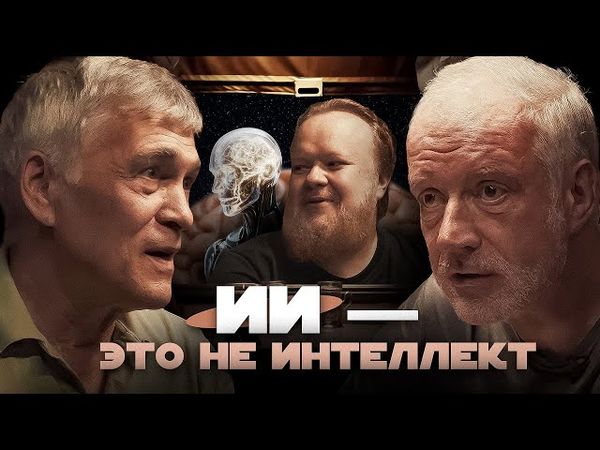
МОЗГ ПРОТИВ НЕЙРОСЕТЕЙ. КТО УМНЕЕ? Семихатов, Сурдин, Марков

МОЗГ ПРОТИВ НЕЙРОСЕТЕЙ. КТО УМНЕЕ? Семихатов, Сурдин, Марков01:37:17

Информация о загрузке и деталях видео МОЗГ ПРОТИВ НЕЙРОСЕТЕЙ. КТО УМНЕЕ? Семихатов, Сурдин, Марков
Автор:

Вселенная Плюс

Дата публикации:

30.06.2025

Просмотров:

99.5K

Описание:

At 00:00 the hosts introduce the idea of building a lunar spaceport, then at 00:42 they outline the topic and guests. At 01:12 the speakers are described as programmers, and at 01:37 the concept of artificial intelligence is explained. At 02:41 the question arises whether AI is truly intellect. At 05:52 the paradox of AI perception is discussed. At 07:20 the brain is said to outperform computers, and at 10:00 the reasons why people underestimate AI's power are examined. At 15:02 the role of AI across epochs is considered, and at 16:04 the idea that AI will solve everything for us is debated. At 17:49 a mobile phone's chess victory over a champion is mentioned, while at 18:40 the factors behind AI's success are explored. At 20:30 quantum computing is introduced, and at 21:48 barriers to technological progress are identified. At 22:48 the necessity of advancing computing is argued, and at 24:02 the possibility of AI doing things it was not trained for is questioned. At 25:45 the Enigma code‑breaking during WWII is recalled, followed by a discussion of self‑organizing systems at 28:12. At 31:54 the inner workings of neural networks are explained, and at 34:32 the training of a network to recognize cats is described. At 39:42 the path of astronomer Vladimir Surdin is traced, while at 41:52 a neural network is compared to the human brain. At 42:52 the neuron is likened to a tiny computer, and at 45:11 the challenges of machine learning are highlighted. At 46:56 GPU usage for neural networks is reviewed, and at 48:05 the brain is compared to neural networks. At 51:18 tasks where the brain outperforms computers are identified, and at 52:21 the limitations of machines are discussed. At 53:02 the pitfalls of autonomous driving are examined, while at 53:27 the question of whether neural networks are conscious and intelligent is raised. At 56:26 the ability of machines to recognize emotions is questioned, and at 58:07 the possibility of machines feeling pain is considered. At 01:10 the method by which a machine learns what it was not taught is explored, and at 01:17 the world as text is contemplated. At 01:08 the structure of language models is explained, and at 01:13 the creative potential of AI is debated. At 01:16 the safety of AI decision‑making is questioned, and at 01:21 the human limitations that are hard to overcome are discussed. At 01:22 the possibility of robot uprising is examined, while at 01:25 the lack of fear of death in computers is highlighted. At 01:26 a single programmer's ability to build a neural network is questioned, and at 01:28 the concept of a digital secret court is introduced. At 01:30 the ways machines have led humans to death are described, and at 01:32 the debate over whether humans or robots drive better is presented. Finally, at 01:35 the audience is asked what to do with AI.