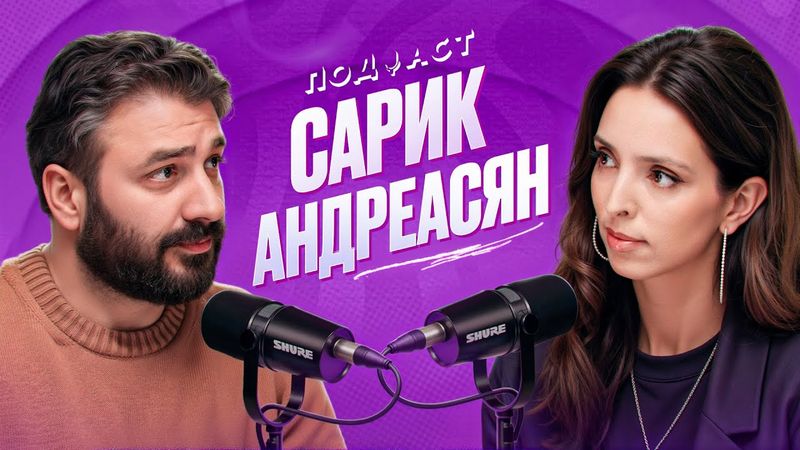
Сарик Андреасян против Картозии, Тарковского, Badcomedian, Звягинцева и авторского кино

Сарик Андреасян против Картозии, Тарковского, Badcomedian, Звягинцева и авторского кино01:36:54

Информация о загрузке и деталях видео Сарик Андреасян против Картозии, Тарковского, Badcomedian, Звягинцева и авторского кино
Автор:

Подкаст Лазерсон

Дата публикации:

30.09.2025

Просмотров:

10.5K

Описание:

At 00:00 the video opens with a teaser, followed by a discussion at 00:58 about how many viewers recognize Sarik’s films through Badcomedian’s reviews and whether that is acceptable. He explains his stance on freedom of speech at 02:50 and addresses accusations that Badcomedian was harassing him at 03:26. The conversation turns to a controversial article by Nikolay Kartozia at 06:00, where Sarik argues that jokes about “adzhika” and “lavash” are racist, and at 07:25 he claims Kartozia’s remarks incite ethnic tension. He questions when jokes about “dolma” become funny at 10:10, and at 09:40 he distinguishes criticism from incitement. Sarik explains why he filed a lawsuit specifically for incitement at 10:50, and at 11:59 he debates whether absolute freedom of speech allows jokes about disability and nationality. He reflects on Armenian writers’ concerns at 13:37, and at 14:14 he discusses freedom of speech in the context of Charlie Kirk and Idrak Mrazalizade. He states he never received apologies from Kartozia at 15:20, and at 17:20 he speculates how the outcome would differ if the target were a teacher or Bondarchuk. At 18:14 he criticizes Tarkovsky sharply, saying he would have reacted to any surname. He questions when it becomes shameful to profit from a profession at 21:00, arguing that film schools teach only auteur cinema. At 23:30 he recalls his first encounter with a camera, and at 24:00 he explains why he dislikes festival and auteur cinema. He talks about Valeria Gai Germanik and the cult series “School” at 25:30, and at 26:30 he contrasts the protection of Hollywood directors with his own need to justify “popular cinema.” At 28:30 he labels the Russian festival scene as political, and at 30:40 he says they were never welcome there. He asks how Putin is doing at 31:49, explaining why he left Russia. At 33:30 he questions whether films critical of the country are “anti‑Russian,” and at 36:25 he asks if Zvyagintsev loves Russia. He admits he knows how to win awards but does not want to go against conscience at 36:50, and at 38:10 he discusses auteur versus popular cinema using “Terminator 2.” He describes “Leviathan” as a truthful film about Russia at 39:05, and at 40:40 he asks whether a film should have a moral. At 41:55 he says direction is opinion, citing “Unforgiven” and “Dogville.” He wonders if he will have followers at 43:35, and at 43:50 he asks if there was a liberal festival scene in Russia. He notes that “Rodnyansky parties” were exclusive at 45:01, and at 45:50 he says you could join if you didn’t love Russia. He contrasts liberalism with ideology at 47:00, and at 49:41 he recounts searching for dolma across California. At 50:27 he urges people to find a form to speak, citing Ryazanov, Mikhalkov, and Bondarchuk, and at 52:20 he discusses self‑censorship and denunciations. He says national ideology matters more than a few artists’ desires at 53:40, and at 55:50 he speculates on the bans he would impose on cinema. At 56:48 he compares Hollywood to Russian cinema, noting the industry’s 20‑year history. He explains why the phrase “Russian cinema” is a meme at 58:40, and at 01:01:42 he asks why there is a craving for Soviet remakes. He mentions a “service romance with Zelensky” at 01:04:58, and at 01:05:35 he discusses the mental code. He explains how he re‑filmed “Prostokvashino” at 01:07:15, and at 01:10:10 he says the era of big cinema is over. He expresses a desire to be seen by millions at 01:11:50, and at 01:12:30 he explains why “Defenders” failed. He says love from the world is less tragic than a mother’s love at 01:13:50, and at 01:15:33 he explains why actors speak that way in “Defenders.” He discusses the success of “Anora” abroad at 01:17:46, and at 01:21:00 he compares Yura Borisov and Timothee Chalamet. He lists directors he admires at 01:24:00, and at 01:25:25 he compares Guy Ritchie and Tarantino. He talks about Scorsese, Inyarritu, and Coppola at 01:27:00, and at 01:28:40 he wonders why film schools don’t name Cameron or Ridley Scott. He evaluates directors at 01:29:29, and at 01:30:18 he says he knows Fellini but loves Tony Scott. He claims to have watched 8,000 films at 01:30:38, and at 01:30:58 he continues evaluating directors, listing many names. He ends by asking whether viewers enjoy their own films at 01:35:50.