How to Predict Market Highs & Lows with Gann Time & Price Theory | Gann Sacred Geometry.

How to Predict Market Highs & Lows with Gann Time & Price Theory | Gann Sacred Geometry.56:21

How to Predict Market Highs & Lows with Gann Time & Price Theory | Gann Sacred Geometry. Videosu İçin İndirme Bilgileri ve Detaylar
Yükleyen:

GannAstroTrader | Decoding Gann Trading Secrets

Yayınlanma Tarihi:

21.02.2025

Görüntülenme:

18.2K

Açıklama:

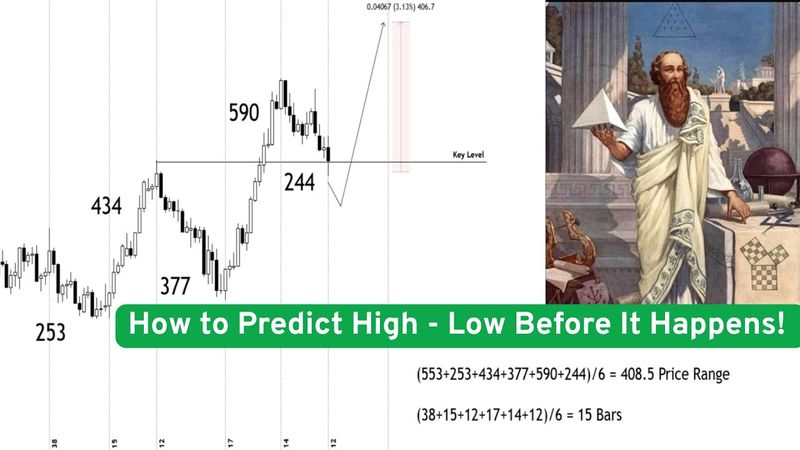
Welcome to GannAstroTrader, where we decode Gann trading secrets. In this video we unlock the historical secrets of sacred geometry and show how they apply to financial markets through W.D. Gann's Time & Price concepts. Markets are not random; they follow universal laws found in nature, human anatomy, and celestial movements. Gann discovered that time and price cycles repeat in predictable patterns, allowing traders to anticipate reversals with precision. This video explores the deep connection between natural mathematical principles, the Golden Ratio (0.618), Fibonacci levels, and market structure—all rooted in ancient sacred geometry used in art, architecture, and astronomy. This video will guide you through how to use these ancient principles in modern trading. 00:00 ▶️ Introduction 01:26 ▶️ Pythagoras 02:25 ▶️ Who was Pythagoras 02:45 ▶️ Pythagoras & Earth 03:07 ▶️ Pythagoras Theorem & Pyramids 04:41 ▶️ Numbers & The Universe 06:06 ▶️ How Leonardo Da Vinci's Proportions Connect to Market Movements 08:01 ▶️ 0.618 Golden Ratio 10:21 ▶️ Golden Ratio in Trading 11:45 ▶️ Trading is Gambling? 12:40 ▶️ The Slot Machine Trap 13:15 ▶️ How to Think Like a Trade? 14:20 ▶️ Why Traders Win and Gamblers Lose? 15:40 ▶️ The ABCD Pattern 18:25 ▶️ The ABCD Pattern Vs. Elliott Wave 19:55 ▶️ Gann's Time & Price Concept + ABCD Pattern 32:30 ▶️ Understanding Probabilities in Trading 32:50 ▶️ The Bell Curve in Trading 35:30 ▶️ The Danger of Over Optimization 36:10 ▶️ The Best Risk Management Strategy in Trading 37:20 ▶️ The Mathematical Trading Model 48:00 ▶️ Example 1 : Average Range and Bars 52:05 ▶️ Example 2 : Average Range and Bars