David Fincher - Invisible Details
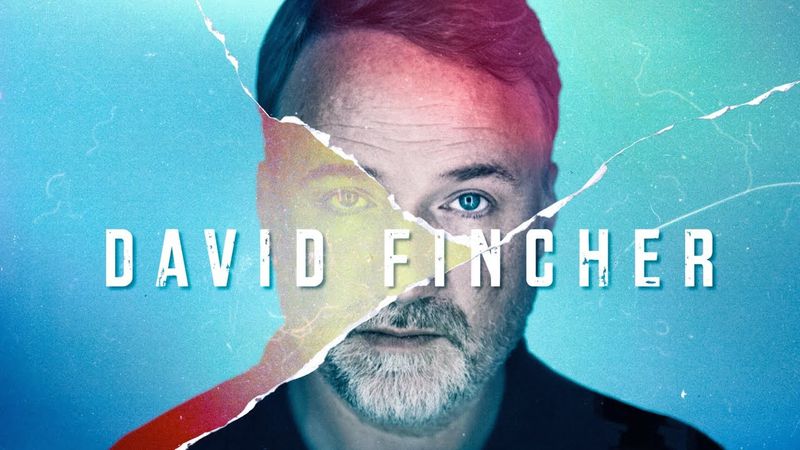
Download information and video details for David Fincher - Invisible Details
Uploader:
kaptainkristianPublished at:
5/26/2017Views:
1.8MDescription:
A look at the hidden visual effects work of David Fincher's filmography. Buy a shirt at Support this channel at Follow me at Music: Trent Reznor & Atticus Ross - In Motion
Video Transcription
Many things come to mind when you think of a David Fincher film.
That signature steely color palette, his unconventionally structured narratives, and of course, some of the most interesting characters ever put to film.
Did you know if you mixed equal parts of gasoline and frozen orange juice concentrate, you can make napalm?
but what they're usually not seen as are visual effects pieces, even though a film like The Social Network has more visual effects shots than Godzilla.
And that's because Fincher's true trademark is deception, and it's accomplished primarily through the use of CGI and digital compositing.
Fincher has always been on the bleeding edge of technology, and he's immersed himself in the visual effects world his entire career, starting with his work on Return of the Jedi at ILM in the early 1980s.
And because of those three decades of experience, he knows exactly when and how to use an effect
effectively.
Take this opening sequence from Fight Club, for example.
We track down the building, phasing into the garage, revealing the vans loaded with nitroglycerin bombs, and set up an important setting for the third act of the film.
Now, without CG, that setup would have to be done in four different shots.
The garage, the van, the bomb, and the timer.
And technically, that's still all the same visual information, but none of those shots establish distance or location in relation to Tyler and the narrator.
Fincher likes to let you know exactly where you are in a scene.
And the use of CG allows him to flesh out those environments in a way that wouldn't be possible with traditional filmmaking techniques.
How would you establish 1960s San Francisco outside of a title card?
Well, you could open with the Golden Gate Bridge.
It's iconic, it's a visual landmark that hasn't changed in appearance since its construction, so it's appropriate for any period.
And it's also used in every single movie to let the audience know they're in San Francisco.
But we're nowhere near the Golden Gate Bridge with Zodiac.
We're downtown at the Chronicle.
And rather than just showing us the exterior of the building, Fincher shows us this.
The San Francisco waterfront as it appeared in 1969.
Complete with a historically accurate skyline as well as a reconstruction of the Embarcadero Freeway that fell during the earthquake of 1989.
And most people would never guess that that entire cityscape was created in a computer.
In fact, nearly every exterior shot in Zodiac is digitally altered in some way to be period accurate.
Eventually, one of the details of the crime seems to be as authentic as possible.
And ironically, the only way to do that was through CG.
If we look at the murder of Washington and Cherry, you'll see that this isn't just a simple chroma key background.
The shot is handheld.
So the entire environment was built from the ground up using camera projections to create a 360 degree 3D model of the intersection that could then be tracked onto the original plates to match perspective.
But more than historical accuracy, Fincher uses these CG techniques to bring depth to the storytelling.
Like illustrating a city's transition into a new era through the construction of a landmark.
Or building tension through eerily precise framing and virtual camera movement.
It's all in service of the story.
Take the Henley Royal Regatta sequence in the Social Network, for example.
It's 57 shots and every single one of them is a visual effect.
3D tracking software was applied to digitally replace each background, as well as create detailed depth maps that were then used to simulate the look of tilt-shift photography, which adds a sense of isolation to the Winklevii and their attempts to expose Zuckerberg.
Everything around them feels so insignificant compared to what Facebook is becoming.
And it's the effect that sells that emotion, but it does it without drawing attention to itself.
And I think that's the essence of all the visual effects in Fincher's films.
They're almost never obvious.
In fact, the real trick of this scene isn't the background, it's the Winklevoss twins themselves.
And no, this isn't just a split-screen cloning effect.
This was done by capturing a 3D mask of Armie Hammer's performance in CG and having it digitally superimposed over Josh Pence's face, creating a hybrid of actor and body double that could then portray two distinct,
but identical characters within the same frame.
Even the simplest shots have a surprising number of complex visual effects.
One of my favorite examples of this is the Zodiac's first murder sequence.
It seems relatively straightforward.
Night, exterior, two characters inside the car being shot by the Zodiac as blood splashes on the radio.
Except it's not at night, it's shot in a studio, the exterior is a digital matte, the two characters in the car as well as the Zodiac are blue screen composites shot on different plates, and all the blood is CG.
Like I said,
He's a master of deception.
And Fincher likes to use digital blood as often as he can.
Zodiac has some pretty gruesome murder sequences, but not a single frame of practical blood was shot.
Same with Girl with a Dragon Tattoo.
Every drop is CG, including the blood being washed off of Mikael's face in this scene, which is a whole nother level of impressive.
And the complexity of the visual effects in the back end allows for much more simplicity during principal photography.
Not worrying about redressing the set multiple times gives Fincher the freedom to shoot as many takes as he likes, and he likes to shoot a lot of takes.
And we shot 56 takes.
I think we probably shot 30, 35 takes, and we probably shot 16 takes.
We did that 17 times.
This was many, many, many takes.
Fincher also utilizes CG in moments that would otherwise be difficult to recreate over those several takes.
If you ever wondered how those gummy bears bounce so perfectly off of Nick's head while staying in frame, it's because they're CG.
Same with Amy's perfect putt.
as well as this gap in Lisbeth's hair.
Since the scene was filmed across multiple days, they composited a separation in her bangs to maintain continuity between shots.
And that same attention to detail was applied to all of Mikael's evidence boards, with notes and photos being digitally altered to remove in accordance with last-minute script changes, and scenes being cut for length.
And yeah, it's easy to think these are expensive, unnecessary solutions to minor problems.
But modern audiences aren't as forgiving when it comes to technical inconsistencies and continuity errors, and Fincher knows that.
His films are about detail.
His characters are investigators and detectives and obsessives, and those traits are all reflected in the filmmaking.
An incredible amount of technical artistry shapes so many moments most people with a blind animosity towards CG
would never even notice.
Take the motorcycle chase at the end of Dragon Tattoo, for example.
Thousands of man-hours of work went into digitally replacing Lisbeth's head during this sequence, even though the simple, financially practical solution would just be to conceal her face with a helmet and let the stunt driver perform with no digital trickery.
It's even been established multiple times that Lisbeth always rides with her headgear, but that doesn't serve the narrative.
She's in a hurry, she's in pursuit of a murderer,
and she's reckless enough to chase down a killer in spite of her own safety.
The use of CG allowed Fincher to shoot the scene efficiently and safely without compromising the logic of the character.
His visual effects are always in service of the story.
They're not there to be recognized, they're not there to impress, they're there to immerse.
Fincher understands that what technology you use is never important.
It's about how you use that technology to communicate your vision and tell the best story you can.
It takes titanium and aluminum and steel and glass and lasers to do one thing, impart feeling, and that's the magic of cinema.
I'd like to thank Squarespace for sponsoring this week's episode.
Whether you're looking to set up a blog, portfolio, or online store, Squarespace gives you all the tools you need to build a beautiful website with no patches, upgrades, or installs required.
And their great selection of designer templates and award-winning customer service makes launching your brand quicker and easier than ever before.
Sign up today at squarespace.com to get 10% off your first order.
That's squarespace.com slash K-A-P-T-A-I-N.