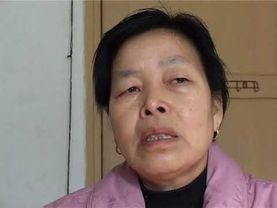
Dead Souls (2018 film)

Download information and video details for Dead Souls (2018 film)
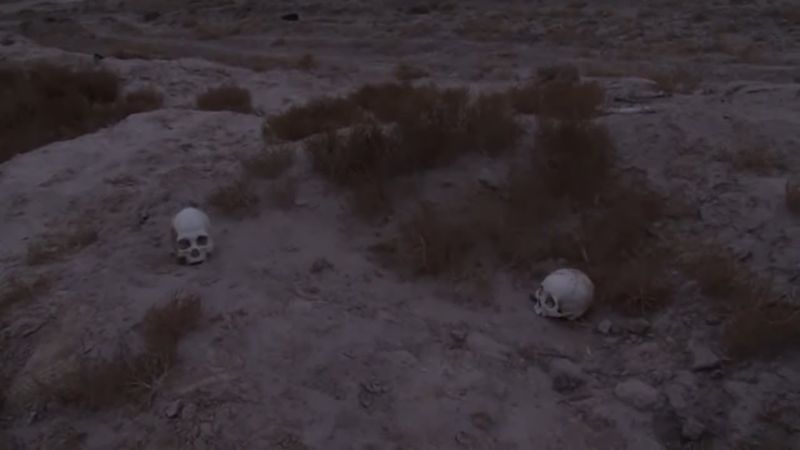
Uploader:
Moses' YouTube PagePublished at:
10/12/2022Views:
17.5KDescription:
死灵魂 Dead Souls Dead Souls is a 2018 documentary film directed by Wang Bing and documents the testimony of survivors of the hard-labor camp in the Gobi Desert in Gansu, China. Directed by Wang Bing Written by Wang Bing Produced by Serge Lalou, Camille Laemmle, Louise Prince, Wang Bing Cinematography Wang Bing, Xiaohui Shan, Yang Song, Liu Xianhui Edited by Catherine Rascon Wang Bing Gives Voice to ‘Re-education’ Camp Survivors By Nicolas Rapold May 5, 2018 “Well, I guess I’ll start at the beginning.” The opening words spoken in Wang Bing’s film “He Fengming: A Chinese Memoir” are humble ones. But what follows is a record of cataclysmic times in postwar China, recounted by Ms. He, a survivor of forced labor camps. She methodically speaks of how it happened, how she was separated from her husband, all while seated in her cluttered, dimly lit, utterly ordinary home. The result is by turns shattering and sedate — a testimony that one critic called “both a cry of pain and a sigh of relief.” “He Fengming” screened at Cannes in 2007, the same year as “4 Months, 3 Weeks and 2 Days” and “No Country for Old Men.” Now Mr. Wang returns to the festival with a work that gives voice to more living veterans of history like Ms. He. “Dead Souls,” his new documentary, has its world premiere this week, clocking in at 8 hours 15 minutes. “The only objective is to obtain, from their memories, the knowledge of the people who can no longer speak of what they went through,” Mr. Wang said in an interview. The subjects of “Dead Souls” were condemned in the Communist Party’s “anti-rightist” campaign in the 1950s. Like Ms. He, they were imprisoned, enslaved and starved in “re-education” camps like Jiabiangou in the Gobi Desert. Mr. Wang’s previous works include his gargantuan chronicle of obsolescent factories and their workers, “West of the Tracks,” which The New York Times called a “nine-hour masterpiece.” His 14-hour installation “Crude Oil” tracked the process of oil extraction. “Mrs. Fang,” his most recent, is a comparatively brief (86 minutes) but devastating elegy of an older woman’s final days. Mr. Wang sits at the pinnacle of the Chinese documentary groundswell that arose with the country’s social and economic upheaval in the 1990s. Last year, he won the Golden Leopard at the Locarno film festival, bestowed by a jury led by the filmmaker Olivier Assayas. His work has premiered in Berlin, Venice (garnering another prize), and Documenta (which has also commissioned projects of his), with retrospectives at the Centre Pompidou and the Harvard Film Archive. “Wang brings us inside the world he is chronicling so thoroughly that, if we watch it in one go, we are apt to lose track of what things outside are like,” the critic Luc Sante wrote of Mr. Wang’s “epic and intimate” cinema. “‘Fengming’ stands alongside first-person precedents like Shirley Clarke’s ‘Portrait of Jason’ (1967) and Errol Morris’s ‘The Fog of War’ (2004) in its ability to wrest powerful effects from the deceptively simple setup of a lone raconteur,” the critic Ed Halter wrote. Other admirers include the filmmakers Jia Zhangke, Arnaud Desplechin and Pedro Costa. For his part, Mr. Wang can sound very modest about his continuing document of Chinese history. “In China, my life is like that of all the other normal Chinese,” Mr. Wang said. “I am one of the many from the normal class. So I filmed these people.” “West of the Tracks,” with its view of Chinese heavy industry in decline, put a spotlight on Mr. Wang in 2003. The film announced an artist with a mission to catch major epochs and small moments before they disappeared. Hard-hitting subject matter can sometimes be a problem for filmmakers facing censorship in China, but this does not seem to have been an obstacle for Mr. Wang. “I’ve been free to shoot my films in China,” he said, explaining that the low commercial value of his work kept him from submitting them for theatrical release there. (“Mrs. Fang” will screen at next month’s Shanghai International Film Festival.) “Dead Souls” finds Mr. Wang again embracing the immersive approach that has yielded memorable results: the touching and magical fireside moments with migrants in “Ta’ang,” or the unnervingly free wanderings of children left to fend for themselves in “Three Sisters.” It’s a form of cinema that begins to feel more like living with the people on screen than merely watching them. For those ready to commit the time and attention, “Dead Souls” will be an oasis of focus amid the many distractions of Cannes. With his typical cool understatement, Mr. Wang said: “I don’t have particular expectations from the audience. I hope this film can hold the content of the stories I shot. In other words, there is a lot of content in this film. That’s why it’s long.”
Similar videos: Dead Souls

天堂花园 Garden in Heaven 艾晓明 胡杰 Ai Xiaoming, Hu Jie (2017) (English subtitles)
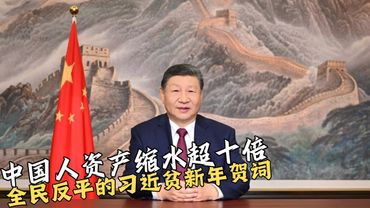
中国人资产缩水超GDP十倍|全民返平的习近贫新年贺词|Xi Jinping’s “Common Return to Poverty” in His New Year Address
邱宇辰Chris Chiu 《 Unknown feat. 金在勳 》 Official Music Video(劇集 【關於未知的我們Unknown】 主題曲)
![[Behind The Scenes] 'คู่กัด' กำลังจะกลายเป็น 'คู่ใจ' | ทำนายทายทัพ My Magic Prophecy EP.1](https://videodownloadbot.com/images/video/9d0/08otcsbx5zodzeitjyhejeu6pmnt0kfb_medium.jpeg)
[Behind The Scenes] 'คู่กัด' กำลังจะกลายเป็น 'คู่ใจ' | ทำนายทายทัพ My Magic Prophecy EP.1
![[Behind The Scenes] นักแสดงกองนี้ 'ทุ่มสุดตัว' | ทำนายทายทัพ My Magic Prophecy EP.2](https://videodownloadbot.com/images/video/0c3/7dxwhrb628d050az4kxm8n4z9lkwkev2_medium.jpeg)
[Behind The Scenes] นักแสดงกองนี้ 'ทุ่มสุดตัว' | ทำนายทายทัพ My Magic Prophecy EP.2