
Dissolving plastic: Japan's invention could save our oceans

Download information and video details for Dissolving plastic: Japan's invention could save our oceans
Uploader:
news.com.auPublished at:
6/5/2025Views:
25Description:
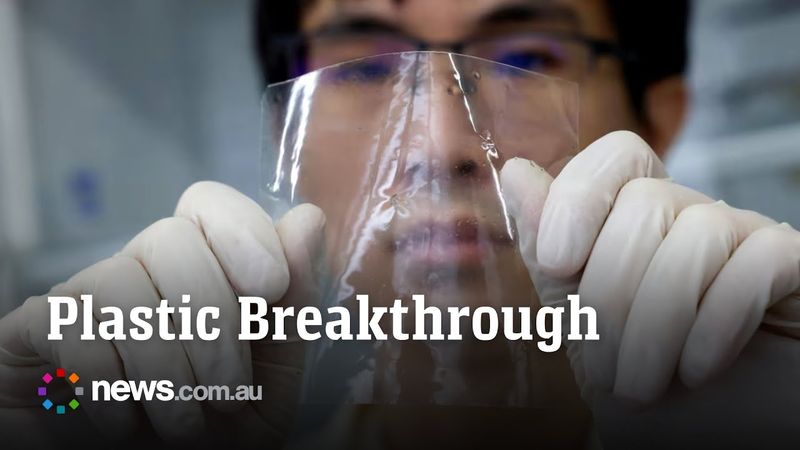
Dissolving plastic: Japan's invention could save our oceans #breakingnews #environment #science Researchers in Japan have developed a plastic that dissolves in seawater within hours, offering up a potential solution for a modern-day scourge polluting oceans and harming wildlife. Diane To reports. Could this bit of plastic be the answer to our modern-day plague that's choking oceans and harming wildlife? Its Japanese developers say it's as strong as conventional petroleum-based plastics... But can dissolve in seawater within hours. This Earth Wako, Japan This new supramolecular plastic was co-developed by the University of Tokyo and the RIKEN Center for Emergent Matter Science. The center's group director and lead researcher, Takuzo Aida, explains that it's made by combining two ionic monomers to form a salt bond, which keeps it strong and flexible. But, the trick is: this plastic material is highly sensitive to salt. Takuzo Aida, Lead researcher, RIKEN Center for Emergent Matter Science "When it comes into contact with salt, it will break down into its original raw materials. Then, these raw materials themselves can be decomposed by bacteria, meaning that they ultimately return to the environment as safe substances." Aida says tests in salt solutions similar to seawater saw the plastic dissolve in about two to three hours, depending on size and thickness. It works in soil too - if a little slower. Aida says tests showed a small piece of the plastic decomposed after about 200 hours. Studies have found many existing biodegradable plastics don't break down fully. That leaves behind the microplastics that are found everywhere these days. Microplastics are fragments less than one-fifth of an inch in size. In 2020, an estimated 2.7 million tonnes of it seeped into the environment, the U.N. Environment Programme said. Researchers have even found microplastics in the human brain, arteries and other organs. Currently, less than 9% of global plastic waste is successfully recycled. And plastic pollution is set to triple by 2040, according to the U.N. That means adding up to 37 million metric tons of plastic waste to the world's oceans each year. The new material is still in its development phase. But Aida hope their fully degradable plastic will prove useful for the packaging industry and become a safe, sustainable substitute. The amount of plastic being produced is increasing every year, he says. "So if we can help stop that growth, and even begin to reduce it, that would be the most meaningful contribution we could make." Connect With news.com.au Online ► [] ▬▬▬▬▬▬▬▬▬▬▬▬▬▬▬▬▬▬▬▬▬▬▬▬▬▬▬ Follow Us: Facebook ► [ Instagram ► [ Podcast ► [ TikTok ► [@news.com.au] Twitter ► [ ▬▬▬▬▬▬▬▬▬▬▬▬▬▬▬▬▬▬▬▬▬▬▬▬▬▬▬ Subscribe To Our YouTube Channel For The Very Latest News From Australia And Around The World: ► [ ► [ ► [ ▬▬▬▬▬▬▬▬▬▬▬▬▬▬▬▬▬▬▬▬▬▬▬▬▬▬▬
Similar videos: Dissolving plastic

Mark Osborne's MORE

Plastic Defence: Secret 3D Printed Guns in Europe

The Strongest Concrete Made From Human Urine?

Tears in the Rain - Blade Runner (9/10) Movie CLIP (1982) HD

Aerial robot with ‘elephant trunk’ developed for complex mid-air manipulation tasks