
Dubai: What Happens When the Oil Runs Out? || 🏢Learn English Through Story Level 3 || Graded Reader🎧
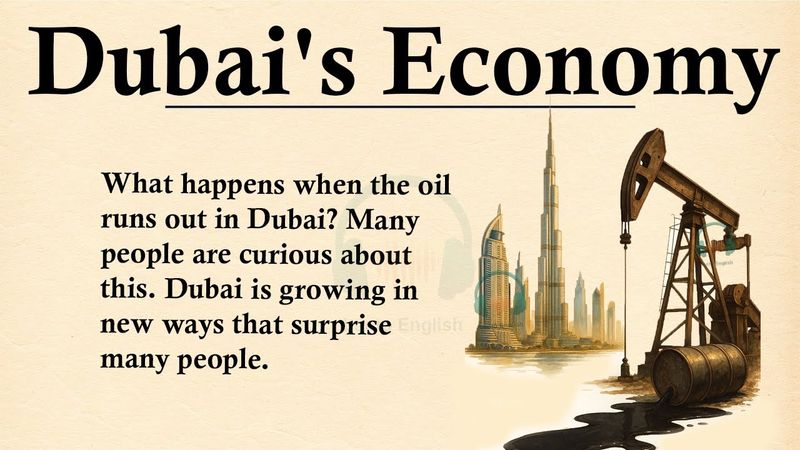
Download information and video details for Dubai: What Happens When the Oil Runs Out? || 🏢Learn English Through Story Level 3 || Graded Reader🎧
Uploader:
Lento EnglishPublished at:
11/17/2025Views:
2.8KVideo Transcription
Welcome to Lento English, ready to level up your English.
Here we learn through stories, slow, clear, and fun.
Listen, relax, and enjoy the journey.
One Introduction Dubai is a famous city today.
When people think of Dubai, they see very tall buildings.
They see big modern airports and huge shopping centers.
They see luxury cars and beautiful artificial islands.
The city looks clean and new.
It is a place of great wealth and modern design.
This picture of success makes many people ask one big question.
How did this city become so rich so fast?
For many years, Dubai was a small fishing and trading village.
It was not a famous place.
Now it is a global center for business and travel.
This fast change is surprising.
It is a story of planning and hard work.
Most people believe that oil money built Dubai.
They think that huge amounts of oil were found here many years ago.
They think this oil made the city's leaders rich very quickly.
Then the leaders used all this oil money to build everything we see now.
This idea is common around the world.
It is true that oil played a part in Dubai's early development.
Oil was first found in the 1960s.
This money gave the city a necessary start.
It helped pay for the first roads and communication systems.
But the idea that oil is the main reason for the wealth today is not completely correct.
The truth is that Dubai's oil reserves were never very big.
Compared to its neighbors, Dubai has only a small amount of oil.
The leaders knew this fact early on.
They understood that the oil money would not last forever.
If the city depended only on oil, it would become poor again soon after the oil finished.
Because of this, they made a very smart and quick decision.
They decided to change their economic plan.
They wanted the economy to be strong without needing oil.
They planned to build many different kinds of businesses.
This important change is called diversification.
Today, oil makes up less than 1% of the city's total economy.
Other businesses bring in almost all the money.
This story is about how Dubai moved beyond oil.
It shows how the city became a global hub for trade, tourism, and finance.
We will look at the big projects they built.
We will see how they welcomed people from all over the world to work and visit.
This story teaches us a valuable lesson.
It shows that smart planning and long-term vision are stronger than having natural resources alone.
We will explore the steps Dubai took to secure its future, making sure its success did not depend on something that could run out quickly.
2.
The Old Days Before the 1960s, Dubai looked very different.
There were no tall towers or huge shopping centers.
It was a much smaller town.
Life centered around the creek, which is a small river arm of the sea.
People used the creek for trade.
Small wooden boats carried goods from place to place.
This was how Dubai made its living for hundreds of years.
The main jobs were trading and fishing.
Some men risked their lives diving deep into the sea to find natural pearls.
They sold these pearls to rich people in other countries.
The economy was small and based on simple buying and selling.
It was a tough life and the city was not rich.
It was just one of many small trading posts in the region.
Then the 1960s arrived.
This decade brought a huge change that nobody expected.
Surveyors found large deposits of crude oil deep beneath the sand and water.
This discovery meant the city suddenly had a source of great wealth.
The oil began to flow, and money started to come into the government.
This discovery was a turning point.
It gave the leaders the financial power to start building a modern city.
They knew they had a chance to change everything.
The leaders, especially the ruling family were very careful with this new money.
They did not want to waste it.
They looked at the future, not just the present day.
They used the first money from the oil sales to create a foundation for the future.
They invested heavily in infrastructure.
This included building better roads, creating large power stations and improving water supplies.
They also started to build a major port.
This port would allow bigger ships to visit Dubai.
The goal was to make the city easy for international businesses to use.
This strategic spending showed great foresight.
The leaders understood a key truth.
The oil would not last forever.
Unlike some neighboring countries, Dubai's oil reserves were actually quite small.
At its peak, oil only accounted for less than 30% of Dubai's total economic activity.
This is a much smaller number than people often imagine.
Because the reserves were limited, the government made a very important decision very early on.
They decided that Dubai must never rely only on oil money.
They needed to build a diversified economy.
Diversification means having many different ways to make money, not just one.
The oil money was simply the tool they used to build the non-oil economy.
The plan was clear.
Use the temporary oil wealth to create permanent sectors like trade, tourism and finance.
This early choice made decades ago is the main reason Dubai looks the way it does today.
They saw the oil money as seed money.
Money used to start growth.
They wanted more than 30% of the economy to come from other things.
Today, that vision is complete.
Oil contributes less than 1% to the city's economy.
The leaders use the old days of oil to prepare for the new days without it.
3.
A new plan.
Dubai's leaders made a very important choice.
They decided the city must not depend only on oil.
They looked at the future and saw a potential risk.
Oil reserves are limited.
They knew the oil would not last forever.
If the city depended only on oil, the economy would become weak when the oil ran out.
This was a clear danger for the future.
Also, the price of oil changes a lot.
Sometimes the price is very high, and sometimes it is very low.
This changing price makes the economy unstable.
The leaders wanted a strong, stable economy that could last for many, many years.
They knew they needed to start a new plan quickly to protect the city's wealth.
This new plan was called economic diversification.
Diversification means having many different kinds of businesses that support the city.
It means not relying on only one thing for money.
The leaders did not want to put all their eggs in one basket.
They decided to use the money they earned from oil to build other industries.
This was a smart move for the long term.
The government created strong, long-term plans to guide this change.
These visionary plans started decades ago.
The main goal was to build a sustainable economy.
A sustainable economy is one that can continue to grow and can handle big global economic changes, like falling oil prices.
They needed to make the city resilient.
The first steps of this plan were to build different kinds of businesses.
The leaders looked for ways to make money without needing oil.
They focused on four main areas where Dubai had a natural advantage.
The first area was trade and logistics.
Dubai is located in a very good place between the east and the west.
This location is perfect for transporting goods and running a global market.
The second area was tourism and hospitality.
They plan to make the city a top place for visitors from all over the world.
They wanted people to come, spend money, and enjoy the city.
The third area was real estate and construction.
They needed to build new modern infrastructure, places for people to live, work and shop.
The fourth area was finance.
They wanted big international banks and companies to open offices in Dubai.
These decisions meant that money was invested into these new sectors immediately.
Today, these non-oil sectors are the most important parts of Dubai's economy.
They make up more than 95% of the city's total income.
The early decision to diversify was the key to Dubai's success.
4.
A Place for Trade Dubai has a great geographical advantage.
Its location is perfect for international business.
It sits right between the countries of the East and the countries of the West.
This central spot made Dubai a natural choice for a large trading center.
The city's leaders realized this early on.
They decided to invest heavily in the infrastructure needed to support global trade.
They built some of the world's biggest places for moving goods.
First, they developed large seaports.
Dubai is now home to two of the world's largest ports.
These ports handle massive ships carrying millions of containers every year.
This allows goods from Asia to travel easily to Europe or goods from Africa to reach America.
In addition to sea trade, air travel became crucial.
Dubai built a very busy international air cargo hub.
This hub allows companies to move high-value goods quickly across continents using airplanes.
The combination of sea and air transport made Dubai essential for global supply chains.
To attract more business, the government started a special project called the Jebel Ali Free Zone.
This free zone began in the 1980s.
A free zone is a designated area where companies receive special economic benefits.
For example, international companies can own 100% of their business.
They also face very low taxes or sometimes no taxes at all on their profits.
This made the free zone very attractive.
The Jebel Ali Free Zone quickly grew.
It brought many industrial companies and investments into Dubai.
This success showed the world that Dubai was serious about becoming a permanent place for trade, not just a temporary city based on oil.
Today, trade and logistics form a fundamental part of the economy.
Logistics is the planning and execution of moving products.
This sector, along with transport, contributes a huge amount to the city's wealth.
Buying and selling goods known as wholesale and retail trade makes up about 26% of the total economy.
Transport and logistics add another 12%.
Together, these sectors make up almost 40% of Dubai's economic activity.
This strong focus on being a trading bridge shows how Dubai moved successfully away from oil.
It is now truly a global hub for buying, selling, and moving everything.
5.
Welcoming Visitors Dubai's leaders knew that relying only on trade was still a risk.
They needed another big part for the new economy.
This new part was tourism.
The plan was to make Dubai a top place for people to visit from all parts of the world.
This strategy was important to attract foreign cash and reduce the need for oil money.
To welcome many visitors, Dubai had to build many special things.
The government invested money in creating luxurious hotels and grand resorts.
These buildings were not just places to sleep.
They were designed to be world-class attractions themselves.
They wanted visitors to feel special and enjoy high quality service.
The city aimed to be known for its hospitality and comfort.
Shopping was also a major focus.
Dubai built very large shopping centers, often called malls.
These malls offered many international brands and comfortable places to shop.
This focus on retail trade ensured that visitors spent their money easily and happily while they were in the city.
The malls quickly became famous tourist destinations themselves.
The goal was to make Dubai famous around the world.
The city needed an image that was modern, exciting, and welcoming.
By building unique attractions, Dubai started getting attention globally.
People saw pictures of the fantastic buildings and wanted to experience the city themselves.
This focus on building a strong international image was key to the tourism plan.
Tourism quickly became a major source of income.
When visitors come, they spend money on hotels, food, transport, and shopping.
This spending helps many other businesses in the city.
It creates jobs for thousands of people working in hotels, restaurants, and travel companies.
This money is called foreign cash, and it is a key part of the total economy.
For example, the tourism and hospitality sector contributed a significant amount of money to the economy every year.
In the year 2018, this sector added about 5% to the city's total economic product.
This 5% was a clear sign that the diversification strategy was working well.
By focusing on welcoming visitors, Dubai successfully added a strong non-oil pillar to its economy.
The city became known not just for shipping goods, but for offering amazing experiences.
This focus on hospitality and leisure helped secure Dubai's place as a true global hub for travel.
The stream of visitors brought steady income, protecting the city from changes in the price of oil.
The plan to attract tourists was a crucial step in building a diverse and lasting economy for the future.
6.
Building the City
The plan to make Dubai a center for trade and tourism needed many new buildings.
To support this new economy, the city had to change its physical look.
This started a very large construction boom.
Dubai needed offices for new businesses, hotels for visitors, and homes for all the people who moved there to work.
The leaders understood that a global hub needed world-class structures.
The speed of the change was very quick.
Large construction projects began everywhere.
The goal was to transform Dubai into a modern global city.
This building activity was not just about making places to live, it was about showing the world that Dubai was ready for its future without oil.
The building sector became central to the economic shift.
These projects resulted in an amazing skyline.
Dubai became known for its tall and unique structures.
These famous buildings helped to make the city recognizable around the world.
They created a new image for the city, moving beyond its past as a small trading port.
One famous project is the Palm Islands.
These are man-made islands built in the sea, shaped like palm trees.
They were designed to attract luxury tourism and international investment.
Another very important project is the Burj Khalifa complex.
This complex holds the tallest building in the world.
These iconic structures were central to the property boom and showed the city's high level of ambition.
The construction industry created many opportunities.
It became a significant part of the economy, making up about 13% of the total economic output in recent times.
This building work created thousands of jobs.
People came from different countries to work on these huge sites, helping Dubai grow faster than almost any other city globally.
The jobs were necessary to build the hotels, airports, and huge shopping centers that supported the growing service and tourism industries.
Today, the skyscrapers and unique designs are proof of this massive effort.
The beautiful skyline is a direct result of the strategic plan to build a diversified non-oil economy.
The city was physically built to welcome the world.
7.
The Money Center Dubai's leaders knew that relying only on oil was risky.
They decided to build many different kinds of businesses.
One of the most important areas they chose to focus on was finance and banking.
The government wanted Dubai to become a major international money center.
To make this happen, they needed a special place where large banks and financial companies could operate easily.
This plan led to the creation of the Dubai International Financial Centre, known as the DIFC.
The DIFC started in 2004.
It was designed specifically to bring big, global finance firms to the city.
The DIFC is a special economic zone.
Companies that work there follow unique laws and rules that are easy for international business.
These rules help make the center very attractive to companies from all over the world.
Dubai's excellent location helps the DIFC succeed.
It sits perfectly between the economies of the East and the West.
This makes it a great meeting place for companies doing business in Asia, Europe and Africa.
The DIFC helps these companies manage large amounts of money, offer investment services and provide insurance.
It is a hub for global trading and financial advice.
Finance and business services quickly became a strong pillar of Dubai's new economy.
The banking and financial services sector contributes significantly to the city's wealth every year.
For example, in 2018, this sector made up about 10% of the total economy.
This contribution is much larger than the small amount of money the city now makes from oil, which is less than 1% today.
Having a strong financial center makes the entire economy stronger and more stable.
It helps attract foreign investment into the city.
It also creates many high skilled jobs for people who work in finance and technology.
Furthermore, the financial sector supports other businesses such as construction and trade by giving them loans and necessary financial services.
This heavy focus on money services shows how successful Dubai has been in moving away from its old oil-based economy.
This shift was a very smart move to build a sustainable future.
eight the future dubai is a city that never stops planning its leaders understand that true wealth does not come from oil that might run out it comes from having a strong flexible economy that can handle changes
The city is always looking ahead to make sure its success continues for many years.
This strong focus on future planning is the final part of Dubai's amazing economic story.
Today, Dubai has a new, very ambitious plan.
It is called the Dubai Economic Agenda, or D33.
The main goal of this agenda is to make the city's economy twice as big by the year 2033.
This is a massive goal that requires great effort and investment.
To achieve this, the city must attract much more money from foreign countries.
This money helps build new businesses and supports existing ones.
The plan also focuses on helping new, small companies grow into big ones.
Supporting these new businesses creates jobs and brings new ideas to the market.
Furthermore, Dubai wants to expand its trade relationships.
It aims to buy and sell goods with many more nations around the world, making its port and airport busier than ever before.
A huge part of the future plan is technology and innovation.
Dubai wants to become a world leader in the digital economy.
This means using modern technology in many different ways, from government services to daily life.
The city is investing heavily in fields like artificial intelligence and smart infrastructure.
The goal is to build a smart city where technology makes everything more efficient and easier for people who live and work there.
However, the road ahead has challenges.
Because Dubai is a global hub, its economy can be affected by problems in other countries, such as global economic crises.
Instability in the region around Dubai is also a challenge that leaders must manage carefully.
Rapid building and growth, known as urbanization, have created environmental concerns.
The city must focus on sustainable development to grow without harming the environment.
Another important challenge is ensuring that more local citizens take jobs in the private business sector.
The government is working hard to balance the needs of the fast-growing city with the needs of its people.
Dubai's journey teaches a powerful lesson to the world.
A successful economy is not built on finding one resource like oil.
It is built on having a clear vision, making brave changes, and never stopping the preparation for tomorrow.
Similar videos: Dubai
How I Learned English in 5 Months By Myself || My Powerful Story 🔥 || Graded Reader || Speak English
Keep Your Brain Young || 🧠🌱Learn English Through Story Level 3 || Graded Reader 🎧
Europe vs USA || 🌍🌎Learn English Through Story Level 3 || Graded Reader 🎧

Что в Китае удивит любого иностранца: от еды до привычек | Кай отвечает на стыдные вопросы
MandarinYeah Chinese language course FREE SI002