
Every Manipulation Technique & How To Combat It Explained
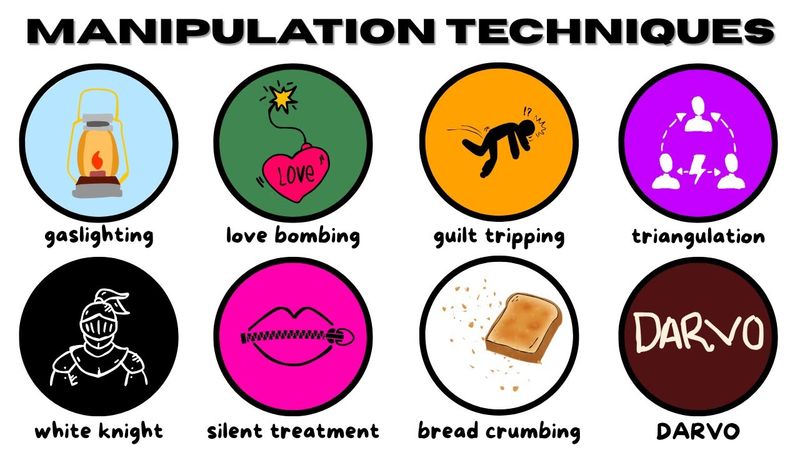
Download information and video details for Every Manipulation Technique & How To Combat It Explained
Uploader:
EverythingProfessorPublished at:
7/31/2025Views:
528.8KDescription:
Video Transcription
Gaslighting.
Everyone's heard of gaslighting, but not everyone knows what it is and how they are being affected by it.
Let me explain.
Gaslighting is when someone messes with your sense of reality.
It doesn't always look dramatic.
Sometimes it's quiet.
Subtle.
Like someone just gently rewriting the story over and over until you start to wonder if you're the problem.
You remember something clearly, and they tell you it never happened.
You try to explain how something made you feel, and they say you're being too sensitive.
Doing it, not to disagree, but to make you question what's real.
And over time, you start to believe them more than you believe yourself.
That's what makes gaslighting so powerful.
Doesn't come at you all at once.
It's slow.
One small moment at a time.
One conversation.
One look.
One denial.
And eventually you start second guessing everything.
Your memory.
Your emotions.
Your gut.
It shows up in all kinds of relationships.
Romantic.
Family.
Even work.
And it always follows the same pattern.
Confusion.
Doubt.
Silence.
Because if they can make you doubt your version of reality, it gets easier to control you.
So what do you do?
You get clear.
You start writing things down.
You trust how something made you feel, even if someone else tries to spin it.
You don't need permission to believe your own experience.
The more clearly you see what's happening, the harder it is for anyone to twist it.
And once you stop explaining yourself to someone who's pretending not to understand, that's when you take your power back.
Love bombing.
This technique is less commonly known, but just as commonly used.
Love bombing feels amazing.
And that's exactly the problem.
It starts with intensity.
Not affection, not care, intensity.
You're suddenly the center of someone's world.
They're obsessed with you.
They say you're perfect.
They talk about forever on the second date.
There's constant texting, late night calls, huge compliments, sudden gifts, and it all moves so fast you barely have time to breathe.
It doesn't feel like getting to know someone.
It feels like getting swept away.
And for a moment, it's hard to see anything wrong with it.
Because who doesn't want to be adored?
But that's the point.
Love bombing isn't about you.
It's about creating a feeling.
One that's hard to walk away from later.
Because once you're hooked on the high, they change.
They pull back.
They go cold.
You start wondering what you did to make it stop.
You blame yourself for the shift and you try to win back the version of them that never actually existed.
The one who said all the right thing.
Who knew exactly what you needed to hear.
That version was the bait.
This is how emotional control gets disguised as romance.
It happens in toxic relationships, narcissistic dynamics, even trauma bonds.
Love bombing isn't about love.
It's about control disguised as intensity, wrapped in flattery.
So how do you protect yourself?
You slow down.
You ask questions.
You look at their patterns, not their promises.
Real connection takes time, space, and honesty.
It grows quietly, not in a rush.
If someone tries to build something serious before trust even has time to form, it's not love.
It's a performance.
And you don't owe anyone an encore.
Guilt tripping.
Guilt tripping is one of the most common and sneakiest ways people try to control you.
And the thing is, it doesn't usually look like manipulation.
It's not someone yelling or demanding.
It's more like a sigh, a pause, a quiet little, well, after everything I've done for you...
They don't come right out and say it, but suddenly you feel like you've let them down.
Like you should have known better.
Like saying no makes you selfish or cold or ungrateful.
That's how guilt tripping works.
It's not about what you actually did.
It's about making you feel like you failed in some invisible way.
Even if you were just setting a boundary,
even if you were doing what's right for you it turns care into currency and your kindness becomes a debt you're always trying to repay the worst part it works especially if you're empathetic you feel the tension the silence the disappointment and before you know it you're apologizing for something you didn't even do or agreeing to something you never wanted it shows up everywhere in families relationships friend groups and it always has the same goal if i can't make you say yes
I'll make you feel bad for saying no.
So how do you deal with it?
You pause.
You take a step back from the guilt and ask yourself, did I actually do something wrong or am I just being made to feel like I did?
Real guilt comes from your own values.
Manipulated guilt, that's someone else's control tactic.
You're allowed to hold your boundary, even if someone else tries to punish you for it.
Triangulation.
triangulation is what happens when someone pulls a third person into a conflict instead of talking to you directly making a sort of social triangle it doesn't feel like an argument it feels like a side conversation you were never invited to suddenly you're hearing things like well sarah agrees with me or
Everyone thinks you're overreacting.
That's not communication.
That's strategy.
Triangulation creates this dynamic where you're not just dealing with one person.
You're now up against a whole invisible team.
And because you're outnumbered, your voice starts to feel smaller.
You start wondering if you're the one who's being difficult.
Or dramatic.
Or wrong.
And that's the whole point.
When someone triangulates, they're not trying to solve the problem.
They're trying to win it.
By building alliances.
By shifting the focus.
By making it seem like you're the common denominator.
This tactic shows up a lot in toxic family systems, like when a parent complains about one sibling to another, instead of having a direct conversation.
It also shows up in romantic relationships, especially when one partner tries to involve a friend, an ex, or even a therapist to validate their side.
Suddenly, you're not just disagreeing with them, you're defending yourself against this whole narrative.
And it's exhausting, because you're not just dealing with the actual issue anymore, you're now being dragged into someone else's storyline.
with someone else holding the pen.
So how do you stop it?
You pull the triangle apart.
Say this.
If you have a problem with me, talk to me.
Not about me.
Keep things direct.
Keep them simple.
You don't need to defend yourself to a third party you never even spoke to.
You get to set the tone for your own conversation.
And if someone refuses to meet you there, you're allowed to step out of the triangle completely.
White knight.
The White Knight looks like a hero on the surface.
They show up with answers, with concern, with solutions you didn't ask for.
At first it feels like they're helping you, like someone finally understands what you're going through.
But that's only the setup.
Because in Toxic Dynamics, the White Knight doesn't just help with problems.
they create the problem themselves just so they can be the one to fix it they stir up conflict behind the scenes they chip away at your confidence then comfort you when you start to fall apart they'll tell you someone's turning on you and then offer to protect you from the fallout they build the fire then show up with the hose why because being the savior gives them power and if you didn't need saving they wouldn't have a role to play
It's subtle.
You don't always see it happening because it's wrapped in care and concern.
But their support comes with strings.
It's not about you getting stronger.
It's about you staying broken just long enough to keep them relevant.
And if you start growing, if you set boundaries or solve your own problems, they might withdraw.
or turn cold, or flip the script entirely and make you feel like you're ungrateful for everything they've done.
So how do you deal with it?
Start noticing the pattern.
Do they step up when things fall apart?
Or do they quietly push things toward falling apart just so they can step in?
Real support helps you rise.
A white knight needs you on your knees.
So take the help if it's genuine, but don't give up your power in the process.
You don't need to be rescued.
You just need room to stand on your own.
The silent treatment.
Silence can be peaceful.
It can be calming, respectful, needed.
But the silent treatment, that's something different.
It's not a pause.
It's a punishment.
It's what happens when someone uses absence to control you.
They don't yell.
They don't explain.
They just go quiet, cold, distant, unreachable.
And they stay that way until you give in.
The silent treatment isn't about space.
it's about power you'll find yourself replaying everything you said wondering what you did wrong you'll feel pressure to fix it even though you're not sure what it is and that uncertainty that's what makes it work because when someone refuses to communicate you're left guessing and eventually you stop focusing on your own needs and start focusing entirely on how to get them to engage again you apologize
Just to end the silence, you bend, you soften, you tiptoe.
Not because it's your fault, but because the quiet is unbearable.
And for the person using it, that silence becomes a tool.
It says, I control when this relationship feels safe.
I control when you feel seen.
And if I withdraw...
You'll chase me.
It can show up in romantic relationships, with friends, even at work.
Anywhere someone wants to win without having a conversation.
So how do you deal with it?
You stop chasing the noise.
You name what's happening.
You say, if you're upset, I'm open to talking, but I won't be punished with silence.
And then you hold your ground.
Because communication is a two-way street.
And if someone refuses to speak unless they're being agreed with, they're not looking for connection.
They're looking for control.
Breadcrumbing.
Breadcrumbing is when someone gives you just enough attention to keep you hooked, but never enough to actually move forward.
They'll send a hey text every few days, react to your story, compliment you randomly, just enough to remind you they exist.
But when it comes to making plans, showing up, or committing to anything real, it's always vague, always later, always just out of reach.
It's like...
Emotional clickbait.
You keep checking in, hoping this time it'll be different, that maybe now they're finally ready to show up, but they're not.
They're just dropping another crumb.
The goal of breadcrumbing isn't connection, it's control.
It keeps you emotionally invested while they stay unaccountable.
You get stuck in a loop of
anticipation and let down and even though you're not being treated well it's hard to walk away because they never really end it either they don't reject you they just stall you and that uncertainty keeps you hoping waiting checking your phone at 2am because maybe this time they'll actually follow through breadcrumbing can happen in dating friendships even professional relationships and it's not always malicious sometimes people do it out of fear insecurity or just because they like the attention
But the result is the same.
You're left in limbo while they keep all the power.
So how do you deal with it?
You stop chasing the trail.
If someone's interest only shows up in flashes, if they always leave you guessing, you don't need to decode it.
You just need to decide it's not enough.
Consistency speaks louder than charm, and you deserve more than crumbs.
The Darvo Method
DARVO is one of the most disorienting manipulation tactics out there.
And once you know what it is, you'll start seeing it everywhere.
The term stands for Deny, Attack, and Reverse Victim and Offender.
It's a psychological sleight of hand, a way for someone to flip the entire script the moment you try to hold them accountable.
Here's how it plays out.
You bring up something that hurt you, calmly, respectfully, just trying to talk.
Step one, they deny it.
That never happened.
You're making things up, or you're being way too dramatic.
Then comes step two.
They attack you.
They go after your tone, your timing, your past.
Suddenly, it's not about what they did.
It's about how you brought it up.
And then comes the flip.
They make themselves the victim.
You're not the one who got hurt.
They are.
They're being attacked.
They can't do anything right.
They act like your honesty is cruelty.
And now, you're the one who has to explain yourself.
That's DARVO.
It's not just emotional manipulation.
It's narrative control.
It turns any conversation about harm into a performance where the person being called out gets to play the hero, the martyr, or the victim.
And if you're on the receiving end, it can make you feel confused, ashamed, even guilty for speaking up.
You start wondering if you were too harsh, if maybe you did come off wrong.
You start defending your tone instead of your truth.
So how do you deal with it?
First, don't take the bait.
If the conversation suddenly becomes all about their pain, their suffering, their offense, pause.
Return to your point.
Stick to the facts.
Say, I'm willing to talk about this, but not if the original issue keeps getting buried.
DARVA works when it causes confusion.
It fails when you stay clear.
Because accountability isn't an attack, and truth isn't cruelty.
Similar videos: Every Manipulation Technique

23 Psychology Tricks That Actually Work

Подключение Шагового двигателя к контролеру ОВЕН

РАЗМНОЖЕНИЕ НЕОБЫЧНЫМИ методами. Часть 2: ( Анимация | Истории ) | РЕАКЦИЯ НА ДОКТОРА ГНУСА

Управляй своей реальностью через внимание

T2x2 ИГРАЕТ в Clash Royale