Father meets his children's killer | Extraordinary moment inside maximum-security prison
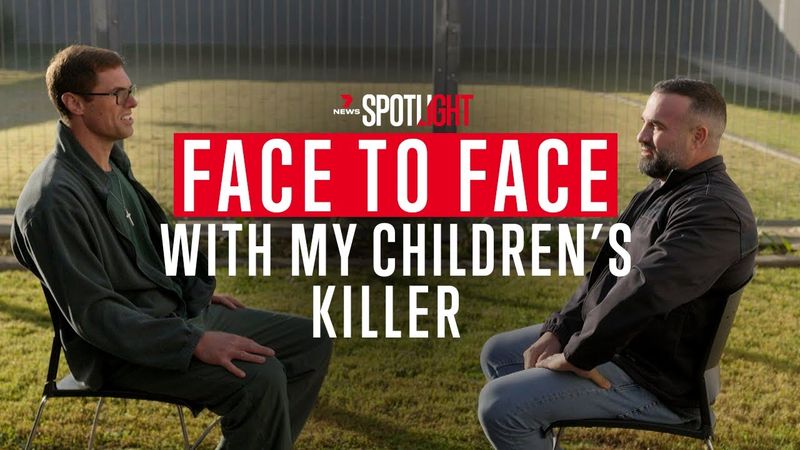
Download information and video details for Father meets his children's killer | Extraordinary moment inside maximum-security prison
Uploader:
7 News SpotlightPublished at:
8/17/2025Views:
4.5MDescription:
Video Transcription
This is the reality of my life.
Although I've tried to move forward and find purpose, nothing makes me happy anymore.
And I wanted to share this part because I want people to understand that the pain is real and the grief is the grief.
It doesn't go away.
It's been five years since the tragedy.
Good afternoon, teachers.
My name is Angelina Antama.
I remember Veronique and Angelina loved each other dearly.
They were best of friends.
They're connected cousins, but more than just cousins, like they both had a very soft spot for each other.
The prettiest baby is Sienna.
Sienna, she was a girl that had her dad wrapped around her pinky.
That's you, Sienna.
Anthony, my boy, he was my best friend.
That kid was my shadow.
Everywhere I went he would follow.
We'd always be together.
Who killed those four kids?
Samuel Davidson was responsible.
Ready?
Yep.
Hi, I'm Samuel Davidson and this is my story I'd like to share with you tonight.
Hello, I'm Michael Usher and welcome to Spotlight.
I'm reporting from inside a maximum security prison two hours away from Sydney.
I'm here for an extraordinary encounter between two men, a father who lost three children and the man who killed them.
You've never seen anything like this.
Samuel Davidson knows every inch of this exercise yard.
Though it's outdoors, razor wire and watch towers turn the open air into a cage.
Still, working out here offers a daily escape from the confines of his cramped, confronting prison cell.
All right, this is your block.
So this is B1.
This is where I'm housed at the moment.
This is home?
This is home.
What's it like in here?
Look, it's... You adapt.
You adapt.
I mean, I've had a fair bit of time to adapt, so...
It could be worse, I guess.
I don't know.
What's your cell number?
428.
Right up there.
You want to show us up there?
Sure.
Alright.
We're up the stairs here, are we?
Yep.
All right, this is home.
Okay, this is your actual cell.
So what time of the day do you get locked in here?
So about 3.15, 3.30, we get locked in here.
And then, yeah, release the next day at about, when is it?
About 6.15, 6.30, usually the doors get cracked in the morning.
On most days he will spend 17 hours a day in his cell and whilst this is a more modern facility, that's a lot of thinking time, a lot of thinking time to be in cell and in cell by yourself.
He lives a very controlled life.
Most of the decisions that he have are made for him.
The time he gets up in the morning, what he eats, who he's able to visit, who he's able to speak to.
That is the nature of a maximum security prisoner in New South Wales.
So in that daily life of his, there's no control that he has.
Very, very limited amount of control.
So here's your TV here.
Yeah, yeah.
To break up the routine and repetition, Samuel watches TV.
Well, pop up here.
You can guide me through it.
Yeah, yeah, go for it.
And make sure everything is in its place.
So you've got long sleeves, and then you've got normal short sleeve, shorts, and what are they?
Pants?
Yeah, long pants.
Long pants, and that's just miscellaneous.
Yeah.
Is that your nature to be that neat and organised?
It is.
Or does it help control things in here?
Yeah, it is.
Look, yeah, I do try and keep it that way because I just think it looks better and...
Yeah, it just makes it more homely, yeah.
I was like that on the outside too, so.
It's interesting because if, and for many people who don't know you but they only read about you, I think they would have an impression of you being a chaotic young man with no discipline whose life was going sideways.
Yep.
Was that you or not?
It wasn't really, to be honest.
That discipline shows even during prison yard work.
Under the constant watch of correctional officers, cameras and fellow inmates, it's a privilege Samuel looks forward to, a break from the monotony of a 20-year sentence behind bars.
What have you got?
So that's your shower.
Six minutes, so you've got to be bloody fast.
That's all they give you, is it, six minutes?
So, and when that runs out, you've got to wait ten minutes before you can have the next one.
So if you don't get yourself organised, you've got to wait there in the cold for ten minutes, so you want to make it happen.
He spent quite a bit of time on a protective custody order.
So he, in those years, he was by himself without any association.
For his protection.
With other prisoners, given the nature of his offence and his profile while he was going through the court system.
Yeah.
So when he arrived in here, he was notorious already.
The other inmates knew exactly what he'd done.
Absolutely.
OK, we're going to retail.
OK.
The driver is a 29-year-old male who's local to the Oatlands area and in his car he had a 24-year-old male passenger and he was driving a dual cab four-wheel drive Mitsubishi Ute.
There were seven children involved.
Four children have been confirmed deceased.
At the time, this was the public image of Samuel Davidson.
Mowed down by a drunk and drug-affected driver.
Drunk and high driver who killed four children.
A shirtless, dishevelled mess.
A no-hoper who lived for partying.
But he had no criminal history.
At school and at work, as a truck driver, he was seen as someone with real potential.
This is in 2006.
Samuel has a quiet, unassuming personality and is well-liked by his peers.
He also appears to be an honest and reliable person.
This is from an old English teacher at Terrigal High.
Okay.
I found Sam to be a very personable young man, a good listener, honest and a loyal friend.
Wow.
He also said you're well-liked by your peers and respectful and cooperative with those in authority.
Yep.
What was high school life like?
Look, it was very up and down, eh?
Um...
Hyperactive ADHD child.
Look, at the start of it wasn't so good.
Eventually I pulled my socks up, but it was a bit later in the years, more closer to year nine and 10, started behaving a bit more, being a lot better.
What were your hopes and dreams?
I wanted to join the army, funny enough.
Samuel's childhood was simple and beautifully ordinary.
young man who loved football and cherished his family.
But that sense of normalcy was shattered when his older sister passed away unexpectedly.
I was 19 when I got that phone call.
She was 30 and she passed away, cystic fibrosis.
She had a lung transplant and basically she got an infection.
Yeah, it was a hard phone call to get a. Yeah, I didn't know what to think.
I thought, oh, yeah, this didn't even feel real for a few days, to be honest.
It was a hard one.
So, yeah, I think it got me a lot worse than I thought, to be honest.
I just tried to play brave and...
You know what I mean, but... You'd seen her just before?
I'd seen her, like, days before.
Maybe a day or two before.
I remember wheeling her around in a wheelchair.
She was too weak to walk and all that.
And I remember wheeling her around and, um... Yeah, it was... We had a few laughs and a few good last moments, so... Got to be happy with that, I guess.
How close were you to your sister?
I was pretty close, yeah.
Oh man, she was the best sister ever, aye.
Went out of her way to do things, even though she had health issues.
Yeah, so she still went out of her way to do stuff for me, buy me stuff, even though she had barely any money.
She was a good saver though, funny enough.
But yeah, incredible person.
Sam says the regular drinking started after the death of his sister.
But he says that's not an excuse for what happened that day.
I know you didn't rely on this in any of the court process, the legal process, but your depression has clearly been a factor in your life, especially drinking and taking drugs.
Yep.
Was it made worse by your sister's death or it was there?
I think I've always sort of had it, but I think the sister's death just topped it.
And yeah, it got me pretty good.
Grief is heavy.
It's very heavy, especially losing a sibling.
I can see it in my kids.
Yeah, it's clearly had an impact on his life.
Absolutely, yeah.
I just hid behind the bottle of the drugs.
They weren't a massive thing.
I didn't do them very often.
Maybe 15, 20 times in my life I've done drugs.
Been to maybe six raves.
That sort of came a bit later.
But the drink, that was my biggest problem, binge drinking on the weekend.
Yeah, that was... Write yourself off.
Yeah, pretty much.
A carton of beer, sometimes a carton of beer in a bottle.
It was, yeah, lots of... quite a lot.
I remember I got up early.
I'd had a big night.
I got up early, started drinking, and I can't remember much.
The boys I was living with, they got home.
We all got into it.
And yeah, pretty blurry from there.
I'm not even sure why on earth we were driving.
I just know that we ran the red light.
I remember waiting to turn and a traffic light was just taking forever.
I don't know why.
Yeah.
Yeah, I've seen the vision.
That can't have been easy to watch.
You just, it's not easy to watch, but you just sort of got to hold it together because you can't change what's happened.
While Samuel was driving from a service station ATM, seven children were walking from Danny's place to buy ice cream.
This is the actual vision.
We had no control over the car.
You had no control because you were driving.
Yeah, I had no control probably because of the intoxication and everything.
Well, definitely because of that.
Definitely because of that.
Yeah.
But also taking a corner so fast that not even a race car driver could have pulled that off in a professional car.
So it was just never going to happen and just taking things too far with that.
And, yeah, when I got out, yeah, it was just horrible.
Yeah.
I mean, obviously there were dead bodies.
I don't really want to go too far into it, but it was horrible.
You could just tell that you're... Destruction, yeah.
Well, it was carnage.
Carnage.
Yep.
You got there pretty quickly.
How comfortable are you describing what you encountered when you first got there?
Look, I think it's not the right thing to do to describe how the kids ended up.
It was, yeah, it was something that you don't want to even think about.
Yeah, it was like a war scene.
It was something you wouldn't expect to see in Australia.
The worst thing you could, you wouldn't wish it upon anyone.
It's just the worst thing that you could possibly imagine.
Did you see him at the scene that day?
Yes, I did actually.
And I had a friend say, that's him.
That's the driver?
Basically, that's the guy, let's get him.
You know, looking at it from the outside in,
Mate, if, you know, any father, if that happened to me, I'll go up and I'll chase him.
I'll effing kill him and I'll do this and I'll do that.
But when it happens, when it happened to me, I didn't want to leave my kids.
Thinking, how am I going to leave my kids and chase this guy?
My kids are in front of me.
Dead or alive, I don't know.
And they kept me with them.
I didn't think about...
how I'm going to kill this guy.
I'm thinking, how am I going to save my family?
The last thing on my mind is trying to chase up a guy and maybe kill him.
That wasn't, that's not what went through my head.
He was brought back to Castle Hill Police Station where he was subjected to a breath analysis which gave a reading of 0.150.
Yeah.
I'm horrified, I don't know why I did it, and I wish it never happened.
Do you think about those children?
All the time.
All the time.
Yeah, little bits have come back to me slowly over the years.
Well, that's trauma.
Yeah.
Do you want a drink of water?
Please.
Yes.
Can I get one of the bottles of water?
Up next.
What do you reckon he's thinking walking here right now?
Danny and Samuel face to face.
I think he'd be nervous.
Hey mate.
How's it going?
And...
On the drive here with Danny, he said an extraordinary thing to me, which completely surprised me.
OK, so that's getting poured tomorrow, yeah?
And we've got how many weeks?
About three, four weeks till we top out on the roof?
It's early on a Tuesday morning.
Danny Abdullah is high up on a building site directing his team.
Hey, can we get up there?
The routine of work offers some distraction, but his children are never far from his thoughts.
My kids are my hobby.
Anytime I'm not at work, I'm with them.
Thank you.
Thank you.
Losing a child, you know, it's the anticipation of one birthday every year.
I've got the anticipation of three birthdays.
So I know when it comes, how I'm going to feel and what I've got to do.
And again, it's in your heart, what would have, what could have, what should have.
You could get probably obsessed with trying to understand what went on that day.
Some parents might.
Yeah, the temptation's there.
But I don't want that to be me, my identity, where I live just in that place and think about it and rewrite the story in my head and try and work out what I can do.
It'll just eat me alive, Michael.
There were seven children involved.
Four children have been confirmed deceased.
all of the events leading up to that catastrophic moment were an absolute disaster from you.
100%.
Had you done that before?
Had you been high and drunk and got behind the wheel?
I've done it under the influence of alcohol, maybe once or twice.
Yeah, there's a couple of times I've done it, but it wasn't a regular thing.
I was always pretty careful with that.
Ubers, arrange for lifts.
Yeah, it's not something I'd normally do.
But below, if I said I'd never done it, it has happened once or twice.
Why that day?
That's a very good question.
Like, I do not know why.
What was a regular occurrence was Sam's binge drinking.
A self-destructive pattern of becoming blind drunk on a weekend had been happening for years.
I really looked forward to getting to the weekend and just getting pissed with my mates.
Like, it's a shame that I had to enjoy life under the influence of alcohol or anything like that to enjoy it.
Because I can tell you my thoughts about that are completely different now.
Because you didn't have a criminal record before this.
No, I didn't.
You hadn't been caught for these things before this.
That's right.
And on this one day, in that weekend of a bender, you make that terrible decision.
Took it way too far.
Right now, I can't hate him.
And I don't want to see him.
I don't hate him.
I think in my heart I forgive him.
It was a moment that took most of us by surprise.
Just days after her three children and Veronique had been killed by Samuel Davidson, Layla Abdullah, Danny's wife, forgave him.
If Jesus can forgive, we have to forgive.
When I was locked up, an officer come and let me know.
He said, did you know that the mother has said on national TV she forgives you?
And I said, what?
Say that again?
That must have floored you when you learned that the family had forgiven you on national TV.
Yeah, it touched me.
I cried.
It got me.
Yeah, I cried.
And it touched me a great deal that she would even think about saying that, let alone it happening.
When Layla made that public statement of forgiveness, did you consider that Samuel might be watching it, that he would hear that message of forgiveness?
No, not one bit.
I didn't think of Samuel.
I didn't even think about the impact it would have had at the time.
I just was so laser-focused on my wife and my kids, and that's all I worried about.
Have you 100% forgiven Samuel for killing the children?
100% I have.
Completely?
Completely.
There's not 1% of anger?
There's probably disappointment, but there's...
I can't sit in that past place and dwell.
I've accepted what's happened.
Were you angry?
Of course I was angry.
Yeah.
Vengeful?
Vengeful.
I was initially, but when I saw my other kids, how broken they were, when I saw my wife being broken as well, that for me sort of fizzled away.
I don't want to make it go from bad to worse.
It's like I've dug myself, I'm in a hole and I don't want to go deeper.
I'm just going to stop right there.
When something like what has happened to me has happened, usually people are out for revenge for that.
Which you can understand and you can appreciate that because it's such a horrible, tragic event.
But regardless, someone's responsible and that person's me.
You'd think that you're getting out, you're gone.
That's it.
That's not the case for me.
He's given me forgiveness.
He's welcomed me into his family.
He's gone beyond.
Where would you be without Daddy's forgiveness, do you think?
It'd be a dark place.
It'd be a very dark place.
Because he has forgiven me, it's like...
I've got hope, yeah.
So I'd have no hope if I didn't have that.
I've often wondered, Danny, whether was it easier to forgive Samuel because of the nature of the accident had someone broken into your house and deliberately killed your children?
Would you forgive someone in that circumstance?
And it's an awful hypothetical.
Yeah, yeah, no, I understand.
I've thought of that.
Look, I probably don't know because it's never happened, but I don't know.
Maybe.
Forgiveness is rarely simple.
It's often layered, messy and tangled with unresolved emotion.
It's something Sam's parents have also had to grapple with.
So this is from your mum and dad in this Bible.
Yep.
So dear Samuel, our beautiful boy, who continues to inspire us with hope and faith and courage, you are the light of our life and we love you eternally.
May this holy Bible help guide you through your life's journey.
All our love, mum and dad.
Isn't that beautiful?
Yeah, they're the most lovely people ever, straight out.
So yeah.
That's incredibly special.
Oh, very special.
Yeah, inflicted a lot of pain on them.
And for that, I'm sorry.
And yeah, well, so I've put them through a very hard test.
They are victims.
100%.
As well.
Yeah, well said.
Yeah, they truly are.
So they're just, I don't even know how they cope.
They're amazing people.
They're in a bad place too.
They're not, like, what they've been through isn't easy.
They're grieving as well.
Samuel's parents declined to be part of this documentary but are supportive of it.
They visit him most weekends.
Yeah, I love every second I get with them, eh?
It's not going to be around forever, unfortunately, so...
That must worry you a bit.
You're in here for a long time.
It hurts.
It really does.
Today, though, Samuel is preparing for another visitor.
Danny Abdullah, the father of the three children he killed, is on his way to the prison.
What does this mean for you today?
I think it's part of the journey and sort of just for me, what happened to our story, just to share to the world.
After the funeral of my kids, I wanted to meet him.
I wanted to tell him about my kids, who they are, who they have been, and who they were to me.
Why was that important for you?
Because you could have been forgiven for hating him and not wanting to have any connection with him at all.
Yeah.
I understand.
I've always been that person.
Whenever there's a problem, I always face it head on.
Up next.
What do you reckon he's thinking walking here right now?
The moment Danny and Samuel come face to face.
And later.
Do you think he deserves to be in jail for as long as he is?
That's a good question.
This is an incredibly rare opportunity today.
It is very special.
I don't know if it's ever been done before.
A cold July morning settles over the New South Wales Hunter Valley.
And in just moments, an extraordinary meeting will take place.
Here you go, Danny.
Cessnock Correctional Complex, the jail.
Five years ago, Samuel Davidson, intoxicated and under the influence, crashed his car into seven children.
Anthony, Angelina, Sienna, and their cousin Veronique lost their lives.
Today, the father of three of those children will come face to face with the man responsible.
It's made possible by a program called Restorative Justice, run by Corrective Services New South Wales.
What do you reckon he's thinking walking here right now, because he'd be leaving his cell?
I think he'd be nervous.
Usually, people are out for revenge.
So, it's a second chance.
They've met before, so Danny and Samuel aren't new to each other.
But this moment is.
And while the cameras are no surprise, they're making everything more intense.
How's it going?
Good, how are you?
Good, brother.
What's happening?
Good to see you.
You well?
Yeah, I'm well.
Yeah, you're looking good.
Thank you, so are you.
Yeah.
Thank you for agreeing to this, because I know it's not easy and it's a pretty big deal to do.
It takes a bit of courage.
Yep.
He's impacted my life just as much as my parents have, just as much as my siblings, and just as much as my children and my wife.
He's in that same circle.
And what do I do with that?
I'll grab some chairs and why don't we head out there?
Yeah, no worries.
I didn't want to turn it into bitterness and anger and pray, but I actually wanted to do the opposite.
So if you pushed him out of that circle...
He's in that circle.
I can't push him out.
When you first heard that Danny might wanted to have met you or caught up in here, what was your reaction?
I was blown away.
I was very, very thankful for him to want to meet me.
How long you got now to go on your sentence?
I got 10 left.
Restorative justice provides the opportunities
for victims to ask many of the questions that they would never have been able to ask an offender before around the crime.
What were you thinking?
Why did you do what you do?
And all those types of questions that only the offender can answer.
And then for the offender, it's an opportunity for them to really confront the consequences of their crime
and an opportunity to provide an apology to show remorse.
Samuel is really sticking his head up and increasing his profile through this process that he truly believes in.
But there could be consequences for him.
Does it make him a target?
Oh, look, I hope it doesn't, but the tall poppy syndrome's alive and well in prison.
Before a meeting like this can happen, both the victim and the offender undergo extensive psychological assessment to ensure it brings healing, not harm.
That's why these encounters are so rare, with only a handful taking place each year and never on camera.
There's no reward for the inmate, not even for Samuel,
It's not about gain, it's about growth.
There is no benefit for him in terms of privilege that he'll get in prison, in terms of the circumstances that he is incarcerated, the controls that exist around him.
There's no benefit or gain for him.
There's no benefit or gain for him other than him wanting to be involved in the restorative justice process and be involved with Danny Abdullah in the work that he's seeking to do.
What did Danny's forgiveness mean to you, Samuel?
It meant that I've got a second chance at life here.
What do you ask of Danny now, sitting beside him?
Look, he's given me everything, to be honest.
He's forgiven me.
That's massive.
I can't really ask for more than that.
So anything else is just a bonus.
Honestly, I look at him like a godfather, like I just want to be everything like him, and I've got a lot to learn from him.
Have you apologised?
I have.
And I'll do it again.
Danny, I'm really sorry to you and your whole family for what I've done and all your friends.
And I'm also sorry to all the emergency services that turned up to that day and had to deal with what they dealt with.
And I'm sorry to everyone, even the neighbours that were on the scene.
Everyone that I've affected, I apologise.
And I'm deeply sorry and I regret it for the rest of my life.
Yeah.
I've forgiven you already.
Thanks, brother.
Yeah.
The first meeting you had with Samuel in the maximum security prison was a private one.
Yep.
What was that like?
Oh, that was nerve-wracking.
It was harder than I thought.
It's not an easy journey to make, to meet the man who killed your children.
Yep.
But that moment was incredibly powerful, wasn't it?
Yeah, it was a moment where...
I saw a person that's probably living with the pain of killing four children and giving one child brain damage.
Putting my parent hat aside, I could see that he's living in a place of guilt.
And I always say, if I had to give him a gun and say, you either shoot those kids or shoot yourself, he'd probably say, I'll shoot myself instead.
So what do I do with that?
Do I just keep hurting him?
It's not going to make anything.
Do I keep hating him?
What's it going to do?
It's not going to do anything.
Samuel, as you're listening to this, I can watch you staring down at the ground there.
What are you thinking?
Look, I'm lost for words, to be honest.
It's just...
I hate that it happened and I hate that I'm responsible for it.
And...
Yeah, look, words can't describe how sorry I am for that day and I just want to do everything right.
You're right alongside the person who took your children.
Is that easy or not?
It's not easy, no.
It can be difficult.
I think it's been five years, six years.
Like I said, I've become more accepting of who I am now.
And I don't think about who I was.
I miss my kids.
And I don't want to stay there in the whys and the what ifs.
I know it's not good for me or for my family.
My kids speak to him.
Do they really?
Yeah.
And they call him, hi, Sam.
They know every night they get on their knees before they go to bed and offer up a prayer for him.
You know, and our faith has now become one.
So your surviving children pray for Samuel?
Yeah.
That is extraordinary, Samuel.
It's incredible.
There you go.
You've got some friends up there, too.
They're listening in.
Four birds.
Yep, four kids.
Beautiful.
That's what Layla would say.
Oh, really?
Yeah.
Your wife would see this as a moment?
The four kids, the four... 100%.
Isn't that something?
Yeah, she always notices things, I thought.
Four birds in song right now, and we're talking about four kids who were lost.
Yeah.
It's beautiful.
Up next, a turning point few have seen before.
I believe in miracles, they still happen.
Have you seen it happen like this before?
No.
It's very real.
Nothing short of a miracle.
And the moment I didn't see coming.
They said an extraordinary thing to me, which completely surprised me.
Our Father, who art in heaven, hallowed be thy name.
Thy kingdom come, thy will be done on earth as it is in heaven.
Religion has become a cornerstone of Samuel's life.
As we forgive those who trespass against us.
He says it's guided him through the trauma and unanswered questions of that day.
I think the thing that really touched me was when I first met Sam.
Sam was, he was broken.
He was reserved.
He'd come to chapel and I'd slowly see him get fed.
But there was a lot going on and he was working through a lot.
There could be some haters who might cynically say you've embraced God for your own salvation, that you've got no option.
You're in here.
No choices.
Why not?
Makes you look good.
Tries to make up for the terrible thing that you did.
What would you say to those people?
Well, nothing will ever make up for it, so there's nothing I can do to make up for it.
It's very real.
I can see it by the attitude I've known Sam long enough and it's just phenomenal.
Have you seen it happen like this before?
No.
So it is extraordinary.
That's correct.
And how powerful is that?
It's powerful because people see it, it's a message and what is growing from it in society and even in the prison.
the respect that they have for Sam in this situation is unheard of.
Really?
It's unheard of, yeah.
What's it meant to him, do you think?
To Sam?
Yeah.
You can see it on him, you know.
Like I say, it's a total transformation.
of a man that was broken to where he is now.
It's just nothing short of a miracle.
So I believe miracles, they still happen, and Sam is a miracle in this situation.
When he gets out, he'll be a trailblazer.
I firmly believe that.
He will share the good news, not by preaching it, but by living it through what he's experienced and learned.
That's nice, Sam.
That was awesome.
Thank you, Brian.
It was good.
Yeah, that was really good.
For most of us, embracing the person who took our children would be unimaginably difficult.
But for Danny Abdullah, forgiveness reaches even deeper.
On the drive here with Danny, he said an extraordinary thing to me... ..which completely surprised me.
Do you think he deserves to be in jail for as long as he is?
That's a good question.
Look, if it was up to me, I'd bring him out tomorrow.
I know the guy.
Really?
Justice is to have my kids back.
That's all.
If you've got one day or you've got 100 years, it's not going to change how I feel.
He said that if he had his way,
he'd have you out of here in a flash.
Yeah, that's really going the extra mile.
He's just, he's one in a million.
Just an absolutely amazing man.
Hard question, but do you think you deserve that?
I don't.
I don't think I deserve that.
Yeah, it was an accident and I didn't mean it, but I'm at fault and I've done that.
So I don't believe I deserve any, him even talking to me was a blessing.
I was just happy with that.
So yeah, he keeps amazing me.
He's just an incredible person and I just want to be everything like him.
I've learned through this and I don't know if I'm saying it right or wrong.
I've learned justice isn't really for the victims from what I've experienced.
I think justice is served for the community.
And I've shared that where
Justice, all right, he's in jail for me.
Yep, that's good.
You know, he's hurt my family and he deserves it.
But...
But that's no punishment for you.
It's not going to...
I'm not going to feel any better or worse.
It doesn't change.
It doesn't change how I feel.
I'm still grieving.
But for the community, yes, people see he got a harsh sentence for what he did.
I've got to think twice about what I'm doing in future.
Is there a point in keeping him for another 10 years?
Look, he committed a terrible crime.
You know, there are four lives that were taken by his actions, so...
The court's punished him.
He deserves to serve his sentence and serve his punishment, and he will have a life beyond corrections.
He still has a long time to go, so he's not there yet.
He's got another 10 years to continue to follow the path that he's on and continue to behave well in custody and ultimately continue into the community and become a better member of society.
Law and society says that you must be punished.
Yeah.
For killing those four children.
Yep.
And that you have to be in here for a certain time.
Yeah.
A long time.
Yep.
Do you accept that?
I do accept that.
Because that's the card that's been dealt with me.
So, I'm liable, I'm at fault.
And, yeah, I've got to own the punishment.
Did you accept that from the beginning?
I knew I was going to be doing a while.
I didn't know how long, but...
the number kept changing and I didn't know how long I was gonna do for this, I just knew it was gonna be a while.
So yeah, I suppose it did take a long time to accept, but being at Foldight did accept straight away, definitely.
Up next, what relationship are you gonna have with Samuel now?
Samuel's message to Australia.
All right, so.
Spending just a few days in a maximum security jail definitely makes you appreciate life beyond the wire.
The air feels heavy.
the cells are cramped and impersonal.
It is a world within a world.
On the final day, I reflected on something Samuel told me when we first met.
I've had a dream where I was waiting for a door to open at home.
So like at home, you just open a door.
You know what I mean?
You don't even think of that.
So yeah, in here you gotta wait for a door.
So that's the dream you have, just freely opening a door.
Freely opening it, can't wait, yeah.
Yeah.
But that dream is at least 10 years away.
He'll be in his mid-40s when he has the chance of parole.
Do you think about life on the outside?
All the time.
I miss the beach, that's my biggest thing.
I love the beach.
Body boarding, spearfishing, surfing, all of the above.
It's just, yeah, it's my favourite place ever.
What relationship are you going to have with Samuel now?
He's a person I speak with from a spiritual point of view about scripture, about the church.
He tells me about his day.
I speak to him regularly.
We speak to each other.
Lately, we've been speaking once a week.
He calls me and then I sometimes check in on his parents.
So the relationship will always be there, I believe.
In an instant, Danny and Samuel's lives changed forever.
But now, bound by tragedy, they've found strength in faith and a shared hope that others can grow from their pain.
Alright, so if there's anything I can say to anyone it is obey the speed limit, obey all the traffic laws, please do not drink and drive or under the influence of anything before you drive, do not do it.
Yeah, don't drink or take drugs or anything to hide your depression or any anxieties.
Just go see a professional if you have to.
And some of you might think I'm crazy, but go to church.
Give it a go.
Try it.
You never know.
So yeah, that's my biggest message.
Do you have a message for those young men as well?
Don't get reckless.
Be a person of good habits, sober habits.
And don't get too chronically drunk and take drugs.
There's no happy ending on that.
There's no positive at the end of it.
If I could write a story, it would be the greatest story ever told.
I'd write it about my daddy, for he had a heart of gold.
There's no deeper sorrow than the loss of four children.
But from that heartbreak, the Abdullah family has offered something extraordinary.
A message of forgiveness.
Our father who art in heaven.
And the beginnings of an unexpected friendship through a unique prison program.
Give us this day our daily bread and forgive us our trespasses.
Together, Danny and Samuel's journey may not only inspire others, but help save lives.
That's a very big thing that you and your family have done as well.
As we forgive those who trespass against us.
You may well have saved Samuel too.
Yeah, I didn't look at it that way.
Never thought of it when he said that to me, then I realised.
And always, always, always will remember the kids.
Never forget him.
Been thinking about him all day and every day.
You sense and feel them a lot, don't you?
Yeah, absolutely.
They don't go away, they just sort of stick around.
I love you.
Well, I'm sure they're watching right now.
100% they are.
I think they're more alive today than they've ever been.
That's what I believe and I know that.
Yeah.
I love you, Mum.
Our thanks to Danny Samuel and Corrective Services New South Wales.
And thank you for watching.
For more details on this story, you can follow our socials.
The handles are right there on the screen.
For now, I'm Michael Usher.
Thanks for your company.
Good night.
Similar videos: Father meets his children
A former police chief who escaped from an Arkansas prison is captured
How We Uncovered A Russian Spy Working At The Sunday Times
Authorities believe they spotted ex-soldier Travis Decker, who is wanted in deaths of 3 daughters
Man convicted in 1979 kidnap and murder of Etan Patz must have new trial, appeals court rules
Convict | Full Movie | ACTION MOVIE | CRIME