Her - Building a Beautiful Future
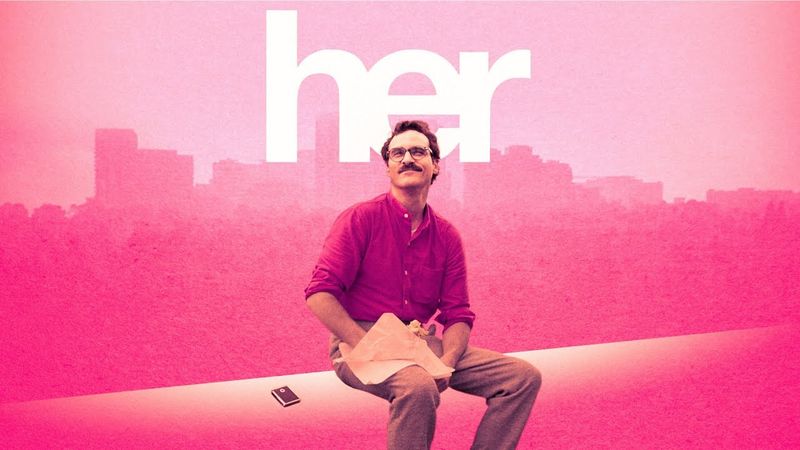
Download information and video details for Her - Building a Beautiful Future
Uploader:
kaptainkristianPublished at:
10/3/2017Views:
631.3KDescription:
A quick look at the techniques used to craft Her's optimistic vision of the future. Buy a shirt at Support this channel at Follow me at Music: Flamingosis - Another Time Her OST - Photograph
Video Transcription
There's a cynicism that seeped its way into the majority of modern science fiction.
Our futures have become dystopian, apocalyptic, totalitarian, and not much else.
That sense of optimism that's so integral to the genre is rare to find these days, which is why Spike Jonze's portrayal of a brighter future in his 2013 sci-fi love story, Her, was so refreshing.
It brought a humanity and a warmth back to technology, and depicted a time not too distant from our own that's worth aspiring to.
And one of the driving forces behind this lighter vision of the future was production designer K.K.
Barrett.
And if you're not familiar with the role of a production designer, they're essentially the head of the various departments that are all responsible for helping to define a uniform visual aesthetic for the film.
K.K.
has worked on a number of Spike Jonze projects, as well as Sofia Coppola's Lost in Translation, which is another link that makes that film such a great companion piece to her.
And his approach to capturing Tokyo's vast technological playground in that film was the same when designing this futuristic Los Angeles.
He said it was all about choosing the right fragments of this massive available palette to represent cacophony off-screen.
A visual theme inspired by Japanese photographer Rinko Kawauchi, whose images illustrate everyday life through these quiet slivers of a much larger narrative, with the goal being to build a future that's rich and distinct that still leaves much to the imagination.
You give the world a parallel story of its own that informs the characters as much as the dialogue, conveying the bigger picture in as little as five or six set pieces.
And to achieve that same sense of scale of Lost in Translation's urban landscapes, they took LA's modest, parabolic skyline and augmented it with CG composites of Shanghainese skyscrapers, creating an amalgamation of downtown Los Angeles and Shanghai's hypermodern Pudong district, where the majority of her was filmed.
And collaging these two cities via visual effects allowed the LA exteriors to match the density of the footage shot in Shanghai.
So, in montage, we can cut from the Lujiazui Pedestrian Bridge in Shanghai, to this shot outside the Disney Concert Hall in LA, to this Shanghai-LA hybrid composite skyline, to this CG-747 art installation outside the Pacific Design Center, all without breaking the illusion that this is one, single, seamless, sprawling future metropolis.
But not all the city was manipulated with VFX.
Both Theodore and Amy's homes, which are just redressed versions of the same apartment filmed on location at the Watermark Tower, have windows facing northeastward into LA's financial district.
And it's an honest view of the city that just appears more dense than it actually is due to the overlapping nature of those few buildings.
and the decision was made to forgo green screen windows so that cinematographer Hoytevon Hoytema could install large mirrors on the helicopter platforms of the adjacent buildings to bounce back sunlight into the apartment, giving it a much warmer, more naturalistic quality than what could have been done on an isolated set.
And her does away with all the cold, monochromatic tones typically associated with the future in favor of a Jamba Juice-inspired aesthetic, with blue tones being very sparse and usually a soft, desaturated shade as you can see here at the beach or here at Catalina Island, with the colors of the sky and the ocean being completely washed out.
Even light emitted from computer monitors and phones is much warmer and more inviting than what's commonly used in film.
And there's a textural property to the technology of her that you don't often see in sci-fi.
With its paper and cloth and wood and glass, pastels and incandescent bulbs, technology's advanced to the point where it no longer needs to prove its sophistication in its design.
With cell phones looking less like sleek Apple products and more like a cigarette case or a business card holder from the 20s.
The computers, which are made up of wood and canvas with no mouse or keyboard,
are more akin to a framed piece of artwork than a window into digital entertainment.
Advertising is textless, brandless, and visually subjective.
Life exists on elevated walkways, outside of billboards and traffic, or any cars for that matter.
It's a simpler future, and that's also reflected in the costume design, especially with Theodore's wardrobe.
With its absence of denim and collars, belts, ties, and baseball caps, it's a subtle evolution of fashion that draws more from the past, as fashion trends often do.
And that's what I love so much about her.
Rather than trying to forecast innovation or technological progress, it draws from the past to be more relatable in the present.
A vintage quality that makes you feel almost nostalgic for the future.
It is very important to us not to celebrate design advancement by looking at technological items that date a film, date a story, nor have it be about that.
It was about characters.
The film is about the human experience in our relationship with technology, not about what the technology is or what it does.
We're too caught up in how our world will change for the worst, rather than how we will stay the same.
Her gives us a glimpse at a lighthearted, more hopeful future.
where characters are free to resolve their interpersonal conflicts and experience life without being oppressed by those dystopian or apocalyptic or totalitarian environments.
Which is why 10, 20, or even 50 years from now, Her won't look like a dated vision of the future, just a charming alternate reality where people cleaned up their lives and finally got their shit together.
And if you want to learn more about some of the filmmaking techniques discussed in this video, you can check out this week's sponsor, Skillshare.
Skillshare is an online learning community with over 17,000 classes in design, cinematography, editing, and so much more.
And with a premium membership, you can get unlimited access to these high-quality classes taught by actual experts working in those fields, all for less than $10 a month with an annual subscription, making it one of the most affordable learning platforms on the market.
And the first 500 people to sign up using the link in the description below will get their first two months absolutely free.
So if you want to learn something new, improve the skills you have, and unlock opportunities doing the work you love, head on over to skl.sh slash CaptainChristian and get started today.
Similar videos: Building a Beautiful Future
She has a bright future behind her #rizz #pickupline #rodeodrive

STELLA EARNS HER ENCHANTIX - 4K REMASTERED | WINX CLUB - SEASON 3

...yet she loves me (Touhou Short Comic Dub)
Просто так • Кристина Ашмарина •

ПРОБЛЕМЫ ИГРОВОЙ ИНДУСТРИИ