
How Short Term Thinking Won

Download information and video details for How Short Term Thinking Won
Uploader:
How Money WorksPublished at:
11/30/2025Views:
60.3KDescription:
Video Transcription
If you ever feel like the world has become incredibly focused on short-term results, that's probably not your imagination.
People are living paycheck to paycheck, companies are being managed earnings report to earnings report, financial markets are waiting for the next interest rate movement, political decisions are being made for the next election cycle, entire industries have been created just to be sold to the next biggest investor, and all of this is being held together by loans that are being written to last just long enough to be bundled up into fixed income assets.
This month, people were losing their minds, because for the first time since it was introduced, the Bureau of Labor Statistics did not publish its monthly jobs report because the household survey data could not be collected during the government shutdown.
Now, this may be a sign of bigger issues under the surface, but the most immediate problem right now is that the Fed can't set interest rates without completely up-to-date information.
These decisions should be made on long-term strategic plans, not noisy, and let's be honest, questionable month-to-month data.
But a few things have changed, which for a lot of markets means that bad news is good news.
A lot of people are actually hoping for more unemployment, because job losses force the Fed to lower interest rates, and lower interest rates means cheaper borrowing, and cheaper borrowing means debt-fueled speculation can go on a little longer.
Now, if you think this is all a little bit dumb, that's because it is.
But at the center of all of these issues, there is the question of, is our entire economy just surviving quarter to quarter?
Florida's buy-now-pay-later interest-free loan model may be backfiring.
The financial services company net loss more than doubled in the first quarter.
It's not making any money.
In fact, it's burning cash.
Cisco has officially completed its $28 billion acquisition of Splunk.
Record revenue in the third quarter, $57 billion.
Then eventually we'll find a way to benefit from that.
Working a full-time job, it's not enough.
I work full-time.
He works more than full-time.
I don't know what to do.
Last month, a report by Goldman Sachs found that more people than ever were living paycheck to paycheck.
Now, I know that by itself, this is a trend that is not that surprising anymore.
But it goes beyond this.
More people than ever weren't even making it that far.
Living paycheck to paycheck is a luxury compared to the new reality of living wage advance to credit card bill.
It's no secret that prices for everyday goods and services have increased by a lot in the last five years, but prices are a function of supply and demand, and demand itself is a function of what people are willing and able to purchase.
Prices have only been able to stay this high because, for now at least, people have been able to afford it, but that ability has increasingly come from new and creative forms of debt.
It's also no secret that the hottest new form of consumer debt bridging that gap is buy-now-pay-later services.
Now, these loans are technically not counted as official consumer debt for some reason, so the exact extent of their lending is hard to get precise data on.
However, by all estimates, it's still in the hundreds of billions of dollars within America alone.
Now, I am not bringing this up just to rant about inflation, consumers being stretched, or predatory buy now pay later systems.
I have done that in plenty of separate videos.
This industry is just one example of a bigger trend.
The point here is that none of these buy now pay later companies make any money either.
Most of them are still burning billions of dollars of investor money every year to gain market share in a market that hasn't actually made any money yet.
So we have households who can't afford to pay upfront for basic purchases being financed by an industry that can't afford to operate beyond the next quarter without being supported by investor dollars.
Investor dollars that are primarily coming from venture capital and private equity firms, who themselves are financed by a complicated network of debt and internal dealing, all of which is now showing questionable real returns.
Now, bad businesses come and go all the time.
That's the nature of capitalism.
what is different today more than ever before is that everybody involved in this string of failure is still making life-changing amounts of money founders and early employees are cashing out on their stock private equity managers are making enormous bonuses investors are enjoying returns that look good on paper and regular people get to finance the burrito along this chain nobody is actually making any money but everybody is getting paid
Even if this whole industry implodes tomorrow, most of the insiders could walk away having made enough money that they will never need to work again.
Taking short-term rewards at the expense of long-term objectives is just human nature.
Our monkey brains need a lot of discipline to stop us from enjoying a little treat right now so that we can be in shape for summer six months away.
In the past, these trade-offs were true in business as well.
Long-term diligent saving, investing, and operating would be rewarded over short-term cash grabs.
The problem is that we have allowed our market system to reward some people in the short term and place long-term consequences somewhere else entirely.
Over the last four decades, there have been three distinct changes that have slowly altered economic incentives to favor surviving to the next quarter above all else.
The worst thing about all of this, though, is just how easy it would be to change these incentives back.
So it's time to learn how many works to find out if all of this is just the new way business gets done, or if next quarter will eventually arrive.
This week's video is sponsored by Vanta.
Customer trust can truly make or break your business, especially as you grow and things like security and compliance start getting more complex.
That's where Vanta comes in.
Vanta is the leading trust management platform that helps businesses earn and prove their trust.
Over 12,000 companies, including fast-growing startups like Cursor and enterprises like Snowflake, rely on Vanta to build, maintain, and demonstrate trust in a way that's real-time and transparent.
As your business expands, your security and compliance tools can turn into chaos, and chaos isn't a security strategy.
Vanta acts as your always-on security expert that scales right along with you.
It automates compliance for standards like SOC 2 and ISO 27001, continuously monitors your controls, and provides a single source of truth for compliance and risk.
Vanta fits seamlessly into your existing workflows so you can keep focusing on growing a company your customers can trust.
My audience can get a special offer of $1,000 off Vanta by using the QR code on screen or clicking the link in the description.
Now maybe you think I have just picked a particularly egregious example of the buy now pay later industry, but this is just one symptom of a much larger and much more important trend.
Everybody is just desperately trying to get theirs and get out, and you only need to look at the data to see the first reason why this has become the default business mentality.
This is a chart of historic dividend yields from the S&P 500.
There have been highs and lows, but for most of the market's history, it paid out roughly 4% to 5% and almost never less than 3%.
This meant if you held a million-dollar portfolio with a mix of all of these companies, you could expect to be paid between $40,000 and $50,000 a year in dividends.
Today, after a constant decades-long decline, that number is at an all-time low, approaching just 1%.
In plain English, what this means is that the only way that people are realistically getting money out of the stock market is by selling their stocks.
Now, by itself, there isn't anything wrong with capital gains returns over dividend returns from an investing point of view.
Both of my good friends Richard from The Plain Bagel and Ben Felix have done great deep dives on this.
What's more is that individually, the tax rate on capital gains are lower than tax rates on earned income like dividends.
so maybe this could just be written off as businesses looking out for their own shareholders but all of these small incentives have created some questionable outcomes now i know you are probably already uttering the words stock buybacks under your breath right now and you would be absolutely right if a company has made a lot of money at the end of the year in the past it only really had two options the first was to just pay it out to their shareholders through a dividend
The second was to put that money back into the business to improve operations, work on R&D, or maybe even pay their employees a little bit better.
Shareholders typically actually liked when companies did this, because theoretically, this reinvestment would grow the business or make it more dominant in its market, making their shares more valuable.
But then in 1982, a law was changed that let companies cut out the middleman of reinvesting their cash into their business's fundamentals and instead let them just directly invest their cash right into their business's equity.
Company management could take company money and use it to buy the company's own stock, which boosted the price.
Now, by looking at this chart, you can see where that law was passed right here.
Again, this video is not to pick on stock buybacks in particular, but it is instead to show how small rule changes can fundamentally alter how our markets operate.
Companies taking their money and buying back stock may not seem any different to companies taking their money and paying out dividends, but it means that to actually get money out of shares, people eventually need to sell them.
Now, companies are theoretically only supposed to buy back their own shares when they think that they are undervalued in the market.
But company management has figured out this weird trick where they can just always say that their company is undervalued and use these buybacks to boost the share price.
And since their compensation is also usually tied to stock performance, it's a win-win.
Today, this has created a situation that would be almost funny if it wasn't so concerning.
A record number of CEOs are claiming that their company stock is undervalued, so they are doing big share buybacks.
But then at the same time, they are personally cashing out records amount of their own stock at a price that they themselves have claimed is undervalued.
For a lot of senior executives with performance-based pay, it simply makes sense to put a few good months on the books and liquidate as quickly as possible, because if they can do that, they will never need to work again.
Back when CEO pay was more modest and not as performance-based, the goal was instead to hold on to an executive job for as long as possible.
The pay was still really good, but you couldn't live off the bonus that came from one good quarter.
So if you wanted to become truly wealthy, you needed to spend at least a decade in the top job, and to do that, you needed to make sure your company would run smoothly for that decade.
Today, pay for top executives is so high that after one or two good years, they can cash out their equity holdings and not really need the job anymore.
Ironically, when they do sell their shares, the person they are most likely selling to is their own company.
Stock buybacks have become so widespread and been driven to such an extreme level that companies buying their own stock now accounts for basically all net buying activity in the market, and then some.
According to the Federal Reserve's Z1 Financial Accounts, since the year 2000, households, foreign investors, and pension funds have on net actually sold about $300 billion more in stock than they have purchased.
inflow in capital has come exclusively from the 5.5 trillion dollars in net purchases made by the corporations themselves this whole game has starved genuine reinvestment into business activity because it's far more rewarding to just directly influence their own stock price now again eventually this will cause problems especially amongst the growing list of companies that have taken on debt to buy their own stock but most shareholders simply don't care about the long term because they are now holding on to their stock for less than a year on average
This trend has been accelerated a little bit by low-cost brokerages like Robinhood, but those people don't actually own enough of the market to have an influence this significant.
The real driver of this is that large stockholders need to liquidate their positions to generate any kind of cash flow.
Over the last five years in particular, we have witnessed a strange trend develop from this little game.
People aren't making profit by running profitable businesses.
They are making a profit by flipping assets that could eventually one day be profitable.
A big determinant of how much these businesses are worth is interest rates.
Cheap debt means borrowing to invest is easier and it means that cash flow becomes less important in the short term.
What this has done has turned bad news into good news.
In the past, something like bad job numbers would spook the market because if people don't have jobs, they can't buy stuff from businesses, and if businesses can't sell their stuff, they won't be profitable.
But that way of thinking is very outdated in today's market.
Today, bad job numbers means that the Fed might be forced to lower interest rates, which is way better for asset prices than something silly like genuine underlying business demand.
Now, it's easy to just point at these companies and their executives and conclude that they are everything wrong with the world, or at the very least, the economy.
But that's also not very productive.
If we are being really honest with ourselves, if you or I got given a job as a Fortune 500 CEO and we could secure a generational fortune by doing some share buybacks, we would probably do it.
I mean, I know I would.
Feel free to pretend you are better than me though in the comment section below.
The point is that all of this was simply the result of a few changes in rewards and regulations.
People at all levels are overwhelmingly going to act in ways that conform to these guidelines.
Yes, some groups and industries are really testing the limits of what is legal at the moment, but that's a separate issue.
The bigger problem is that everything covered in this video so far is perfectly legal.
Yes, we can absolutely do a better job of punishing people who fall outside these regulations when they do happen.
But we also should not rely on people forgoing obvious personal rewards just because it's the right thing to do for society at large.
Now, it probably doesn't help that the people making regulations and rules are very much at the f*** you got mine stage of their life at the moment.
But go and watch this video next to find out how this short-term thinking has moved well beyond financial markets.
And don't forget to like and subscribe to keep on learning how money works.
Similar videos: How Short Term Thinking Won
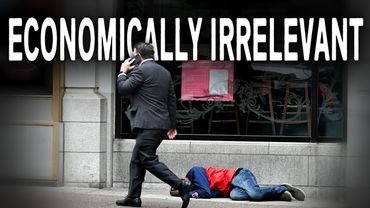
Why You Don't Matter Anymore ........... (Economically Speaking)

How To Make A New Sequence In Premiere Pro

Capricorn "The Wait Is Over! Everything Starts Moving Fast Now!" November 24th - 30th Tarot

ASMR | Up close MOUTH SOUNDS and hand movements

ASMR | The only BRAIN MASSAGE you’ll ever need!