
[HSK3~4] How to Address People in China (在中国怎么称呼别人?) | Chinese Podcast
![[HSK3~4] How to Address People in China (在中国怎么称呼别人?) | Chinese Podcast](https://videodownloadbot.com/images/video/e29/mumyddnsl8spjqzd18q62d0or2dzegak_standard.jpeg)
Download information and video details for [HSK3~4] How to Address People in China (在中国怎么称呼别人?) | Chinese Podcast
Uploader:
Nihao Buddy! -Chinese Podcast-Published at:
10/10/2025Views:
41Description:
🎉 Master the Unspoken Rules: Chinese "Context & Appropriateness"! TPO Communication Skills for Work & Life Unpacked! 🎉 Learner Martin always feels his Chinese is either "too stiff" or "too casual." Don't worry! In this episode, Teacher Wang Fang will give you the single best tool to "cure" that communication anxiety! 📚 All Your "Chinese Address & Expression" Headaches Solved in One Go! In China, communication is all about "Fen Cun Gan"—the sense of appropriateness (think of it like knowing where the line is). You have to nail the wording and expressions depending on the occasion and the person you're speaking to! From polite, professional requests in a business setting, to genuine, native-sounding daily conversation, and even those "little words" that convey subtle emotions—we’ll teach you step-by-step how to make your Chinese more accurate, more natural, and how to build rapport from your very first word! After this episode, you’ll be able to: Talk cooperation with clients without fear of using the wrong words and sounding unprofessional! Chat with colleagues and store staff, making your Chinese instantly friendly and natural! Know how to refuse or express yourself gently—ditch the awkward “恐怕 (kǒngpà - perhaps/afraid)” and “不行 (bùxíng - can’t)”, and use more comfortable, nuanced phrasing! 🍜 This is the episode that will level up your Chinese expression! Through practical dialogues between Wang Fang and Martin, we'll help you master the most authentic expressions and language techniques: Formal Promises and Requests How to use "〜之前 (zhīqián - before...)" and "尽快处理 (jǐnkuài chǔlǐ - deal with as quickly as possible)" to showcase your responsibility and professionalism. High-Frequency Daily Help & Ordering How to differentiate between asking a colleague for help with "麻烦你 (máfan nǐ - to trouble you)" and "帮个忙 (bāng gè máng - do me a favor)." The most natural way to order at a restaurant: "给我来(份/瓶/个)(gěi wǒ lái... - Could I get a [portion/bottle/unit] of...)." The Right Way to Use the Courtesy Word "请 (qǐng - please)" Distinguish between the formal "请允许我... (qǐng yǔnxǔ wǒ... - Please allow me to...)" and the everyday "请坐/请喝茶 (qǐng zuò/qǐng hē chá - Please sit/have some tea)." The "Temperature" of Negation Finally, understand the difference between “不行 (bùxíng - inability/prohibition)”, “不能 (bùnéng - not allowed/no capacity)”, and “不可以 (bù kěyǐ - regulation/principled prohibition).” Particles That Add "Human Touch" to Your Chinese Master the subtle power of "吧 (ba - suggestion/discussion)," "呀 (ya - question/exclamation)," and "呢 (ne - reminder/emphasis)" to make your Chinese sound truly native. The "Soul Adverbs" of Spoken Chinese Help you avoid the workplace trap of "恐怕 (kǒngpà - afraid that...)" and learn to use high-frequency words like "不见得 (bùjiàndé - not necessarily)" and "反正 (fǎnzhèng - in any case/anyway)." Advanced Grammar Structure Fast Track Emphasis structures like "连...都/也... (lián... dōu/yě... - even... also/too...)" and offering suggestions with "不如 (bùrú - why don't we...)." ✁┈┈┈┈┈┈┈┈┈┈┈┈┈┈┈┈ 🎧 Time Table (Jump to the topics you need!) 00:07 - Today’s Topic: The frustrating complexity of Chinese titles! 00:26 - Scenario 1: Restaurants. Avoid 「小姐」! What are the best alternatives? (e.g., 「服务员」/「美女」/「阿姨」) 01:17 - Scenario 2: Business. Combining titles and last names (e.g., 「经理」/「李总」) 01:39 - The Universal Title! Why can you call almost anyone 「老师」 (Teacher)? 02:00 - Advanced Tip: How to address a client's parents (e.g., 「叔叔」/「阿姨」) 02:41 - Street Talk: Showing warmth to elders (e.g., 「大哥」/「大爷」/「大姐」) 03:26 - Professional Honorifics: Why is a driver called 「师傅」? 03:52 - Familiar Titles: The difference and usage of 「小王」 and 「老李」 04:55 - Culture Deep Dive: 「老」 doesn't just mean 'old'—it can mean 'respect'! 05:39 - Spousal Titles: Distinguishing between 「爱人」「老公」「老婆」 06:53 - Specialist Titles: Addressing doctors and lawyers (e.g., 「大夫」/「王律师」) 08:00 - Wrap-up: Why "入乡随俗" (When in Rome...) is so crucial! 09:09 - Final Summary and Next Steps ✁┈┈┈┈┈┈┈┈┈┈┈┈┈┈┈┈ 💡 Don't Forget to Subscribe! 👉 💬 Share your hilarious stories about mixing up formal/casual Chinese in the comments below! 🔖 #ChineseLearning #PracticalChinese #ChineseConversation #ChineseCulture #AddressingEtiquette #BusinessChinese #HSK
Similar videos: How to Address People in China

习近平大打?中打?小打?台海风云突变|Xi Jinping: Major Strike? Moderate Strike? Minor Strike?
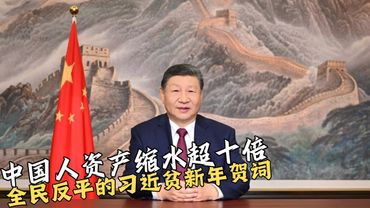
中国人资产缩水超GDP十倍|全民返平的习近贫新年贺词|Xi Jinping’s “Common Return to Poverty” in His New Year Address

天堂花园 Garden in Heaven 艾晓明 胡杰 Ai Xiaoming, Hu Jie (2017) (English subtitles)

一次非法彩票騙局,8個心理陷阱,這你頂得了?
![【習語錄】習近平專屬歌曲「別看你今天鬧得歡,小心今後拉清單」-閩南狼PYC(陳柏源)[Official Music Video]@Enzobeatstw](https://videodownloadbot.com/images/video/5e8/1kgjwff9aizw6zfk6m4etrzbbkzldgdq_medium.jpeg)
【習語錄】習近平專屬歌曲「別看你今天鬧得歡,小心今後拉清單」-閩南狼PYC(陳柏源)[Official Music Video]@Enzobeatstw