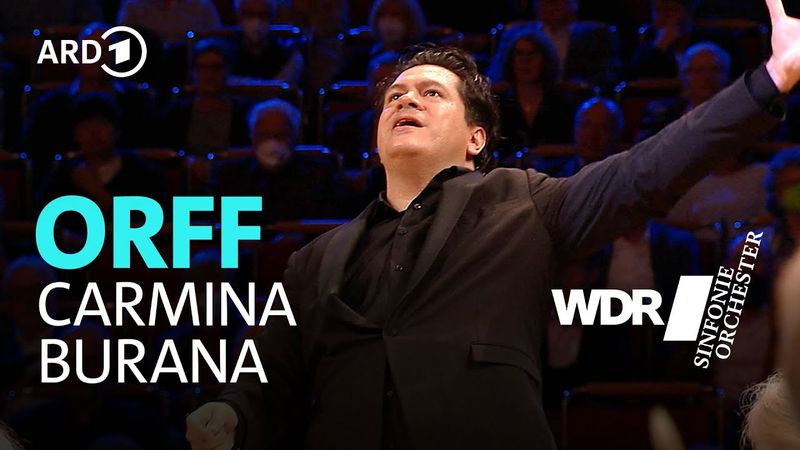
Orff - Carmina Burana | Cristian Măcelaru | WDR Symphony Orchestra | WDR Radio Choir

Orff - Carmina Burana | Cristian Măcelaru | WDR Symphony Orchestra | WDR Radio Choir01:00:56

Download information and video details for Orff - Carmina Burana | Cristian Măcelaru | WDR Symphony Orchestra | WDR Radio Choir
Uploader:

ARD Klassik

Published at:

11/24/2022

Views:

3.9M

Description:

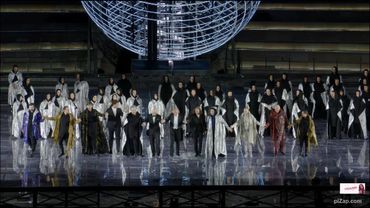
Carmina Burana, performed by the WDR Symphony Orchestra under Cristian Măcelaru for its 75th anniversary concert on Oct. 29, 2022 at the Kölner Philharmonie. Soloists were Sarah Aristidou, Wolfgang Ablinger‑Sperrhacke and Markus Werba, with choral parts sung by the WDR Rundfunkchor, the NDR Vokalensemble and the boys and girls of the Kölner Dommusik. 00:00:00 No. 1: O Fortuna 00:02:26 No. 2: O Fortune plango vulnera I. Primo vere 00:05:13 No. 3: Veris leta facies 00:09:55 No. 4: Omnia sol temperat 00:12:04 No. 5: Ecce gratum | I. Uf dem anger 00:14:53 No. 6: Dance 00:16:34 No. 7: Floret silva 00:19:58 No. 8: Chramer, gip die varwe mir 00:23:38 No. 9: Reie, Swaz hie gat umbe, Chume, chum, geselle min, Swaz hie gat umbe 00:28:43 No. 10: Were diu werlt alle min II. In taberna 00:29:34 No. 11: Estuans interius 00:31:47 No. 12: Olim lacus colueram 00:35:03 No. 13: Ego sum abbas 00:36:34 No. 14: In taberna quando sumus III. courses d'amours 00:39:43 No. 15: Amor volat undique 00:43:22 No. 16: Dies, nox et omnia 00:45:26 No. 17: Stetit puella 00:47:16 No. 18: Circa mea pectora 00:49:18 No. 19: Si puer cum puellula 00:50:09 No. 20: Veni, veni, venias 00:51:06 No. 21: In trutina 00:53:21 No. 22: Tempus et iocundum 00:55:42 No. 23: Dulcissime III. blanziflor et helena 00:56:24 No. 24: Ave formosissima Fortuna Imperatrix Mundi 00:58:02 No. 25: O Fortuna If you want to experience all the riotous power, rhythmic drive and vibrant physicality of Orff's "Carmina Burana," you should be sitting in the middle of the orchestra. Then you can feel firsthand the archaic violence of the half‑cheering, half‑despairing choral invocation of the capricious goddess of fortune Fortuna, sitting in the middle of the roughest binge, where a roasted swan sings its tortured melodies, experiences the mating stress of the young people in the village square, driven to excess by two pianos and drums, percussion, and the minne of the high couple. All this was incredibly cleverly composed by Carl Orff in a new simplicity, influenced by folk music and current dance music, but not having much to do with the new music of the time, with Schoenberg or Stravinsky. Perhaps this was the reason why the Frankfurt premiere of the "Carmina Burana" on June 8, 1937, although criticized by some papers because of its music and permissiveness of content, but in the Nazi state the work triumphant march through the concert halls – and even after the war hardly lost its popularity after the war. After 1945, the composer claimed that with the "Carmina Burana" he wanted to compose a work that was "not faithful to the line" – for which the musical modernities and the emphasis on an uncertain fate (instead of ideological certainty) would speak for this. On the other hand, the society that Orff depicts in his "secular songs" is down‑to‑earth and popular – much more so than in his late tragedies than in his late tragedies based on ancient Greek models. Orff had discovered his source in an antiquarian bookstore catalog: the first complete edition of songs ("Carmina") and dramas, mostly written in Middle Latin, from the former library of the Benediktbeuern monastery (to which the adjective "Burana" refers). The question of the genre of the "Carmina Burana" remains interesting; today they are mostly performed in concert, but they have also been seen on stage or in film (by opera director Jean‑Pierre Ponnelle). In any case, recently discovered sketches by Orff prove that he imagined the "magical images" in the subtitle as projections – perhaps a suggestion to reinterpret the "Carmina Burana" once with modern video technology. (Michael Struck‑Schloen)