
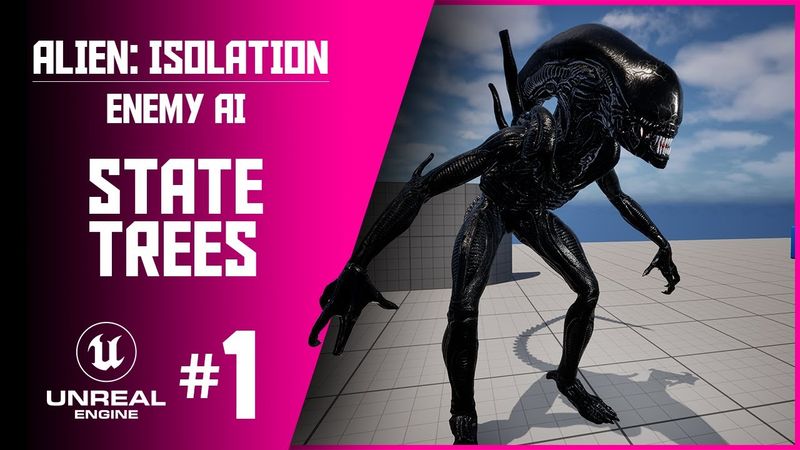
Part 1: Introduction | "Alien: Isolation" Smart AI in UE5

Download information and video details for Part 1: Introduction | "Alien: Isolation" Smart AI in UE5
Uploader:
Metaxis GamesPublished at:
5/31/2025Views:
16.9KDescription:
Unreal Engine 5 State Trees - "Alien: Isolation" Smart AI - Part 1: Introduction Overview: In this brand new series we'll be deep-diving into Unreal Engine 5's State Tree system, and building a smart enemy AI inspired by the Xenomorph from 'Alien: Isolation.' Support me via my ' Buy Me A Coffee' link : Other Parts in this Series: Complete Playlist: Part 1 - Introduction : Part 2 - The OpenCage Mod Toolkit: Part 3 - Complete Beginner's Guide to State Trees: Part 4 - The AI Controller and Basic NPC Behaviour: Part 5 - Sight Perception And Attack Behaviour: Part 6 - Code Cleanup and Improving State Tree Performance: Part 7 - Prediction Sense: Part 8 - Multiple Vision Cones in UE5: Part 9 - Set Heightened Senses and Look At Player Animation: Part 10 - Adding Gameplay Environment, First Person Perspective, Skeletal Mesh & Animations: ------------------------------------------------------------ Detailed Video Description: In this Unreal Engine tutorial series, we'll be creating a smart Enemy AI system inspired by the Xenomorph AI from alien isolation. To create this enemy AI system, we'll be using Unreal Engine 5’s state trees and blueprints. The AI of alien isolation is generally celebrated as one of the best implementations of an enemy AI system ever created in video games. Its complexity, unpredictability, and its uncanny intelligence makes it feel like you're actively being hunted by a malevolent predator. The architecture of the xenomorph's AI is beautifully constructed, but although it is complex, it relies on certain basic fundamental systems that are easily accessible in game engines like Unreal Engine 5. For instance, the Xenomorph AI relies on behaviour trees, branching pathways of decisions determined by changing conditions in the game environment. Unreal Engine 5 has behaviour tree functionality built into the engine as well as the newer and more flexible State Trees, which we'll be using in this tutorial series. But before we discuss the differences between behaviour trees and state trees in unreal, it will help to understand how behaviour trees function in alien isolation. A basic example of a behaviour tree is where an enemy NPC performs an action based on whether or not it has seen the player. If the player hasn't entered the enemy's line of sight, the decision pathway will branch into behaviour (A). And when the player does enter the enemy's light of sight, the decision pathway will branch into behaviour (B); attack the player. This basic decision-making process forms the underlying design of the xenomorph’s behaviour tree, with the main difference being its complexity and the many different branches of decisions based on changing conditions in the environment. And thanks to the free OpenCage Mod toolkit, which we'll discuss shortly, we can actually inspect and investigate the xenomorph’s behaviour tree for ourselves. At first glance, the complex branching system of logic pathways in the xenomorph’s behaviour tree may seem overwhelming. But on closer inspection, the system is governed by the same simple rules. If the condition is true, perform action A. If the condition is not true, perform action B, or proceed to the next condition check. This may be an oversimplification, but fundamentally this is how the Xenomorph AI operates. There's no magic behind it, simply an expertly implemented system of condition checks resulting in the appearance of an intelligent threat. Now Unreal Engine 5 has an inbuilt behaviour tree system. So why is this tutorial series going to focus on state trees instead of behaviour trees? First of all, what are state trees in Unreal Engine 5? State trees are a newer, more versatile alternative to behaviour trees. While behaviour trees organise AI decisions in a hierarchical tree structure, state trees take a different approach by organising AI behaviours into distinct states that an entity can transition between. Think of state trees as being similar to a state machine like what you might have seen in Unreal Engine’s animation blueprints, but with more flexibility and power. With state trees, we have all the benefits of behaviour trees, but with greater flexibility and the ability to transition from one state to any other state based on defined rules. With the upcoming release of Unreal Engine 5.6, Epic Games have stated that they will be encouraging developers to use state trees instead of behaviour trees for enemy AI implementations, and NPC's included in the new game templates will all be using state trees to drive their behavior.
Similar videos: Introduction

Part 2: The OpenCage Mod Toolkit | "Alien: Isolation" Smart AI in UE5
Part 8: Multiple Vision Cones in UE5 | "Alien: Isolation" Smart AI in UE5
Part 6 - Code Cleanup and Improving State Tree Performance | "Alien: Isolation" Smart AI in UE5
Part 7: Prediction Sense | "Alien: Isolation" Smart AI in UE5

Motion Brand Strategy (part 2) | Lesson 3 creating a moveBoard for motion system