Part 3 - History of the Kashmir Conflict

Download information and video details for Part 3 - History of the Kashmir Conflict
Uploader:
Hindu American FoundationPublished at:
9/18/2019Views:
2.9KDescription:
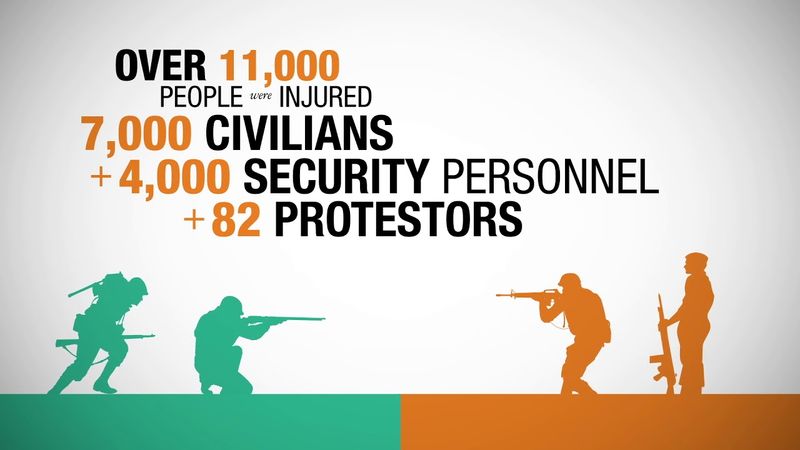
VIDEO TRANSCRIPT: 2016 Unrest Returns to Kashmir More recent unrest in the Kashmir Valley was sparked by the death of Hizbul Mujahideen commander Burhan Wani. Wani was killed in a gunbattle with Indian security forces in July of 2016. In the weeks following, over 11,000 people were injured including 7000 civilians and 4000 security personnel. 82 people were killed in clashes between protesters, led by separatist groups, and Indian security forces. Hizbul Mujahideen has since been designated as a terrorist organization by the European Union and India. During the violence, mobs also attacked Pandit migrant camps in six cities in the Valley. In Pakistan Occupied Kashmir, Kashmiris held protests against alleged human rights violations by Pakistan’s military and Inter-Services Intelligence, known as the ISI —including accusations of extrajudicial killings of at least 100 Kashmiri activists in the previous two years, rigged elections, and repression of Kashmiri political activists. These concerns were echoed by the US State Department. 2019 Pulwama and the Abrogation of Articles 370/35A On February 14, 2019, a suicide bombing by the Pakistan-sponsored terrorist group, Jaish-e-Mohammed killed 41 Indian security officers in the Kashmiri town of Pulwama, escalating tensions between India and Pakistan. India launched retaliatory airstrikes on a Jaish-e-Mohammed terror camp in Pakistan and the UN Security Council designated Jaish-e-Mohammed founder Masood Azhar as an international terrorist. In August, the Indian government legally and democratically abrogated Articles 370 and 35A of India’s Constitution, temporary provisions that conferred special status on the state of Jammu and Kashmir. The move sought to better integrate the residents of Jammu, Kashmir, and Ladakh into the rest of India and afford them, regardless of gender, sexual orientation, religious or socio-economic background, equal protection under the law and better educational and economic opportunities. It is also expected to create conditions for the rehabilitation and resettlement of Kashmiri Pandits in the Kashmir Valley. At the same time, Jammu and Kashmir was bifurcated into two new Union Territories: one for Jammu and Kashmir, and one for Ladakh. Religious and political leaders in Ladakh had long called for separate UT status for Ladakh and complained of being socially and economically marginalized by state policies that favored the Kashmir Valley. The Only Way to Peace Peace can only prevail in Kashmir when Pakistan ends the use of terror networks by its military-intelligence complex against India. Political and religious leaders in the former state of Jammu & Kashmir must embrace secularism and pluralism and work for the benefit of all residents of Jammu & Kashmir and Ladakh. The Government of India needs to restore for the residents of Jammu, Kashmir, and Ladakh equal protection under the law and all of the rights and privileges other Indian citizens enjoy. And lastly, the Government of India must ensure the safe return and equal rights of the Valley’s indigenous, Kashmiri Pandit population, who were ethnically cleansed and have been living as refugees in their own country for 30 years. - - - Facebook Twitter
Similar videos: History of the Kashmir Conflict
Murshidabad Violence
Pahalgam Terror Attack: Tourists Shot After Being Asked If They Were Hindu | Jist
Golden Temple Drone Threat? | Army vs SGPC | Truth Behind Operation Sindoor

Civil Defence mock drills conducted across India
Operation Sindoor: Were India and Pakistan Close To A Nuclear War | Tushar Gupta