Pink Floyd’s Boldest Gamble | Music Documentary | Full Movie | Pink Floyd: Atom Heart Mother
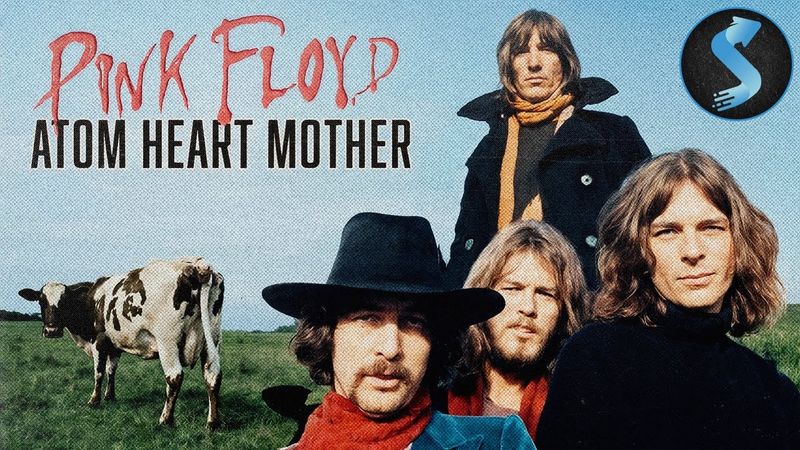
Download information and video details for Pink Floyd’s Boldest Gamble | Music Documentary | Full Movie | Pink Floyd: Atom Heart Mother
Uploader:
THE STREAM - Movies and MorePublished at:
6/11/2025Views:
418Description:
Video Transcription
Well, if I first may turn to Roger, I want to ask one fundamental question of which our televiewers may not be quite aware, the significance of it, because they didn't hear all of it.
Why has it all got to be so terribly loud?
Well, I don't guess it has to be, but I mean, that's the way we like it.
And we didn't grow up with a string quartet, and I guess that could be one of the reasons why it is now.
The way the act's developed in the last six months has been influenced rather a lot by the fact that we've played in ballrooms, necessarily, because, you know, this is obviously the first market.
And I think concerts have given us a chance to realize that maybe the music we play isn't directed
at dancing necessarily like normal pop groups.
The Syd Barrett era has become a legend in rock history, but it was built on some pretty slender foundations.
A couple of hit singles and quirky psychedelic album Piper at the Gates of Dawn.
And that's it.
In recording terms, it was all over almost before it began.
1967 was the year of the Barrett-led Pink Floyd.
They became the hippest, coolest band in London, on the London scene.
Everybody wanted to see them and hear them performing.
Because at that time, the whole British music scene was being infiltrated by the underground, which meant influences from the States, of course, and the West Coast of America.
And of course, 1967, which is when Pink Floyd finally flowered, became known as the Summer of Love, and that was when flower power ruled.
The whole club scene changed and people wore caftans, beads and bells and became overnight hippies.
By 1968, Sid was already out of the band and on his way to becoming a tragically misunderstood and mythologized figure.
Initially, it looked like Barrett would take the fledgling band's prospects with him.
Deprived of their charismatic lead singer, guitarist and principal writer, Pink Floyd were left to carry on against a background of skepticism.
people thought, which way are Pink Floyd going to go?
And the answer was that they could just go on forever, and they could extend the arrangements that they'd already started experimenting with to reach the point where, literally, they were painting sort of kind of broad landscapes of sound.
High on time Simple life High on time Simple life
With the arrival of David Gilmour, the band lurched more towards the experimental direction which had been buried under layers of English whimsical psychedelia on the first album.
The emphasis was now on sprawling avant-garde compositions like Set the Controls for the Heart of the Sun and The Sorcerer Full of Secrets.
The first Floyd album, that's also one of the secrets, was a thrill really.
I remember when we first played it at Melody Maker office and our first copy soon got worn out very quickly because Floyd were doing all these new interesting things, experimenting with sound effects.
They are the first band to totally explore stereo, the spectrum of stereo.
They use it like no one else has used it.
The only other band to use sound effects are actually The Beatles.
Everyone else would talk about it, but they actually used it.
And Floyd, with the next band on, to really use it, used the telephone, the dripping tap, the people walking through the room, all that sort of thing.
No one else used it in a rocking idiom.
Set the Controls is one of my favorite tracks from that era because it's really quite strange and it has a particular mood and that's one of the things they were always very good at getting and still are, you know, is creating a mood.
They're using quite mellow sounds.
You've got quite a mellow tom-tom sort of drum, and you've got the vibraphone, which is quite a mellow sort of smooth sound.
And I think those combined give that kind of a very hypnotic effect.
One of the things they were doing live was they were having the extraordinary lighting.
And so the whole thing was a visual experience as well.
And, you know, let's be honest about it, I think there was probably a little bit of LSD around in those days.
And so I think that's probably one of the reasons why these tracks worked for them.
I find that the whole period of Ama Gama, even the end of Sources, going into Atom Heart and Mother, a period of great transition.
And I think that the band are searching.
You can feel them moving.
They're moving away and they're changing.
certainly looked as if the 1970 model pink floyd had run out of ideas the only major new composition in the band's armory at the time was a sprawling jumble of ideas which the band had begun to play on stage under the title of the amazing pudding
Pudding was certainly the word for it.
The thing was a confused jumble of diverse ingredients and influences, almost totally lacking in melody and form.
The only hope, it seemed, was to draft in some outside help.
God, it's you.
Ron Giesin, G-E-S-I-N, don't get that wrong.
Composer.
It's just a, it's a kind of a playroom.
There's old and new here.
Or, and or, sound architect.
There's the old Fairlight computer down there, which is, some people say, just for holding open the door nowadays.
But it's useful for some things.
and or professional nutter.
One Gieson is a very, very good arranger and a very inventive arranger and one of the modern type arrangers.
That's what Pink Floyd needed was somebody who knew what they were doing, who could actually take their crazy ideas and actually bring them to life and get them down and actually blend them in with what they were doing.
He was a fine musician but very much an eccentric.
I remember going to see a performance and Ron Gieson came on first but in fact all that happened was a bunch of... the piece was called Ron Gieson's A Piece for Eight Microphones and he set up eight microphones on the stage and then went off and nothing happened for 15 minutes because that was... so it was an avant-garde piece for eight microphones.
This is ongoing stuff.
Yeah.
Sometimes I just do, you know, what I just did.
Playing.
This pattern.
This is pattern.
And then sometimes I write.
And sometimes I put it straight into the computer.
A lot of it's subconscious then?
Yeah.
Well, it's right.
Subconscious flow, I call it.
When I'm doing that, what I just did on the keys.
It's what you do.
Ron was a marvellous Scottish eccentric, a great musician.
He used to entertain people by playing the petrol can, I remember seeing him live in concerts.
In the great tradition of English eccentric performers, really.
This is 1928, Steinway.
A fine year for pianos.
But there was a lot of method in his madness.
He was a trained musician and recording engineer.
Loved experimenting with multi-tracking and tapes and played a very mean banjo, or ukulele perhaps I should call it.
Thank you.
So he was thinking in a very weird sort of way, but for him to be able to make his input into the track for it to work, he would have to have understood the way the band worked, and the way that they played, and what music they liked, and what they listened to, and what they were capable of doing, and vice versa.
They wouldn't, I would imagine, have got him involved unless he'd been party to their party, so to speak.
We were just friends and I think that they appreciated me for my individuality of thinking and deed doing.
This is the adjustable spanner collection.
They're interesting mechanisms that fascinate me.
And also the research side of me says there is no history of the development of adjustable spanners.
So I'm building one here.
I might then write the history.
Do you use them all?
No, of course not.
This is the joke.
The big joke is that you only ever need one adjustable spanner to use.
What happened in Atom Heart Mother was that
Because they were kind of exhausted because of commitments and demands by the manager and EMI records, they needed some other input.
So because I was friends with them all, I was asked to be that, to do that input or be that input, really.
The band felt they could say to Ron Gieson, well, try this, and he'd go, okay.
A lot of arrangers you say something like that to and go, well, you can't do that.
Well, I always get the impression with Ron Gieson, he didn't mind what they threw at him.
He'd have a go at it and try and make it work for them.
They had lots of little, or not so many actually, maybe five or six little sections that they had recorded at EMI Abbey Road of what I call a backing track.
And they had then stuck these together, as you do with magnetic tape.
So with that, they'd come up with a tape, which was an accompaniment tape.
lasting, I can't remember, 23 minutes or something.
It might have been 25 and a half, whatever.
It was under 30 and over 20.
And they gave me that, a mix, a rough mix of that tape.
And we had some discussions about what might go on it.
They said they wanted a big sound.
And we had a very short session, and I'm talking like a morning and another bit of an afternoon somewhere, I think, where Rick Wright came round my studio in Labrador Grove, London West 10.
and we looked at the choir section.
So he maybe suggested some notes or a way of going, but there was nothing written down.
There was nothing written down for the choir at that time, at that session.
And then Dave came round with a sort of an arpeggio and suggesting that for what was in fact the main theme, the first theme.
The rest of it,
was me.
With Ron Giesen now on the case, work began in earnest on turning the pudding into something altogether more appetizing.
Although the four members of Floyd appear to have very little to contribute in the transformation of the piece.
I didn't see much of Dave Gilmour at that time.
because he was more of, in the rock scene, a straight musician in the rock genre.
The others, so was Rick Wright really, but the other two, Nick Mason and Roger Waters, were much more multi-dimensional.
It was already a complete piece before Ron came on the scene and we decided to get him to do some orchestrations.
It's a concoction.
It's an assembly.
The speeds were all wrong.
Like, when you're moving through a piece, you know when it should speed up, you know when it should slow down.
In fact, the reverse happened with some of the sections, because when they stuck the sections together, they didn't actually really work.
So my job, the job part of it,
not the art part of it, the job part, was to craft something sensible on top of this rather cobbled collage or montage and make it look like it was working.
The end result was something altogether grander and more harmonious than the confused ingredients of the original piece, although the harmony on the record was not reflected in the studio.
The recording process was difficult to say the least.
To do something like that, you have to plan it.
You know, you can't just come in with...
50 musicians or whatever and really expect it to actually work properly.
You have to make a plan and you have to stick to that plan.
Extra musicians cost money as well.
Pink Floyd and the record producers, EMI Records, dictated the limits.
And the limits would have been so many session players, you know, because they're adding up.
Oh, £23.96 and £83 and whatever.
Oh dear, no, can't have that.
We'll have to have two less choir, you know.
Oh.
Ron Gieson told me the trouble he had conducting the group in the studio.
He found working with professional musicians like brass players, for example, they need quite a lot of discipline.
Rock in its evolution is about breaking the rules and classical musicians are taught and trained at college and university not to break the rules.
Players of a classical nature tend not to want to improvise.
If you ask them to do something like such and such,
They've either never heard them, or at least if they have heard them, they're not going to want to do that.
Because you're giving them a lot of leeway.
You're asking them to invent things.
And most musicians are, in a sense, the job is so high-pressured, you haven't got space to think like that.
So you need to give them things absolutely precise.
You need to tell them exactly what you want them to do, and then they will do it beautifully.
The brass players were session players, EMI type of session players, who were of a high quality, but not to my standards of best orchestral players.
The players that were on Atom Heart Mother were rather hard.
I mean, brass players are known to be rather hard.
I think they're arrogant bastards.
No, they all...
They're always very professional, I think, brass players.
I don't think you want to meet one in a dark alley anywhere, to be quite honest, after a late night out.
Brass players live in their own world, there's no doubt about it.
But in my experience, if you pay them above union scale and let them go to the pub on a break, you have no trouble at all with them.
I had a bit of a go at a horn player because he was mouthing.
He could see that I was nervous because I didn't know much about directing professional musicians.
I knew a lot about how to make a good form.
but not about directing.
So he could see this, and that suited him to have a bit of a go.
And I said, I leant forward, I said, another word out of you, mate, and I'm over there.
Bang.
You know, and in the bot, they're all going, Christ almighty, Ron's lost it.
The rest of the group kind of said, OK, Ron, we'll take over from now.
I think you had to leave the studio at one point because emotionally it was very difficult to get so many people to do what was in your head.
I mean, I'd actually pretty well cracked up.
I mean, just due to the strain of working.
I mean, I'd done a lot of work.
I had done much work that year.
A hell of a lot.
Films, an album, you know, blah, blah, blah.
So I was ready for a bit of a rest.
That was why John Aldiss, the choir master, was asked to conduct the rest of the whole session.
And I just sat at his side and said, no, I want to get a bit more punch into that or I'm going to do this.
So he took over.
But the main point about him...
taking over was that he was being a classically trained person, didn't have that punchy drive that
a Duke Ellington standing up in front of the band would have had.
And I really needed that kind of direction.
For any orchestra or anyone having to conduct it, it must have been an absolute nightmare.
The conductor has a huge part in the way the musicians actually play it.
The musicians really are, you know, the channel from the conductor and the writer's idea, you know.
If you see the great composers who are conducting their own pieces, they'll make notes on the page that completely changes the whole texture of a very simple melody, because they know how it should sound.
If I'd only been, you know, if I could have held on a bit or gone and had a breather for a couple of days, I would have done it.
And it would have been punchier.
The delivery of some of it, certainly the brass sections, they're all a bit woolly for me.
But it worked, OK, it worked, and it may have been more suitable for the Pink Floyd's cloud-like drifting aspect.
At that time, EMI had just moved on to 8-track recorders with 2-inch tape.
And no one had actually cut the tape at that point.
It was considered that maybe there would be problems if it was edited.
Consequently, Roger and I had to do the backing tracks in one pass.
It was a 23-minute piece, something like that.
We probably took about the third take where we actually got all the way through it because it was so difficult for us to remember where the hell we were in the piece.
So from then on, the thing...
in some ways went downhill.
When we'd finished all the recording sessions at Abbey Road, I said to Steve O'Rourke, the manager, I said, that was a good rehearsal.
Can we do it again, please?
For real.
Of course, that was never to be because of the energy levels and the money constraints and the whole bit and EMI wanting to get the stuff out.
So reality prevailed, which is a state of art.
It always has been.
You've got an introduction and basically six sections.
The first section has the horn theme.
The second section has the cello theme going into the guitar dreamy solo.
The third section has the choir.
The fourth section is the bluesy one.
The fifth section has no sense of harmony at all.
That's the atmospheric one.
Five fairly unrelated sections.
It's difficult to make them convincing in a conventional sense.
And I think that's why the sixth section brings together bits of everything.
Atom Heart Mother incorporated strings and arrangements and sound effects and started memorably with a great deep humming note.
Very disturbing if you heard it for the first time.
He starts it with a low E drone, from I think it's a Hammond organ, I'm not quite sure.
And then juxtaposed on top of that, he has the very first note the brass plays, an E flat.
So obviously there's a discord there straight away.
Then he gets them to play B majors, he gets them to play C majors, A majors, A flat minors, all sorts of chords against that drone.
Ron Giesen wasn't doing anything particularly groundbreaking because the Russian composers, in my opinion, Prokofiev and Stravinsky, had already been writing discordant, or what is looked upon as new classical discordant music, for some time already.
Emotionally, the first thing you get from a discordant chord is tension and drama and darkness and horror movies have quite a lot of discordant things.
You have basically the horror movies that a lot of the time use augmented and diminished chords which are not particularly discordant but they create a drama, they create the tension.
So take what you're used to hearing in horror films and move it to real heavy tension and heavy drama and that's what you're getting at the start of Atom Heart Mother.
Thank you.
The brass section does sound sort of quite chaotic in sort of places, I think.
It's quite cleverly done.
Listening to it, you've got the French horns.
They're actually doing quite a nice sort of fairly romantic sort of melody underneath all this crazy brass stuff over the top.
You've got quite nice what you'd call classical romantic harmonies, just sort of very, you know, ordinary major, minor sort of chords in the French horn section and with quite a nice sort of...
you know, nice romantic, cantable, French horn melody.
The opening, the idea is to have something coming out of sort of nothingness, coming out of the myths where you can't actually work out exactly what's happening.
And it's only with the horn theme that suddenly you think, ah yes, familiar ground, E minor, nice tune, I know where I am.
And if you just had that, it would sound completely different.
But obviously over the top of that, you've got the trumpets doing a lot of quite sort of modern classical 20th century music.
Harmonies, very angular, very sharp.
THE END
I think it sounds more complicated than it really is.
If you move to jazz stuff that had been pre that in the 30s, 40s and 50s, especially Miles Davis playing some very unusual pieces of music at the time, you know, over two or three chords.
So this sort of modern approach of dissonant and unusual things was not completely and utterly
you know, restricted to just the classical world.
It had been developed in the jazz world as well.
I think you've kind of got this kind of little battle going on between the two different areas of music, the two different styles.
I think they're sort of battling.
That's why it sort of, it does sound quite sort of chaotic and sort of unstructured.
It could have just been, to be sort of blunt about it, it could have been a stoned mess.
But it clearly wasn't.
The art bit was getting a couple of melodies that really worked.
And I believe that the opening theme melody really works and the cello melody really works.
They're entirely out of my head.
Both of them are quite expansive.
They cover quite a wide range.
I mean, the horn one...
starts on the space of about an octave but then it expands and then further so you've covered that whole space which is quite quite wide ranging if you then look at the cello theme it starts down at the same place
It's actually slightly wider, but not much.
So they both have this sense of expansiveness, of space.
They're not claustrophobic.
The cello melody, basically, it's a melody more than a section.
It was soulful and it was heartfelt.
Yes, it was performed very well.
The cello section is a repeated melody, basically, that goes over quite an interesting chord sequence.
What Ron Giesem was presented with is a series of chords which are okay so far.
then well outside the range of the original key.
That was during the band section, you know, they were all playing at that point, and some of the chords seemed to me to be, OK, let's go to this chord, well, that sounds all right, and then how about if we go to that chord?
And so he'd written something that weaved its way through the chords, which were slightly unnatural, and he'd made it sound natural.
PIANO PLAYS
This is the third bar of it.
Well, those chords aren't that easy to join.
He does it by a fairly natural sounding chromatic motion.
So you've got every single note going from one note from the G chord to another from the B chord.
Now that's actually rather nice because it's just one note higher than we've already got.
So there's a sort of lightness to it.
And then the same pattern, just transposed downward.
So that gets over that rather awkward change of key, change of chord.
And then we're sort of back home because he can do the same thing again.
So there are chords which don't really belong together, but because of the way that he has sort of smoothed over the line, he's tried to deny the differences between the chords, so that what you get is something that's slightly tangy.
It's not exactly what you'd expect.
It goes somewhere you've never quite heard, but it comes back home again, and so it's nice and reassuring.
The interesting thing is the way the moods change and the way that they use Dave Gilmour's lead guitar playing, which establishes that very melodic, romantic and haunting sound that is Dave Gilmour's trademark.
And of course also the use of Rick Wright's keyboards, which are quite important throughout this whole work, and the way they blend the brass and the strings together.
The journey that you're taken on by the track as a whole is the interesting thing.
You get this whole section of the introduction with the brass, and then the band joins in.
Then a progression starts with the band playing, which is E minor, G major, F major to C major.
And that continues, and they go around that section, with the brass now playing in harmony, not discordant.
When I first heard the choral section,
When it came in, you know, I was quite surprised.
Oh wow, this is a completely new feel and texture going on.
It starts off obviously with quite a slow, almost angelic sort of voice doing sort of nice long progressive notes.
The organ starts off, it's doing this.
And then you get the voice sort of answering it.
You get just that tiny little phrase which has come out of the organ playing subconsciously.
That's quite a clever idea to suddenly have this sort of haunting female voice in there, you know, with the choir behind it.
Then another voice joins it.
And you've got these two lovely melodies which sound very angelic, I suppose.
And then basically the two voices start to do thirds, sixths, harmonies, which is quite nice.
It gives it that kind of most medieval sort of feel about the music, quite sort of sweet.
What they're doing musically is they're using a G major pentatonic scale which is really quite pleasant because it's a scale that doesn't have a beginning and an end so it can continually move around with this sort of haunting effect.
And then the vocal part just builds on that.
I mean this is just a little segment from what happens six and a half minutes or so in where you've just got that little idea.
And then you just carry on weaving a two or three part vocal line over a very, very simple harmonic background.
It's the easiest thing to do, just to keep it going and keep it going in a very dreamy sort of way.
So yes, I think it works.
I quite like it.
Basically, you've got the E in the root, which is obviously the root chord of the whole song, and you've basically got all the vocal movement going up and down what we call a G major scale.
And then it goes to an A minor chord, and then you use a G major scale against it.
So it's moving between those two basic chords.
So it has a bit of
the tension is released from the pentatonic to a different chord, to a different scale, then it moves back again.
So the circle gets broken and then the circle is unbroken.
It's cleverly done, but it's quite a simple technique really.
He's used all the notes of the G major scale, and obviously as more and more voices have added, then you've got this really thick, dense texture, which sounds quite confusing, but you've got some fantastic sounds.
He tends to move outside this G major scale every now and again and if you're musical he starts adding the odd C sharp which just throws it, just gives it that slightly ominous sort of sound as opposed to this lovely angelic.
It's a sort of jazz technique in a funny sort of way because when people are playing jazz solos they'll play what's called outside the chord, they'll play out of the chord and then they'll resolve and it's that resolve that makes you think
that what they've played before all made sense.
But musically, it might not make sense at all.
But if they don't resolve it, it won't.
It'll be hanging there just making no sense whatsoever.
So it's quite an interesting technique.
When all the blokes join in, it really fills out the sound and obviously they're doing faster rhythms again over the top of all the ladies that are doing sort of flurrying runs here and there.
Suddenly you've got this sort of Gregarian chant going on mixed with sort of quite unusual movements.
and only 30 seconds before you had a rock band playing.
Somehow it moves effortlessly.
That's the beauty about it, is how it does work.
When you get to the funkier band section it's really interesting because it would move from an E minor chord from the other band section into a G minor chord and then what they have on top of that is they have a C major chord with the G root
They play around that for a while, jamming around that, which is great, quite exciting, quite interesting.
And then it goes to a G major chord.
And then a new progression of chords start.
It goes G major, it goes F major, it goes C major, to B major.
And that's taking you to another completely different section
And this is an extraordinary section coming up now.
This is a section where Ron Gieson started to introduce his ideas into this piece of music which were non-classical and non-rock and roll.
I had written a whole section thinking that beat one was on a certain beat from reading from the tape but when Nick Mason
saw that or we got to the session on that part because this was a choir one of the choir sections he said no beat one's not there beat one's one beat back
So he said, you'll have to move everything one beat back.
I said, no, why not just take that as one beat?
It's only where the bar lines are written on the score.
And I didn't have time to go away and overnight move the bar lines one beat, because that's all you have to do.
The phrasing was all correct for what was in the backing, which was what I call an off-beat punchy section.
It's the funky section, it's called.
No one has ever heard that section as I wrote it.
And that's something that could be done in the future.
Let's put that section back.
This is a section which you could nowadays, I suppose, call it a sound design, filmatic sound effects.
You didn't have digital technology where you can edit and you can cross fade and do all that sort of stuff really quickly.
This was really quite extreme and quite unusual.
Well, there's a motorbike thing and an electronic area.
And a train coming.
You know, they used a lot of sound effects in those days.
They could have, and I'm sure they did spend many, many hours, hopefully of fun, with razor blades and pieces of tape and sticking them together and seeing if they worked.
Some will have been by accident, and some will have been actually figured out musically, and you thought, well, that section, that eight bars, I want to put that eight bars in there, but then I want
eight bars of brass section, I want backward band for four bars on top of it.
And he would lay it onto each separate track and he would just mix in the different tracks and it would just create what it created, which was this weird sound design.
And even to this day, when you listen to the track, there's some strange things going on, and it's only the mind of Ron Gieson that could have introduced those particular effects.
And it's a really, that is groundbreaking.
They weren't pioneers of ambient music or found objects stuck together, because some of the American more classical electronic music composers had done that before.
So they were, the Floyd were kind of borrowing some of those techniques.
But they work very well.
And I've always said that Roger Waters
was a grand master at timing.
Not a great bass player, didn't need to be.
His art is in timing.
It's the when to do something.
Now.
THE END
So when you come out of what I call the sound design section, you come back into a stuttering brass that re-enters into the original brass and band theme again.
That is an attempt, I think, to tie it together and say, yes, these sounds do belong in this track.
And try to say, you have listened to one complete piece of music rather than just five bits of music which are sold together.
You've had all these sections, different sort of feels, different motions, drama, weirdness, rock and roll, blues, bottleneck guitars, brass playing all sorts of strange triplet things, different key changes, cadences moving all over the place.
It's a tour de force and a very exciting one.
And when you get to the end of the track and the first time you listen to it,
You either think, my God, what was that?
Or you put it on again and start listening to it.
Very exciting, very exciting.
Atom Heart Mother, as it was now called, was certainly an unusual piece.
The choice of instrumentation was equally eccentric and no one seems to know where the exact direction came from.
The instruments they used were actually quite unconventional, because they had quite a brassy, cello-y sort of thing going.
It reminds me very much of when I first heard The Who, where John Entwistle always played the French horn, and they put it in things that you would never imagine.
A rock band like The Who,
And John would always play the French horn or something in it.
And it sounded great.
Do you know what I mean?
And it sounded brilliant.
And I think it was quite unconventional.
When I hear some of that stuff that's in the suite and in the big sections, it sounds a little bit, not hooey, but that sort of very unconventional rock meets classical thing.
There was a concept there.
So I think they knew what they wanted to get.
I don't think they were quite aware of what they were going to get.
But I think they knew what they wanted to get.
And that is half of your battle, if you have a pretty clear picture of what you're after.
It's unified in its key, in its tempo, in its time signature.
It tends to move from one thing into the next quite easily because of this, because of the same tempo.
So it actually feels like you are listening to a whole works as opposed to lots of segments that have been, you know, dodgely stitched together.
It's like a kaleidoscope of sounds that all come and smash each other up.
And out comes this very strange thing.
And that's the sort of thing I got from it, first of all.
Especially the brass in the cellos and the strings and the choir.
The choir I find very chamber-like and very sort of morbid, really.
And the strings to me, again, are sort of quite on the dark side.
Whereas all the brass things is very strange and very avant-garde.
And that works for me a lot.
Despite the fact that it was this album which gave them their first number one, the band today are pretty scathing about the work.
I think the whole thing was a bit of a mishmash myself.
If Atom Heartmother in itself was a more structured piece, or if there was some way of pulling it out, I'd still love to perform something like that again, just the vocal section.
I'm sort of less fond of the brass parts for it.
I wouldn't dream of performing anything that embarrassed me.
If somebody said to me now, right, you know, here's a million pounds, go out and play Atom Heart Mother, I'd say, you must be joking.
The group was mostly receptive to my ideas.
There were murmurings and frowns and puzzlement at times.
But rather like the way I had to accept their tape, they had to accept what I did, because none of them could write music.
And I could only write it very slowly.
I was only one page ahead in the book, really, from that point of view.
I don't think it is a piece of music.
I think it's a load of pieces, pieces of music, which are a patchwork quilted together
Does that work?
I don't know.
The thing is, to me, it's a bit like a painting.
I could look at a painting and think, don't get that.
And you could look at a painting and you get it.
So, I mean, I half get it.
I get bits of it, but I don't get it all.
It's not bad.
It's not a bad little number.
It's rather obvious in the sections.
A, A, B, C, back to A, A, B, D. Finish.
With a couple of sound effects.
ambient atmospheres set into that.
But it was, again, it was all that could be done with all the material and confinements various.
Despite its detractors, Atom Heartmother continues to sell in large numbers, even today, 35 years after its first release.
Whether or not it has stood the test of time as a piece of music remains a matter of conjecture.
Yes, I was definitely surprised by the commercial success.
For one month,
stripped to my underpants in the Ladbroke Grove studio, my little studio on the top floor, in a very hot summer, writing stuff.
That was a surprise when I've slaved away for years at projects and not got much.
obvious return or reward.
We're talking spiritual reward here, not just money.
So it was a great surprise.
Atom Heart Manor was a very impressive work because nobody else had dared do anything like this before.
If you can imagine taking a tape along today to a record company with the kind of material that's on Atom Heart Manor,
the long silences and pauses and segues into different themes and such um i don't think anybody would listen to something like that today it's extraordinary isn't it
Does it stand the test of time?
A tough one.
If you are a massive, massive Floyd fan, without a doubt, if you're a sort of not too...
a headstrong Pink Floyd fan?
Maybe.
If you just like the major steps in Floyd's career, like the first period and then like Dark Side of the Moon and Animal and then The Wall and things like that, no, I think you'll find it tough.
I think Atom Heart Mother has stood the test of time, although it does sound a little dated in parts now, mainly due to production, and of course it is odd hearing it now.
We're so used to hearing sharp packaged pop music.
But on the other hand, you still get all the
The kind of sense of space and mystery and intrigue that was Pink Floyd's forte really.
That's what it's all about.
I think it sucks you into it.
You have to be prepared to let your defenses down and go with the flow when you listen to Pink Floyd.
definitely stood the test of time.
There's not many albums that, well for a start we wouldn't be talking about it today if it had been lost in the mists of time and I think it's a great combination of sounds and the amount of work and the people that have gone into it is amazing really for that year.
Musically it's still a bit of an enigma, a bit of a puzzle but it still repays listening even now after all these years and
Yes, it's definitely up there amongst the pantheon of Pink Floyd classics.
If you ask yourself what has been the most pervasive development in popular music over the last 20 years, it's stuff associated with sampling, sequencing, dance music by and large, and almost anything can be made to work if you think about the subtleties of the way one thing goes into another.
And it's a change, really, from the conventional notion of writing music, whereby you sit down either in your head, you think of words or notes which you hang together as a tune, or you sit at a keyboard and come up with a chord sequence or something like that, which is what we normally think of, I think, when we talk about writing music, to almost designing music.
And you can see the start of it in something like this.
So, yes, historically, it's a linchpin.
Regardless of what the various players now feel about it today, in 1970 and 1971, both The Amazing Pudding and Atom Heart Mother were frequently performed as part of Floyd's stage set, both with and without the orchestra.
What I saw of them, I hated the live performances.
The brass and choir were not up to live performing.
CHOIR SINGS The conductor, I think in England, still John Aldous, did all he could to keep the thing together, but it was pretty ragged.
CHOIR SINGS
and I know that I left Hyde Park in tears.
I think the band's performance
is actually drowned by the arrangements.
They've got to the point where the arrangements and the brass and everything take over from the dynamics the band have, and to me that flattens it.
Brass lacks impact, it sounds a bit weak, probably because the guys hadn't rehearsed it properly, didn't quite know what they were doing and weren't convinced that they were doing the right thing anyway by playing with a rock band, so that kind of comes across in a way.
I think it's very difficult to replace the cello with a French horn.
I just think the cello's got such a lovely, warm, earthy, wooden sound, and to try and change that with a French horn is very difficult.
Obviously, they did do that for some live performances, but if you heard it live, you'd miss the cello, I think.
The French horn wouldn't have weaved its way through the piece of music as effectively as the cello.
But there must have been a very good reason for them doing it, I would have thought.
Maybe they couldn't get the cello player they wanted.
Or maybe it was an additional... One person had to be hired to play the cello on a whole tour for only 16 bars, and they thought, we've got the brass section for the whole tour, let's get somebody in the brass section who also plays trumpet and French horn or whatever.
to double and play that melody.
I think Floyd are fantastic musicians and very, very capable of producing that sort of dynamics and that sort of spontaneity themselves.
I'm sure the band could have done the whole thing on their own.
If he had a synthesizer at the time, I'm sure he could have used that to a greater effect.
Side two of Atom Heartmother is altogether less contentious.
Certainly the most successful track is David Gilmour's Fat Old Sun.
When that fat old sun in the sky is falling Summer evening
Fat Old Son is a Floyd classic on stage.
It's not on a record.
On the record, for me, it doesn't make it.
For me, it's not enough Floyd.
It's too wishy-washy.
How on earth does a song like Fat Old Son fit on the same album as Atom Heart Mother?
In some ways, it reminds me a bit of a sort of country song, you know.
You can hear them saying, I was driving down the highway just the other day, you know, drove through Bakersfield the other morning.
It's sort of weird because on the same album, there's this completely and absolutely pretty standard song.
But I quite like it.
Holding hands Roll me up and down
When they play it on stage, it's like a different song.
It's got all the dynamics, all the passion, all the greatness of Floyd tracks.
The one thing that Pink Floyd, to me, have always been able to do is transmit their emotion from the record to the listener.
I think that's why they've been so popular.
It was a group effort and everybody was enjoying it and I think that comes across.
So you've got the slightly lazy song Fat Old Sun.
Think about it, I'm sure Summer's Day in England somewhere they were just watching the fat old sun in the sky.
This is a real sort of band track where the band have got together and say, you know, this is our track, we're going to make our statement with our instruments.
It's a nice warm song.
Interestingly enough, though, the bridge section have not dissimilar chords to some of the cello section in Atom Heart Mother.
Here's the opening sequence for Atom Heart Mother.
Under the horn melody.
A four-chord sequence which just repeats.
It doesn't repeat the same every time, but pretty well.
What do we get under Fat Old Sun?
exactly the same.
Metrically, it's exactly the same.
You've got this ponderous 4-4.
What is different between Fat Old Son and Atom Heart Mother is that you have some lyrics, so it makes it a song.
Well, that matters.
That takes it out of the realm of Atom Heart Mother greatly.
And you have no orchestral instruments.
Other than that, they're exactly the same.
They come from exactly the same stable, exactly the same way of thinking.
On that record, to me, it's sort of sunk in some sort of strange sort of production thing.
You see, this is the first album that Floyd has started to produce themselves.
And I actually think it's a little bit of an exercise in production.
And they've sort of all focused on the production and missed the point that the actual material is actually really, really more important.
I'm a producer, and I don't think producers are as important as a record.
Maybe in a way the album had to have these more subdued and cooler tracks otherwise you might have gone mad after listening to 45 minutes of ground-breaking music from a rock band.
If there is still some debate over the merits of Fat Old Son, there is relatively little argument over Alan's psychedelic breakfast.
The consensus is very much that Alan should have skipped breakfast that day and stayed in bed.
Toast, coffee, marmalade, I like marmalade.
Marmalade, I like marmalade.
Alan's psychedelic breakfast is quite a bold experiment, really, but whether it succeeds, certainly not in musical terms, I wouldn't have thought.
the opening of that the sort of musical opening of it you have a again a fairly unrelated a set of fairly unrelated chords on the organ which this time don't have any sort of tune tying them together but once they're presented to you they then got out of the way you then have a series of piano lines sort of unrelated lines all in e major all sort of they're really just doodling
Alan's Psychedelic Breakfast is one of those titles you expect Syd Barrett to have written.
It's straight out of Piper at the Gates of Dawn, but it doesn't have the humour or the eccentricity, lyrically, of Syd.
It's great fun and marvelous to hear people being that experimental.
I love the sound of matches myself, actually.
It all seems to work.
If you take sound, pure sounds, as instruments in a way, which is what I think they were trying to do with this piece, it's certainly intriguing.
It's like a cinematic sort of thing.
You can imagine it as a soundtrack for a movie.
Although I do think it's a great track, I find it tough to listen to, and I'm not sure that it works.
Just the whole sort of ridiculous idea of asking somebody, what do you have for breakfast?
So go for it.
You know, I like marmalade and I like porridge.
And sort of linking those ideas and those themes.
Very surreal, really.
And yes, it's entertaining.
It's fun.
I enjoyed it.
Away from the arguments over the merits of some of the music, the sleeve has been universally admired and as designer Storm Ferguson once put it, this sleeve is totally cow.
This sleeve is just another major step in Floyd's visual presentation.
Always great, always good, always different, always worth looking at, always very inventive and always very thoughtful.
I don't think Floyd have ever made a bad cover.
Storm Thorgerson was asked to come up with an original cover.
I mean, all his covers are original.
But they always say, we want this one more original than the last one.
And so he said to somebody, go out and shoot some cows.
So someone went out with a camera and shot some cows.
I mean, you know, it's with a camera, not with a...
There's something rather poignant about the cow.
I don't know what they're trying to put across.
Maybe they're trying to put across that they're all vegetarians.
It could be that the Floyd at the time were chucking this title around, tossing this thing around, and going, Adam Hart udder.
They might have.
They may have.
I don't know.
The cow on the cover was another part of the process of random composition that was going on.
In other words, take ingredients from here and there and stick them together.
Typical of Pink Floyd, sort of a free spirit, their approach to breaking down all the rules of the record industry, as well as making advanced music, coming up with advanced promotion as well.
You'd expect a space sleeve with all sort of, you know what I mean, something really out there.
And all they've done is put this sad cow on grass, very plain, very in your face.
I think it's quite sweet.
Not sure I know the philosophy behind it.
The title...
was got by me saying to Roger, you'll find a title in that newspaper there.
And this was in the studio back room at the BBC recording.
So Roger picked up the newspaper and it was one of the popular tabloids.
And
found a title, Atom Heart Mother, and it was about a woman who'd just given birth and had an atomic, a pacemaker, one of the first ever pacemakers fitted.
That was it, but that was the process and that was the kind of way that we were going.
Thanks to a combination of the brilliance of the artwork, the quality of the music, and the strength of the groundswell now building behind Floyd, the album climbed to number one in the album charts.
Love it or loathe it, Atom Heart Mother is a key part of the Pink Floyd story.
They had established themselves originally as three-minute hits, single people in a way, with C.M.
Lee playing Arnold Lane.
Although live, of course, they'd always experimented and played longer pieces.
But now they could do that on albums too.
It's like dipping into a sweetie bag.
Because you don't know what you're going to get.
Hand in, you know, what's going to come out.
And that's the thing about the album that interests me.
You listen to that part and the next track is completely different, but it works.
And I think it was just a great, great starting point for the fantastic album that came next, which was the house in years really of Floyd.
Why did they not put my name on the cover?
A proper acknowledgement.
It's on as a composer credit.
That didn't worry me at the time, but it gradually grew on me that I should have had credit for that because from my career point of view, it would have helped a bit.
Similar videos: Pink Floyd
Metal’s Most Iconic Era | Music Documentary | Metallica: The Halcyon Days of Metal
King Crimson Redefined Rock Forever | Music Documentary | Inside King Crimson: 1972–75
Metallica Before Fame | Music Documentary | Metallica: The Halcyon Days
Thrash Metal's Rebellion | Music Documentary | Full Movie | Megadeth Thrash Unleashed
Fame Almost Destroyed Him | Robbie Williams: Phenomenon | Music Documentary