
POVERTY IN TOKYO JAPAN – WHAT THEY DON'T SHOW YOU
Download information and video details for POVERTY IN TOKYO JAPAN – WHAT THEY DON'T SHOW YOU
Uploader:
Sakura storiesPublished at:
5/15/2025Views:
666.4KDescription:
Video Transcription
What if your home only lasted seven hours?
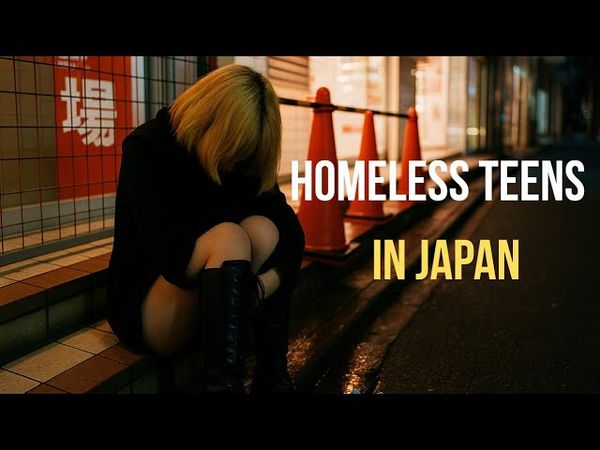
In Tokyo, nearly 4,000 young people live every single night without a proper home to return to.
They're known as the Toyoko kids, teens and young adults with nowhere else to go, living night to night in cheap business hotels and internet cafes, a hidden generation surviving in one of the world's richest cities one night at a time.
On the surface, Tokyo is a dream destination for many.
Yet beneath the dream, thousands of young people live an invisible life.
While Tokyo's apartment rents have remained relatively stable over the past 15 years, the average one-room apartment now costs approximately ¥71,583 per month, a figure that can be challenging for those earning minimum wage.
Public housing options are limited, with high demand leading to extended waiting periods.
Unable to afford traditional housing, these youths resort to nightly rentals.
Capsule hotels, manga cafes and business hotels like Toyoko Inn have become temporary homes.
The cost of this nightly survival often exceeds monthly rent, but there's no paperwork, just quick check-ins, cash or mobile payments, and no questions asked.
There are people who don't have a home to go back to, but I have a home to go back to.
What do people who don't have a home to go back to do?
Photographer Yusuke Nagata has spent years documenting the Toyoko kids.
Through his work, the world glimpsed into the hidden realities of youth homelessness in Tokyo.
How long have you been homeless?
It's been three years in total.
I was originally homeless when I was in kindergarten.
I was kicked out of the house.
It's been 25 years in total.
Nagata shared the story of a young woman living between internet cafes.
She works full-time at a convenience store but cannot afford rent.
Her belongings fit into a single bag, her routine punctuated by seven-hour stays at cafes, capsules, or 24-hour eateries.
I want to be alone.
It's a place where I can resolve my feelings.
Another story, reported by Zenbird Media, describes a teenage boy in Kabukicho.
Forced onto the streets after conflicts at home, he now makes a living by handing out promotional flyers at night.
Sleeping in manga cafes, he spends roughly ¥3,000 per night, trapped in a cycle of earning just enough to pay for another night indoors.
Each story highlights the same grim reality.
The nightly cost to survive in Tokyo is higher than normal rent, but without stable employment or a guarantor, an apartment remains impossible.
Most capsule hotels and internet cafes offer stays lasting around seven hours.
Check in at 10 p.m., check out by 7 a.m. sharp.
Rooms are tiny.
Capsules measure just two meters long and one meter wide.
There's barely enough space to sit up.
Manga cafes offer small cubicles equipped with a reclining chair and a computer.
Privacy is limited, real rest even more so.
A news report by Tokyo MX captured the harsh morning routine of these young people.
Housekeeping arrives early, lights flicker on automatically, and everyone must leave immediately.
They carry backpacks and plastic bags holding their possessions, a change of clothes, toiletries, smartphones.
Anything more would slow them down, risking theft or loss.
This lifestyle, described by Nagata as a permanent state of emergency, leaves young people constantly exhausted, anxious and vulnerable.
I don't have a dream.
I can't imagine what will happen after I die.
I'm not interested in myself and I don't think about anything.
The authorities have taken a tough approach on the homeless.
Parks were locked and lit up at night to discourage people from sleeping there.
Officially, Japan claims low homelessness rates, under 4,000 nationwide.
Yet the Toyoko kids are not counted.
Why?
Because by law, staying overnight in manga cafes or capsule hotels isn't technically homelessness.
These youths remain invisible, not included in official statistics or welfare programs.
The Tokyo Metropolitan Police Department is cracking down on underage teenagers who frequent Tokyo's nightlife area, often dubbed Toyoko Kids.
Starting last month, the police spent the weekends of the last three weeks rounding them up and used a team of 126 officers in the operation.
A total of 42 were apprehended during the period, who were between the ages of 13 and 18 years, with some of the older kids being from as far away as Niigata Prefecture.
As there have been several cases of juveniles being encouraged to engage in criminal activities like prostitution, the police have stepped up,
prevention efforts.
Without an official address, they can't access healthcare, education, or social support.
The welfare system requires proof of residence, an impossible ask for someone changing addresses nightly.
NGOs such as Colabo and Tenohasi try to help.
They offer meals, healthcare advice, and occasional shelter, but their resources are limited and many youths are too ashamed to seek assistance openly.
What is the police doing here?
It's not good for children to sleep on the street, is it?
I'm doing my job, but there's a limit to what the police can do.
The police don't do anything special.
They come here when there's a problem, so I don't think they care that much.
Experts and advocates, including Yusuke Nagata, point out that this issue stems directly from Japan's housing policies.
High rents, strict lease requirements, and insufficient public housing create impossible hurdles for vulnerable youth.
Nagata's photos capture Tokyo's contradictions, starkly wealthy shoppers passing unaware by exhausted teenagers sitting in cafe corners, heads bowed, hoping not to draw attention.
It's very special that it's in the middle of a tourist attraction.
Aren't tourists surprised?
No, that's true.
It's like these people are rare.
They take pictures and stuff like that.
This side is just a normal existence, so it's nothing special.
In neighborhoods like Kabukicho, Toyoko kids navigate the neon-lit streets each night, knowing tomorrow's survival depends entirely on today's earnings.
Tonight, as Tokyo sparkles under bright lights, thousands of young people quietly line up again, swiping their phones, paying another 4,000 yen.
Another seven-hour stay in tiny rooms, tiny capsules, tiny chairs.
each one silently hoping tomorrow will be different, knowing deep down it won't.
This crisis isn't just about homelessness, it's about visibility.
It's about how a wealthy city treats its most vulnerable young people, hiding them in plain sight.
If you've never heard of Tokyo's Toyoko Kids, you're not alone.
These stories need to be heard so please share and subscribe.
Stay tuned, because Japan's hidden stories are just beginning.
Similar videos: POVERTY IN TOKYO JAPAN

Pt.1- Financial Capital Or India's Shame? | Can Spirit-Of-Mumbai Hide Govt Failure? | Akash Banerjee

UNREAL WONDERS OF PLANET | The Most Beautiful Places to Visit in The World | Travel Video 8K

Life in India’s Coldest Village: Drass | Ladakh (-60°C)

Mossad's Secret Allies: Exploring the Sayanim Network | @GetIndieNews

Walton Goggins' The Ghoul Surviving the Wasteland | Fallout | Prime Video