Production Design — Filmmaking Techniques for Directors: Ep2
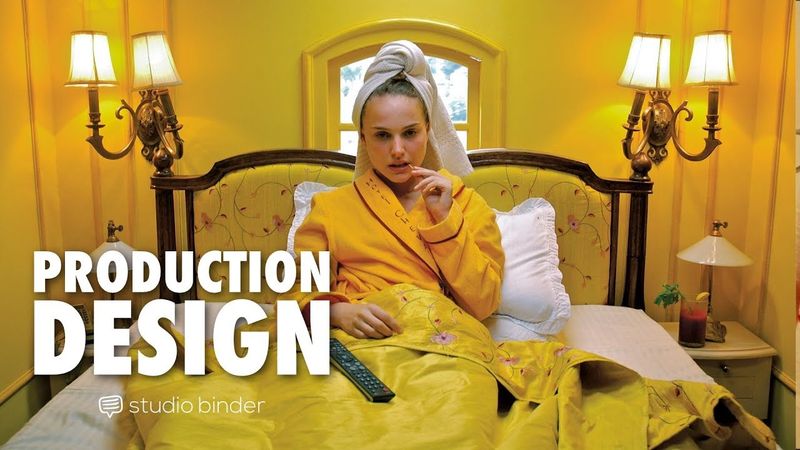
Download information and video details for Production Design — Filmmaking Techniques for Directors: Ep2
Uploader:
StudioBinderPublished at:
6/5/2018Views:
546.1KDescription:
Video Transcription
We all know writers fear the blank page, but how often does a director feel the same way about a blank frame?
It's easy to populate it with actors and a location, but what about that space in between the characters?
How can you fill that space with production design to create a specific mood, to reveal character, or even communicate the themes of the story?
This video will show you how you can achieve those goals with production design and visual contrast.
Production design is the overall visual look of the production.
It encapsulates a unifying vision for set design, prompts, wardrobe, but why is production design so important?
Well, in three major ways.
Production design sets a scene's mood, can reflect the state of a character, and lastly, it can articulate a story's themes.
First, let's look at how it affects mood.
Production design is often used to affect viewer feelings.
Ask yourself, should this scene's production design be uplifting, melancholic, or dreamy?
Look at how Wes Anderson uses art direction in this scene to reflect Richie's emotions.
It's an empty room.
The walls are empty.
The whole art direction feels empty.
The result?
We feel empty.
just like Richie.
Now contrast this with another scene with Richie.
Let's freeze right there.
Richie's holding a colorful drink.
He's on a yacht.
And look at those wardrobe choices.
They're bright, colorful, whimsical.
The set dressing?
It's filled.
Lived in.
Bustling with trinkets.
This life feels about as full as this frame.
But again, look back at the other scene.
How does this life feel?
The production design is sparse.
The color tones, blue, somber.
The walls are closing in on Richie.
It's claustrophobic.
Each element in the set dressing adds up to create a full picture.
Our next component is character.
Production design is a powerful way of externalizing the internal state of a character.
What kind of dining set defines me as a person?
Watch the first part of this scene from True Detective.
Rust Cole's storage unit is... a bit shocking.
And if this is a look into the inner state of Rust, we should be worried.
According to the show's art director, actor Matthew McConaughey spent an entire night helping to dress the unit to reflect Cole's inner state.
Now let's go back and look at how this contrasts with Rust's apartment earlier in the series.
It's nearly empty.
Production design was used to show us how much obsessing over this case changed Rust.
Next up is theme.
Production design can be used to communicate a deeper meaning behind your images.
The subtext.
Watch this scene from Jurassic Park.
Did you see that?
Watch it again.
That's DNA projected onto that dinosaur.
Contrast this with how the film used DNA earlier in the movie.
While Jurassic Park is a monster movie, it's also a movie that suggests the real monster is man.
As he tries to manipulate DNA, the theme of the movie is man's attempt to control nature.
It's one thing to use production design as a way to make your film more aesthetically pleasant.
It's another to use it intelligently to tell a story.
A simple way to do this is to employ the use of a script breakdown.
With StudioBinder, you can tag a scene's set dressing, props, wardrobe, and share them with your team.
Breakdowns aren't just for logistics.
They get you thinking more carefully about production design, which leads to better, more creative choices.
Feel free to share if you liked this, or leave a comment.
See you in the next video.
Similar videos: Production Design
How To Create A Shatter Effect In After Effects
Parks & Rec Production Designer Explains How Design Creates Story
PRODUCTION DESIGN: HOW TO | Filmmaking Insights | Watershed
Best Explainer Video for Data Science Product | Qualetics | Motion Graphics Animation
Strategies for Creating Films Music and New Worlds with AI #ai #music #video #film