
The Best 5 Minutes You’ll Spend Learning Guitar
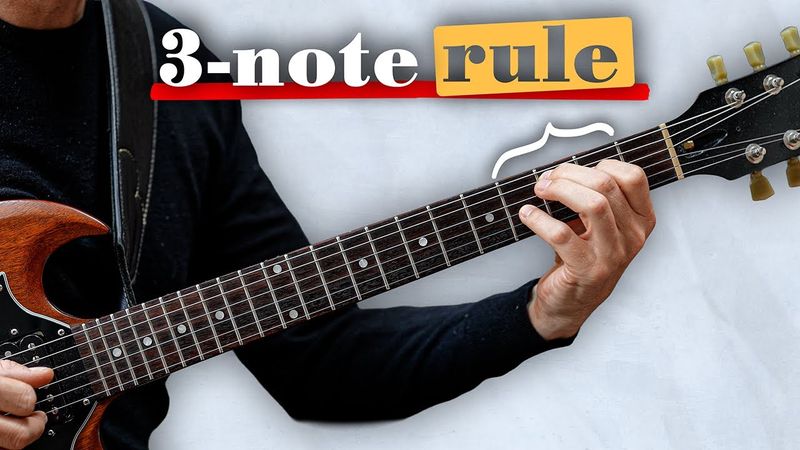
Download information and video details for The Best 5 Minutes You’ll Spend Learning Guitar
Uploader:
Paul DavidsPublished at:
10/16/2025Views:
566KVideo Transcription
You can learn this today.
We're not going to use it only today.
We're actually going to use this for the rest of our lives.
I play it all the time.
Making music and you started talking about the most valuable five minutes ever spent on a guitar.
Yeah, and also you can play any song in the world with this.
It's kind of amazing.
I mean, I'm genuinely very excited about it because I think from all topics in music, guitar, this is probably the best investment of your time.
I'm starting the clock.
Let's do it.
Five minutes?
Let's do it.
Okay, let's go.
Let's go.
What are we talking about?
Okay, so we're talking about shell chords.
You heard this.
Yes, yeah, yeah.
Let's take C major.
When we hear this sound, right, so the most important color here is basically understanding that, okay, this is really the chord.
This 1-3 gives us the sound of major.
This is a major chord, yeah.
Versus...
This is minor.
Exactly.
Okay.
So when we have a shell chord, we're basically doing a reduction.
We're not doubling notes, we're not playing the five, we're just taking the essentials.
So the essentials in a chord are the one, the three, and...
The five.
Ah, ah, the seven.
What?
Yeah, because check it out.
The five is cool, but the seven gives the information if it's home base.
Yeah, major seven.
It's kind of lush.
I like this.
Versus this.
Dominant 7.
Exactly.
C7, dominant 7.
So when we're talking shell chords, we're using the 1, the 3, and the 7.
Only three notes.
Not 4, not 5, not more.
Just three notes.
But those notes give us everything we need, which is kind of amazing.
And there's four shapes.
There are only four shapes.
And the cool thing with guitar is you can move it.
Remember when you learned this chord?
Yeah, F major and O.
Let me show you something.
If you move it up, this is... Man, exactly.
I mean, I remember that moment.
It was kind of like, what?
Yes.
So it's the same thing with shell chords because here, you know, you can play all these crazy charts.
So you're saying... All these crazy songs right now with these four chords.
That's it.
You can do it.
You can do it all.
Yes, oh yeah.
Do that, yeah.
One more time?
Yeah, one more time.
That's it, that's it.
You just wrote a song, right?
It's amazing.
It's like these colors, especially if you do a little hammer-on, a little vibe, that's it, you're there.
So it's instant music.
The four shapes.
Okay, let's do it.
Because there's different shapes on the sixth string and the fifth string, just like barre chord, but let's just go over the fifth string first, because we started with this.
The basics are this, C major 7.
This is the sound and the shape.
Now, it's important to also listen to the color.
So feel the sound, you know, imagine how it feels.
And then you move this finger half step down.
You get C7.
Again, think about how it sounds to you because you want to tag that color information.
This is how we learn music, by listening and kind of feeling the sound.
I feel like this wants to go somewhere, right?
Exactly, that's the tension.
Now, we're gonna just learn the shape, so we're gonna move this finger from second fret to first fret.
So this is C minor.
Okay, I usually play this like this.
You can totally play this finger, that's totally fine.
And then it's easier to move to the diminished shape.
So four colors, right?
So these are the four essential chords of every song.
Yeah, literally.
To recap, C major seventh, C dominant seventh, or C seventh, correct.
C minor seventh, and C diminished, right?
or diminished shapes, we can use it for diminished, but we can also use it for minor sixth, because we have the minor, and this is the sixth.
So we can use it both for diminished and for minor sixth.
Is it correct that sometimes, because for example, the summertime?
Summertime.
Yes, perfect example.
Yeah, exactly.
That's exactly that.
Okay, teach me summertime.
What do we do?
Okay, so if you want...
It uses shell chords?
It does.
Show me.
Okay.
So, first chord is A minor sixth.
Yeah.
Then second chord is B diminished.
And then back to A-6.
Can you sing the melody with it?
I can try to hum it.
Yeah, okay.
So, summertime And the living is easy To A7 Fish are jumping to F7
2-5-2-C, D minor 7-E7
So do I understand correctly that we're playing an A minor sixth chord?
Correct.
But it functions just as the tonic, right?
A minor.
100%.
So when we have a minor tonality, we want to play a triad or we want to play a sixth chord oftentimes.
Because if you play a minor seven, it's kind of suggesting we're going somewhere, for example, G major.
In this case, in this song, we are located in A minor, so it's a very good idea to play this six.
It's kind of stylistically correct.
Yeah.
I often see this as well, but please help me in this, as a D seventh.
Yeah.
With a fifth in the bass, but it's...
Right.
Yeah.
It's exactly when I play the second and third bar, so we have A minor six,
diminished here, and then usually you can go to E7, but I just stayed here, you know, and I went back, so it's exactly, I said 2-5, so it's substitutable.
Yeah, okay.
So that's just a choice of the player.
Exactly, yeah.
We discussed the chords on the fifth string.
Correct.
But there's also four shapes on string six.
Correct.
Yeah, so since we have five minutes, I'm going to do it really quickly.
C major seven.
Okay, yeah, this one I know because usually I would play a C major like this.
Right, so then we just drop that five, exactly.
And then from here we take the B natural to B flat.
And I know some people are like, ah, I just moved this finger.
Yes, but please know that this is the note B natural because it will help us in the world to know what we're doing and then we hear it and feel it, right?
That's the diminished, but let's go minor first.
Exactly, and then diminished.
That's it, that's all the shapes that you need.
And you know, I remember just moving to New York and going to school, I got this crazy chart in front of me and I was like, what am I doing?
Yeah, often in jazz you will see sharp 9, 13, flat 9, sharp 11.
And it can be really intimidating, right?
these shell chords are exactly the solution.
But really, I mean, you just omit all this, like, extra information and what you need to play is really the chord.
So, you know, you have a song like Summertime or you have a song like Autumn Leaves, you see, you know, C minor 7, 9, 11, like, no, no, no, I'm just gonna play C minor.
And it's perfect when you're improvising, when you're playing with somebody, like, just chunking...
You can learn literally any song.
You take the real book or you take any book with information, you open it and you can play it after this video.
It's kind of amazing.
I think it's really a great investment of time.
Yeah.
What it helps me a lot is to see exactly where in the chord the important notes are.
Even if you play a bar chord, if you know the shell chord of that chord, it can help you determine where the key notes are, for example, which is super useful.
for soloing as well, right?
And you can also extend that, right?
So we can take, for example, let's take G7.
My pop guitar brain says...
I mean, and that's killing, that's great, that sounds great.
But you know, the thing is, if you do our shell chord, yeah, you can have this finger that's kind of hanging out.
You're like, oh, what?
We actually use the pinky.
Oh yeah, what is this?
I know this one.
Jazz.
G13?
G7?
G713, exactly.
Or G7.
Flat 13.
I love this, especially if it goes to.
Yeah, exactly.
But then what is this?
Because if I have a C major seven here, I can add that D here to create like a nine.
Yeah, perfect.
And you can see, because I remember when I learned this shape, it was like disconnected.
It was like, oh, this is a complicated shape for C major seven.
No, this is shell plus this.
This is shell plus this.
I can take this shell and add any melody line.
So what would be a typical example a guitarist would use the shell voicing?
Maybe like... Oh, yeah, yeah.
Hmm.
Yeah, okay, I get it.
So we're playing, it's a pretty jazzy progression, but it's very nice, actually.
You go from C major seven.
Yeah, exactly, with the hammer on, it's cool.
Yeah, yeah.
Because you get the sixth for a brief second, then to A seven.
Oh, yeah.
C major seven to C seven.
Yeah.
F major seven to F... Minor six.
Minor six, yeah.
Yeah, and it's super large.
And you can always add this open E.
yeah that's it you got it so and you know and this is kind of i love it right it's super fun it's really super like allowing for things to happen because it's not too complicated so you're like oh you start playing with rhythm you start like having ideas this is like the the grounding element and then you can start flying
the core of what every guitarist should learn.
Did we stay within five?
Well, yeah, within 550 maybe.
But honestly, so, so much information
And it is really something you can learn quickly.
That's the cool thing.
It's not like, oh yeah, it's super easy if you spend five years doing this every day.
No, it's really, you can learn this today.
Today, yeah, this is a today thing.
This is like sitting down with a guitar, right now, we're figuring it out.
We're not gonna use it only today.
We're actually gonna use this for the rest of our lives.
I play it all the time with my shows, with people I play, singers, like everything.
It's a great tool, like always.
And that's why you're here, because you're on tour.
Yeah, actually, yeah.
Everyone needs to check you out.
This channel is just a gold mine of...
Beautiful chord voicings, but also improvisation and jazz vocabulary.
It's beautiful.
Check it out, Rotem Sivan.
It's been amazing having you back on the channel after all that happened.
Good seeing you.
Check out his music, subscribe, and see you next time with another video.
Take care.
Bye-bye.
Similar videos: The Best
The Pedal Of My Dreams - IT'S FINALLY REAL!

Playing Guitar In A Nuclear Power Plant (sounds BEAUTIFUL!)

Why this is Red Hot Chili Peppers’ HARDEST GUITAR RIFF
EPIC RIFFS: Stevie Ray Vaughan - The Hardest Blues Riff?!
THE Pentatonic Shape that Will Change Your Playing - 10 days guitar challenge
![Linkin Park / Slipknot / Eminem - Damage [OFFICIAL MUSIC VIDEO] [FULL-HD] [MASHUP]](https://videodownloadbot.com/images/video/aec/u4bd9zhyg4nw13l22dkg0wiy6zn5khqp_medium.jpeg)