
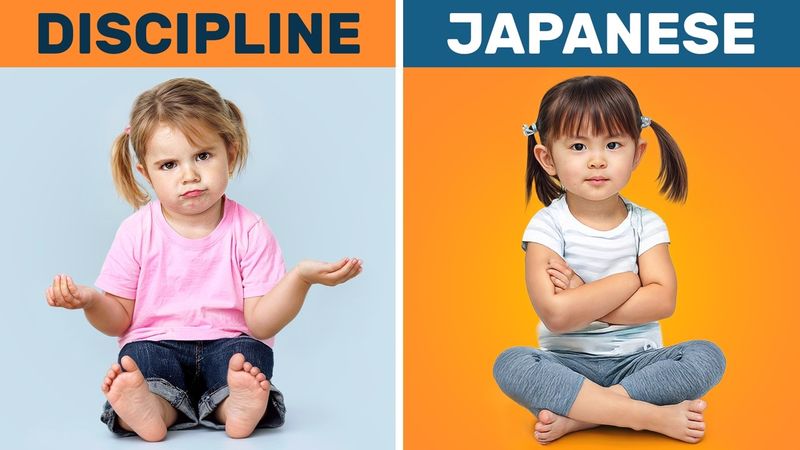
The Japanese Rule To Obedient Children
Download information and video details for The Japanese Rule To Obedient Children
Uploader:
Emma HubbardPublished at:
8/6/2025Views:
556.5KDescription:
Video Transcription
There's one simple rule that Japanese parents follow that helps create calm, respectful, and obedient children.
It's called shitsuke, which literally means discipline, but it's very different to the definition of the word discipline that we use here in the West.
It's really easy to fall into a cycle that looks something like this.
We wait for our kids to act out, then we punish, lecture, or bargain with them.
Shitsuke flips this completely.
It's based on the belief that children develop good manners and courtesy through instruction and practice, not through punishment or hoping they'll just figure it out.
Instead of constantly putting out fires, Japanese parents prevent them by actively teaching the exact behaviors they want to see.
And today I'm going to show you exactly how to do this in your home using three simple principles.
Whether you have an 18 month old or a five-year-old who seems to question everything, these principles will work.
So let's dive into the most powerful tool Japanese parents use, and that is modeling the behavior you want to see.
Japanese parents understand that kids are observational learners.
They watch, they learn, and then they try to do it themselves.
Think about it.
Have you ever noticed how your child copies everything you do?
They pretend to talk on the phone, just like you.
They copy how you walk, and they even repeat words you wish they hadn't heard.
So if you want a calm child, you must be calm.
If you want a respectful child, you must be respectful, especially when you're frustrated.
And if you don't want your child to scream when they're angry, then you should also try not to scream when you're angry.
For example, let's say your child just drew on the wall with a permanent pen.
Now your first instinct might be to yell, what did you just do?
But instead, if you were to adopt this modeling approach, you would demonstrate the calm response you want them to have when they're angry.
So you might say, there's a pen on the wall.
I'm feeling frustrated right now.
So I'm going to take three deep breaths before we talk about this.
then you would actually do the deep breathing where they can see you.
And then you would talk calmly to them about the wall.
Now I know staying calm, particularly in these sorts of situations is hard, especially when you're already exhausted from a long day.
And let's be honest, sometimes you are going to lose it.
Now, although that's not ideal, it's okay because you can use those moments to teach your little one that mistakes happen.
So you might say, I'm sorry that I yelled.
I was angry about the wall, but I shouldn't have yelled at you.
Next time, I'll try to take some deep breaths first.
This shows your child that everyone makes mistakes and more importantly, it teaches them exactly what to do when they feel angry or frustrated and how to repair a relationship if they do make a mistake and yell.
Essentially, you're modeling the tools they need for next time.
Now, modeling is powerful, but even the best modeling won't work without the second piece, which is creating crystal clear expectations through consistent rules and boundaries.
And this is where we as Western parents often struggle because we've been conditioned to view rules and boundaries negatively, like we're somehow crushing our children's spirit or limiting their freedom.
Sometimes we even feel guilty about setting boundaries because we want our kids to like us and be happy.
But the truth is rules don't make children unhappy.
In fact, having no clear rules is what makes them anxious and stressed.
Think about it like this.
Imagine if you went to work and your boss never told you what time to arrive, what your job was, or even when team meetings started.
You'd be anxious, stressed, and confused all day.
And that's exactly how your child feels without clear rules.
When your child knows that we always wash our hands before dinner or toys get put away before we read stories, they actually feel safe.
They're not constantly wondering what's expected of me right now, or am I going to get in trouble?
Instead, they can just relax and follow the routine, which means way less fighting and way more cooperation.
Let me show you exactly what that looks like in real life.
At our house, we have a very simple rule.
Shoes come off when you walk in the door.
My husband and I both do this every single time and we expect our kids to do the same.
Now all three of our kids automatically kick off their shoes the moment they step inside.
And in fact, our two and a half year old has become our little rule enforcer.
She actually greets visitors at the door with a big hi, and then she immediately tells them to take their shoes off.
And that's the power of clear, consistent rules.
When kids know exactly what's expected, they stop fighting it and they start owning it.
They actually become your helpers instead of your challenges.
But here's the crucial part.
This only works if you're consistent.
If I enforce the shoe rule, but my husband sometimes ignored it, what would happen is our kids would start to think, wait, what's the actual rule here?
And this would create some confusion.
And that confusion is what makes kids start testing rules and arguing about the rules.
because they're literally trying to figure out what you want and where the boundaries are.
So before you create any new rule, it is really important that you have a conversation with everyone who cares for your child.
This might be your partner, grandparents, or even the babysitter.
You just want to get everyone on the same page.
Now, I'm not saying your child can't have different rules at different houses.
Kids can learn that grandma's house means unlimited TV, while at home, they can only watch TV on the weekends.
But that takes time and maturity.
And for the big important rules like safety, respect, or behavioral expectations,
It's always better when the key adults in your child's life are on the same page, because when the adults are consistent on what matters most, kids stop guessing and they start cooperating.
And that's when you see real obedience without the power struggles.
Now you might be thinking that this sounds like a lot when I'm already overwhelmed and I get it.
But when you adopt this approach, it actually makes your life easier, not harder in the long run.
Within just a few weeks of consistent modeling and clear rules, you'll start seeing real changes in your child's behavior.
But there's one more piece that makes all the difference.
And this is the most important part of shitsuke that completely changes everything.
Instead of just saying, don't do that or stop being naughty, Shitsuke teaches parents to ask one crucial question.
What skill does my child need to learn here?
You see, when your child throws a tantrum in the grocery store because they can't have that candy, they're not being defiant or trying to embarrass you.
They just haven't learned how to handle disappointment yet.
When they won't share their toys, they're not being selfish.
They haven't learned the skill of taking turns.
And when they constantly interrupt your phone calls, they're not being rude.
They just haven't learned the skill of waiting patiently or recognizing when it's their turn to talk.
This shift in thinking changes everything because instead of punishing the behavior you don't want, you start actively teaching the skill that they're missing.
And that's when you see real lasting obedience because your child actually knows how to behave well.
For example, imagine your child snatches their friend's toy.
Instead of yelling, don't snatch, and then hoping they'll magically figure out how to share, you would get down with your child and actually teach them the skill of taking turns.
Before I step you through exactly how to do just that, I quickly want to mention that saying don't snatch is actually one of eight common phrases I recommend parents avoid because these phrases often don't convey the message we intend and there are simply better alternatives that work much more effectively.
To find out what these eight phrases are and what you can say instead, just click the link in the description to get the free guide.
Okay, back to turn taking.
So to teach this skill to your little one, something you might do is you might say, you want the dinosaur.
It's Tom's turn now, you can have the dinosaur in one minute.
And then you would help your child practice waiting by either giving them something else to do, so you might go find another toy, or if they're really struggling, you would comfort them by staying close by and saying something like, waiting is hard, it'll be your turn soon.
Now, if your child has a complete meltdown at this point or they're too overwhelmed to learn, that's okay.
Your first priority is to keep everyone safe.
So you might need to remove them from the situation, offer them comfort, and try to teach them the skill of turn-taking later when they're calm.
The key is to come back to it when they're ready to learn.
But if your child remains relatively calm, then when that minute is up, you would say something like, Tom's turn is finished, now it's Olivia's turn.
And then you would help Tom hand the toy over if needed, and then support him to wait his turn using the same approach.
And this is what makes all the difference.
Your child actually learns how to take turns, which means less snatching, less fighting, and more cooperation.
So the next time your kid is not behaving, do step in and help, especially if someone might get hurt, but then ask yourself, what skill do they actually need help with here?
And here's the key part.
Don't just identify it and move on.
Actually take the time to teach them that skill.
Because when you give them chances to practice what they're missing, something amazing happens.
They start doing less of that challenging behavior and more of the positive behavior you actually want to see.
But here's where things get tricky.
Even when you understand all of this, you still need your kid to actually listen when you ask them to do something.
And sometimes it goes a little like this.
You say, please put your toys away and they ignore you.
Or you say it's time to get ready for bed and suddenly they're fascinated by whatever they're doing.
So you say it again and again, and by the fifth time you're either doing it by yourself or you've started yelling.
But here's the thing.
There's actually a really specific way to give instructions that get kids to listen the first time.
And I show you exactly how to do it in this video.
So if you're sick of repeating yourself or bribing your kid with screen time just to get them to brush their teeth, make sure you check it out.
Similar videos: The Japanese Rule To Obedient Children
Child Not Listening? Stop Yelling. Do This Instead

ASMR Froggie Friend Cleans Your Eyes!👁️| Relaxing Eye Cleaning for Tingles & Sleep 💤

7 ENGLISH TECHNIQUES THAT WILL HELP YOU IMPROVE YOUR ACCENT AND PRONUNCIATION

HOW TO PAINT Snowy Berries (Watercolor)

QIGONG MORNING WARM-UP ROUTINE TO RELIEVE JOINT PAIN, STIFFNESS, & ACHES | YOUNG AT ANY AGE