
The RISE and FALL of Black Friday
Download information and video details for The RISE and FALL of Black Friday
Uploader:
Levi HildebrandPublished at:
11/15/2023Views:
648.5KDescription:
Video Transcription
Black Friday is legendary as one of the largest shopping holidays of the year.
But the things that gave it its infamous status of the past are no longer staples of this day.
And things might somehow be changing for the worse.
Today's episode is sponsored by Ground News.
Look forward to hearing about them later on in the episode.
Now, since its conception, Black Friday has been a sort of barometer for how we shop.
America's biggest retail holiday started back in the 50s and the 60s when suburbanites would storm Philly City the weekend after Thanksgiving to get ahead on their holiday shopping.
These days were busy for retailers for sure, but even more so for the police.
The sidewalks bustled, there was traffic problems and chaos galore, and the cops had to do a fair bit more work than they normally do.
The story then goes that the cranky police officers dubbed the day Black Friday.
now philly tried to rebrand it as big friday and that really didn't take but honestly who cares the point here is black friday is the pinnacle of consumerism the most american holiday that could ever exist a holiday literally founded on the concept of shopping
I hate Black Friday.
And as much as we would like to think that we are too cynical or too woke today for this kind of mindless consumerism, annual sales still increase year after year.
So if we just said that the yearly sales for Black Friday continue to increase year over year, how can we make a video titled the way that we did?
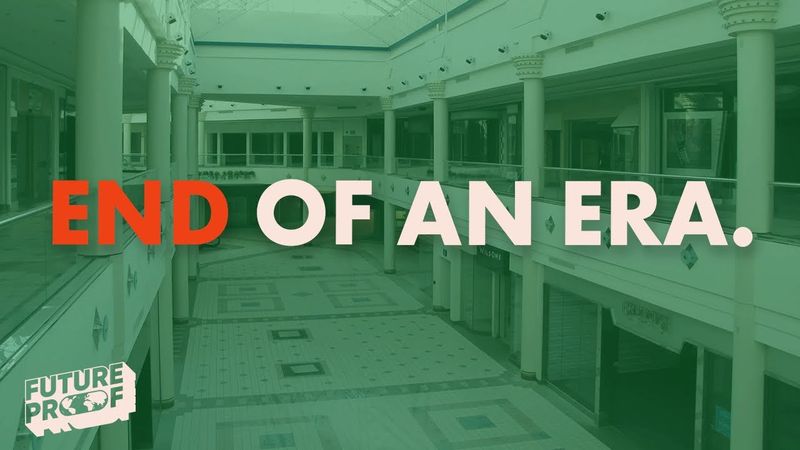
Well see, even if this American holiday is celebrated in dozens of countries around the world, what it once was as a one-day shop-a-thon has shriveled into a month-long drawn-out cyber sales pitch.
Black Friday deals start next Wednesday.
Now, before we get right into this, we want to share some caveats from our research team, because it turns out Black Friday is pretty difficult, if not impossible, to research accurately.
When you Google search anything related to Black Friday, all you get is just 50 pages of deals and then some market analytics for how you could potentially maximize your business sales if you're a business owner trying to sell stuff during Black Friday.
Now if you do get past all the marketing and targeted ads, the stories that you find about Black Friday are usually to do with the horror stories that are associated with its peak.
What we can safely say is this, people went absolutely ham over this holiday.
It was very famous
for people to wait outside of their favorite store at midnight camping in sleeping bags and tents to storm the gates at dawn.
Clips from this era of Black Friday madness are hard to watch because it's honestly kind of just like the most depressing representation of humanity.
People are literally shoving each other over, stomping and trampling each other trying to save money on a TV.
Now if you want to know how bad it really does get, there is a literal website called Black Friday Death Count, and it is pretty well exactly what it sounds like, and we can't describe the things that are on it.
Now, if you're wearing your rose-colored glasses here, you could say that Black Friday helped people afford the presents that they felt like they needed to get for their loved ones, right?
It's a stressful time of the year.
You feel some pressure to buy the stuff, and Black Friday made it a little bit easier.
I would say that that is more of a commentary on our consumerist society, putting unnecessary stress on people and, you know, consumerism in general, just eating away at your
But if you do take the glasses off, it looks a lot more like capitalism-induced civil terrorism.
Like, if the Purge was rebranded as a sales event.
Listen to me.
Get it all.
Now, the problem was this mayhem was objectively a great thing for the economy and sales numbers at a corporate level.
But the chaos and optics of an angry horde of people getting pepper sprayed at a Walmart doesn't exactly make the holiday feel like the celebration that corporate elites were hoping for.
The whole thing eventually got so messy that it was in dire need of a rebrand.
And fortunately, the internet was there to save the day.
Just
add a bunch of angry people on the internet with complete anonymity and it'll probably sort itself out, right?
The internet did what the internet always does.
What was once just a one-day thing then grew to include Cyber Monday.
Now it's the Cyber Five or Cyber Week.
This year Walmart's deals holiday kickoff was started on October 9th and I thought that we all agreed that putting up a snowflake decoration before Halloween was a faux pas.
A lot of the hype around Black Friday and the rampant consumerism that followed was in part due to the media promoting it as this essential part of the holiday experience.
As a result, we get flooded with news stories every year about the craziness that ensues after discount prices are promoted.
It is a vicious cycle.
That's why I like Ground News, an app and website that compiles news from all over the world on one platform.
It also shows additional context that mainstream media doesn't, like how factual the reporting practices are, or if they tend to sensationalize headlines and even
who owns each publication which can explain their motives for framing a specific story in a particular way.
Take this story on Walmart announcing Black Friday deals early.
Ground News shows more than 30 articles published on this and coverage is mainly coming from center-leaning outlets.
I think this is a super interesting and valuable tool, especially for people who are looking to be more informed about where they get their information.
You can see this when you look at the difference between these two headlines.
Uproxxed, a mixed factuality source, headlines this as most of the Mean Girls cast reuniting for the commercial, which sounds a little more dramatized than the Hollywood Reporter's headline, which is rated high factuality.
I think what Ground News is doing is really important because this is exactly what our whole goal is here on Future Proof.
helping people make informed decisions and practicing critical thinking every step of the way.
Plus, they're based in Canada, just like us.
Check them out at ground.news.futureproof.
You can subscribe for as little as a dollar a month or get 30% off unlimited access through our link in the description.
A huge thank you to Ground News for sponsoring today's video.
Let's get back into it.
But however you see it, the retailers are making bank.
Last year, Salesforce data reported almost $300 billion in sales.
So while Black Friday is getting bigger, much bigger in terms of how much space it takes up on the calendar and how much money it makes year over year, it's just not the day that it used to be.
We're not seeing those 80% off door crasher deals anymore.
The average discount is more like 25 or 30%.
Sure, Black Friday sales are still significant, but nobody is crashing doors at a Walmart for 25% off.
And there's a big reason for this.
Being a consumer or just a human in the modern world isn't what it used to be.
What with inflation, the growing wealth gap, the whole millennial avocado toast situation, we have less time and way less spending power than ever before.
Instead of using Black Friday to stock up on holiday gadgets and gizmos, 40% of shoppers plan to go to grocery stores.
Now listen, I'm no economist here, but if people are waiting until big sales days to go grocery shopping, that feels a little bleak.
Not as bleak as homicides being committed in the sake of Black Friday, but still.
Now at the end of the day, the profit motive isn't going anywhere.
For every change that we face, there is a marketing exec somewhere trying to figure out how to make another dime off of it.
For example, to meet the needs of consumers to have stuff and for CEOs to make billions, we're seeing a rise in buy now, pay later financing.
This type of thing used to be reserved for big ticket items, but now you can refinance your cable knit sweater for four easy payments.
The Black Friday sales marketing also seems to be cutting a little deeper each year to convince people to keep shopping even if they can't really afford to.
Now, listen, I know that there's going to be somebody in these comments that goes off about how many great deals they got and how much money they saved.
And that is great for you.
Maybe take me shopping with you next time if you're really so good at it.
But we're talking about averages, OK?
Not everybody is out here getting a good deal.
In fact, most people are not.
But of course, the big thing driving us into the next era of retail beyond Black Friday is online shopping.
This isn't just for Black Friday, but brick and mortar shopping in general.
Malls are closing across the country and nobody is fighting over spots in those big box store parking lots.
Nobody's fighting for spots in those big box store parking lots.
Dude, I'm like a rapper, even though the script was written for me.
There is a real problem across the United States with tons of malls being completely abandoned, which is actually a bigger deal than you might think.
The US is kind of famous for bad public infrastructure and lack of public spaces, and sadly, the mall was one of the only places where people could get together.
Just look at the imagery that we saw in the last season of Stranger Things.
The mall is where the whole community gathers.
The whole show is basically set there.
But today that mall is likely shuttered in real life.
What happens when this whole world of shopping goes online?
Well, that's actually something we'd love to explore more in another video.
So let us know if you want to hear more about the future of malls in America or something like that.
Now, even before the pandemic, we were already moving into this era of IRL stores acting more as showrooms rather than a place where you actually buy things.
Today, you might go into a store to browse or try on a few things or feel the product in your hand, but then you actually go and make the purchase while at home, doom scrolling on the toilet.
However, the pandemic was really the event that pulled Black Friday off of the streets and onto the internet.
Year after year, online and mobile shopping are breaking their records.
Black Friday 2022 marked the highest ever online sales, with Americans spending over $9 billion.
So Black Friday as a holiday is thoroughly deceased.
But what does this internet based consumerism have to offer in its place?
Live stream shopping.
One of the bigger growing trends are retailers merging
e-commerce with influencers to make live streamed shopping content.
This is literally like a person walking around in the store looking at different products that are available or demonstrating a variety of products that they have curated to people on the internet live.
Viewers can interact and ask questions about the products and engage in sort of gamified content with limited time offers and giveaways and stuff like that.
This is similar to how OG Black Friday activated our hunting and survival drives with scarcity and limited time offers.
But live stream shopping gives the same kind of urgency with the convenience of never having to leave your house.
This is basically the shopping channel, but for a TikTok generation.
But instead of sitting at home in front of the TV that you got at last year's Black Friday, you can watch shopping live streams anywhere you have your phone, which for basically everyone today is everywhere.
Now, this kind of thing actually got popular first in China, which makes sense considering that it is the country with the most online shoppers in the world, and it's only getting bigger.
More and more e-commerce apps are starting to support livestream shopping.
Amazon launched their version, Amazon Live, back in 2019, which didn't really pick up steam until the pandemic.
And for those of you who are in the millennial generation or older, this might feel
kind of hard to imagine because, you know, we knew what it was like to live in a world without the internet.
But for people today who feel disconnected from their community, who don't have even malls to go and meet up with other people, a stranger on the internet taking them shopping might just be the closest thing that they have to hanging out with a friend.
And sadly, this is where shopping is going in the future.
Now listen, if you're not too depressed and you like this video, make sure that you literally like it.
And if you wanna see more content like this talking about the consumer products of our consumer world, subscribe to see videos every single week.
Similar videos: The RISE and FALL of Black Friday
Your Old PC is Your New Server
Billy Carson - Forbidden Knowledge | SRS #93

ASMR ORBEEZ BALL ON THE MIC TRIGGER (Intense Mic Triggers, Whispers to Soft Spoken)

THE BEST TRANSPARENT S25 ULTRA…? #Shorts

They Weren't Expecting To Hike Through A Rainstorm 🌧️ | 2 Days And 1 Night 4 EP283 | KOCOWA+