The Unluckiest Racer of ALL TIME
Download information and video details for The Unluckiest Racer of ALL TIME
Uploader:
DailyFuelUpPublished at:
10/18/2024Views:
786.3KDescription:
Video Transcription
Imagine being right in your prime, with the whole world watching as your talent shines, and your future looks literally unstoppable.
But then, in one split second, everything changes.
A life turned, Formula One losing what could have been one of its brightest stars.
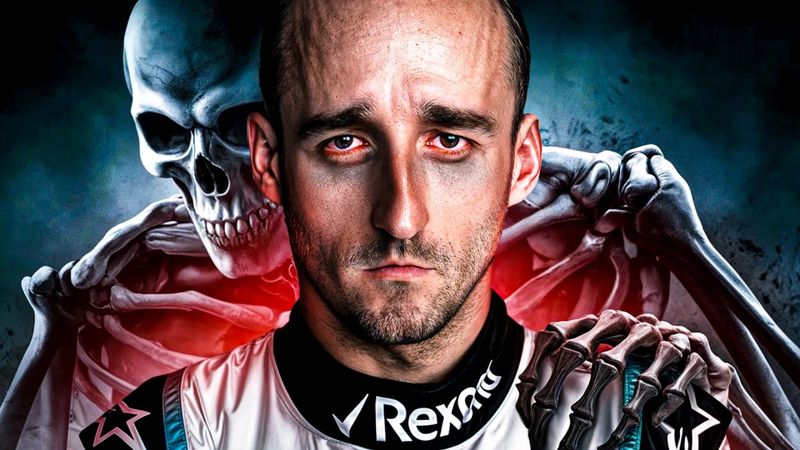
This is the story of Robert Kubica, the unluckiest F1 driver, and honestly one of the most heartbreaking tales in motorsport.
If only fate had played out differently.
Robert Kubica was born in Kraków, Poland, on December 7th, 1984.
As a kid, Robert first got into cars after spotting a cool little off-road vehicle in the street.
But unlike other drivers we've seen, Kubica didn't have an easy start in racing.
He didn't come from a wealthy family.
In Poland, rallies are way more popular than F1, so it was pretty unusual for a kid to be into circuit racing.
but Robert's love for motorsport kept growing, so his dad saved up and bought him a go-kart two and a half years later.
Kubica couldn't officially race until he turned 10, but once he hit the track, it was obvious he had something special.
In his first three years, he won five Polish junior championships.
Don't even ask me how that's possible.
At 14, he became the first foreigner to win the International Italian Junior Championship.
He also came second in the European Junior Karting Championship and won the Junior Monaco Kart Cup twice in a row.
His name was getting known not just in Europe, but on the international stage, too.
And while the other kids had fancy helmet designs, Kubica used this plain one to save money so his dad could buy tires or whatever else they needed.
It was clear Kubica was different, and in 2000, he kicked off his professional career as a test driver in a Formula Renault 2000 car.
Then, in 2002, he became one of the first drivers to join the new Renault Driver Development Program and had an awesome year.
Finishing as the runner-up in the Formula Renault 2000 Italy, everything was going great.
Until 2003, just before his debut in the Formula 3 Euro Series.
This was where we started seeing the disasters unfold.
Kubica had a road accident in Poland that left him with a broken arm and titanium screws holding it together.
Thankfully, after a long and intense recovery phase, Kubica finally made his comeback.
He still had some pain, and not gonna lie, he wasn't expected to achieve much.
After all, he basically only had one arm that really worked.
If only he knew what was to come.
But the Polish driver amazingly not only adapted well, but also won the race.
Yep, incredible, but true.
It was a testament to Kubica's amazing resilience, which he'd show off throughout his entire career.
After that, he snagged another podium and scored points in a few more races, ending up 12th in the championship.
Honestly, with everything he'd been through, and keeping in mind he missed out on six of the 20 races,
I don't think he could have done much better."
But then came 2004.
He kept racing in the Formula 3 Euro Series, grabbing pole in Macau, finishing second in the race.
He only ended up seventh in the championship, and he got a call from Minardi to test their F1 car at the start of 2005 after his strong performances.
However, the team had a bunch of issues with the car's development, and they were only allowed to race in the season opener in Australia after winning an appeal.
So with Minardi all over the place, Kubica never got to test with them.
So in 2005, he switched to the Formula Renault 3.5 series with the Epsilon El Scuddi team, where he'd run into legends like Maldonado and Chandhok.
Nah, but seriously, it was a good series to prepare for F1.
And what can I say?
That's where Kubica's true potential first started to show.
4 wins, 11 podiums, and 3 poles.
Finally, Kubica won his first professional championship.
It was just what he needed.
That year, Minardi, yep, again, invited him to test an F1 car during the free practice session in China.
But once again, he couldn't make it because his super license hadn't arrived in time.
But a couple of months later, Renault invited him to test the R25 in Barcelona, the car that Alonso used to win the title that year.
What a fucking beautiful opportunity.
An absolute masterpiece.
every F1 driver's dream.
And while his journey had its fair share of ups and downs, though I've definitely seen worse, Kubica got an offer from BMW to be their third driver.
He'd get to drive the F1 car in the first and second free practices every weekend.
If you think about it,
pretty smart.
Young drivers can ease into it without insane pressure.
Anyway, this was one step closer to getting a full-time seat in F1 for Kubica, and that's what he worked on throughout 2005 and 2006, until the German Grand Prix came along, where one crash changed everything.
It was kinda odd, but it turned out to be a perfect opportunity for Kubica.
He was about to become the first Polish F1 driver ever at the Hungarian GP.
It was a one-shot deal, he couldn't waste it.
And the truth is, he didn't.
In qualifying, he ended up ahead of his seasoned teammate Nick Heidfield, and in the race, he tackled the rain and finished in P7.
going on here between Kubica and Ralf Schumacher.
This is the battle for ninth place.
Here's Felipe Massa in a points-paying position here in eighth, coming under pressure from Robert Kubica, making his Formula One debut here.
Kubica now all over the back of Massa.
Massa gives him room.
That was fair.
And Kubica dives through.
And on his debut, he is now in a points-paying position, the first Polish driver.
Unfortunately, he got disqualified because his car was two kilograms under the weight limit.
What a retarded mistake.
But whatever.
He had all the proof he needed and was just waiting for the offers to roll in.
And it didn't take long.
Villeneuve had been underperforming all year and had a lot of disagreements with the team, to put it lightly.
And with Kubica having done so well in Hungary, it was the perfect setup for Villeneuve to leave.
For once, Kubica was in the right place at the right time.
In the next race in Turkey, he qualified ninth, which was great.
but a tyre choice mistake cost him a points finish.
But it was at Monza, in his third F1 race where everyone really got to know Kubica.
They're off.
Schumacher on the left.
Watch out for Räikkönen on the right.
He cuts across to cut off Heinfeld.
Now look at Kubica going aggressive on Massa.
Kubica is past Massa.
De La Rosa is having a go as well.
And it looks to me like Kubica's up to fourth place.
Can he make the chicane though?
Yes, he can.
Where is Alonso?
As Kubica goes past his teammate.
Robert Kubica in only his third place.
going to be a force to be reckoned with in the next few years, I think, BMW.
And they're both in the pits at the same time.
They've got to get him in front of Kubica, that's the first task.
The second one is, of course, to get him in front of Massa.
Kubica in the pits, Monteiro, and they're side by side.
Right, Alonso on the right, Kubica on the left, it's a drag race as to who's gonna get the place here, but Alonso is so determined here, he's driven by anger, and it looks like he's back out in front of Felipe Massa as well.
Oh, who's that?
It's Alonso!
It's the world, listen to the crowd!
And Massa goes up on the oil, there's oil down there in the first chicane.
Fernando Alonso climbs out of the cockpit, his second mechanical retirement, and what a place for it to happen at Monza with Schumacher, his title rival, leading.
It's been an immaculate performance by Schumacher, but Kubica has crossed the line now.
He has his podium, and I'm going to ask you for your driver of the day, but I'd like to volunteer the name.
What an incredible performance.
At just 21 years, 9 months and 12 days, Kubica became the second-youngest driver to get a podium, right after Alonso, and the first since 1997 to do it within his first three races.
The Polish driver became the new star on the track.
Even though he didn't score any points in the last three races of the season, Kubica left a great impression, and there were definitely high hopes for what he could do in the future.
By 2007, BMW made a big leap forward and had the third fastest car on the grid, putting Heidfeld and Kubica in a good spot to score points consistently.
After a technical issue forced him to retire in Australia... You think Kubica's slowing down, is he?
Yeah.
and a tricky race in Malaysia.
Kubica started to find his pace with the new car.
In Bahrain, Spain, and Monaco, the Polish driver finished in the top six.
Kubica was gaining confidence and building consistency.
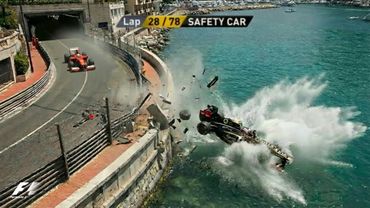
But it was the next race in Canada where Kubica gave us one of the most chilling moments in Formula One history.
He qualified eighth, while Heidfield was third.
During the race, Kubica went in for an early pit, and after a safety car, he was in 15th, right behind Jarno Trulli.
A lap after the race resumed, Kubica, right behind Trulli, tried to pass him on the inside before the hairpin.
Oh.
My.
God.
Safety cars and ambulance out.
Everyone was fearing the absolute worst.
Kubica was quickly extracted from the remainder of his car and rushed to the hospital.
Thank God, he was conscious and talking.
But for the next few hours, there was speculation about a serious leg injury.
And I don't know where those rumors came from though, because it ended up being just a sprained ankle.
What an absolute miracle.
Just a sprained ankle from this.
Kubica missed the next race in Indianapolis, giving his seat to a young Sebastian Vettel.
That's a story for another day, though.
And in France, Kubica was back in action.
And as crazy as it sounds, that wasn't even close to the worst thing that happened in his career.
The truth is, he came back stronger than ever.
finishing fourth in two races in a row and scoring points in six out of the last eight races.
In the end, Kubica finished sixth in the championship with 39 points, while Heidfeld was fifth with 61.
Sure, he was beaten by the German, but for his first full season in F1, I think we can all agree that that wasn't bad at all.
And while the best was still to come, so was the worst.
In 2008, Kubica totally turned things around.
In fact, Kubica blew Heidfeld away and had an incredible season, finishing second in Malaysia and scoring his first pole in Bahrain.
He then had two fourth-place finishes in a row and was second again in Monaco, before heading to Canada.
Kubica kept up his streak and qualified second.
He was getting better and better.
And in the race, well, pure magic is how I'd describe it.
Sutil's car catches fire.
Safety car is deployed.
There he is and he'll pick up the safety car.
So all of that work that was a six second lead has now been negated and this falls nicely into the hands of those with a bit more fuel on them.
The race leader comes into the pit, the soft tyres come off
Oh, look at the pit lanes closing.
Hamilton has hit the back of Kimi Räikkönen.
This is looking handy for Robert Kubica.
Rubens Barrichello has the satisfaction of leading up as Kubica goes up the inside and takes that place away from Heidfeld.
We need to increase the gap to a knee.
And into the pit.
He should just exit into the lead ahead of Heidfeld.
They've got their pit stops out of the way.
He's yet to unlock the first victory.
Robert Kubica wins in Canada.
From having one of the ugliest crashes ever, to winning.
Same place, just a year later.
And he had now taken the lead in the championship as well, in a car that was by far not the fastest.
But let's be realistic.
That season, even though Kubica did everything he could, the Ferraris and McLarens were just on another level.
And he lost the lead.
in the next race.
He did his best and picked up three more podiums in Valencia, Italy, and Japan.
The Pole really made the most of his BMW, still having a mathematical chance at the title until the penultimate race.
which was simply incredible.
In the end, he finished fourth in the championship with 75 points, while Heidfield was sixth with 60.
By then, it was safe to say Kubica was already one of the top drivers on the grid.
What he had shown so far was just incredible, but that was about all the good luck he got.
After this season, it felt like nothing but bad luck followed him, only getting worse and worse.
In 2009, there were major changes in the regulations, and unfortunately for Kubica, BMW went downhill, fast, dropping from the third best car to the sixth.
And honestly, there's not much to say about this season.
BMW had no pace whatsoever, and Kubica and Heidfield could barely fight for points.
Even with that, Kubica, somehow, snagged the podium in Brazil.
By the end of the season, he was 14th in the championship with 17 points.
Heidfeld finished just ahead of him with two more points.
By that point, without any competitive cars, he started side quests, participating in rally races in Italy and France.
And to add more bad luck, BMW left F1 at the end of that season.
So, what was next?
By this point, years were going by, and no one was giving Kubica a good car.
But then, surprise surprise, guess who showed up?
It seemed like Kubica's story with Renault wasn't over.
And I won't lie, it wasn't the most exciting project on the grid.
But at least Renault was a solid and stable team.
But the Renaults ended up being pretty lackluster.
Could he not have a decent car for once?
Well, Petrov, Kubica's new teammate, barely racked up any points.
The pole stayed really competitive, snagging another three podiums and finishing in the points consistently.
There were even rumors that Ferrari gave Felipe Massa an ultimatum to deliver results by the British Grand Prix.
And if he didn't, Kubica might take his spot next season.
I wish it happened, but reality is we're talking about Kubica here.
Luck wasn't on his side once again, and Ferrari ended up renewing Massa's contract.
Kubica wrapped up the season in eighth place, just six points behind Rosberg's Mercedes and eight behind Massa.
Just imagine what Kubica could have done with that Ferrari.
And here's the response.
Yep, I'll have that one as well.
That same year, Kubica took part in more rally events and even snagged the third place at the Rally Antibes Côte d'Azur, which was pretty impressive.
Back to F1.
Renault, of course, wanted to keep Kubica on board and extended his contract for one more season.
There were big expectations for the team, which was rebranded as Lotus Renault, especially after Kubica locked in fastest in the final day of pre-season testing.
But with Kubica, you know that good luck doesn't last long.
Four days later, everything changed.
February 6th, 2011.
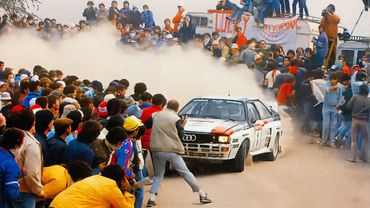
First stage of the Ronda de Andorra rally.
Ok, ok, come on, come on!
Debris everywhere.
An Escoda Fabia S2000 on the side of the road stopped, with a guardrail cutting through the car.
Jacob Gerber, the co-driver, has miraculously walked away from the crash unharmed.
But the driver, Robert Kubica, is still inside and not responding to calls.
It can't be possible.
Once again, the Pole is the victim of one of the worst crashes.
What were the chances?
Help arrives, but he's trapped in the car, seriously injured by the guardrail, and it takes over an hour just to get him out of there.
He's then rushed by helicopter to Santa Corona Hospital in Pietra Ligure.
The situation is really, really serious.
multiple fractures have been diagnosed on his leg and his right arm there are complications related to the functioning of his hand there's only one solution the renault driver was put in an induced coma overnight the doctors work on his injuries for seven long hours and after a lot of uncertainty bits the surgeon said his life is not in danger but it would take time for him to make a full recovery
However, he needs a lot more surgeries to fix the fractures in his leg, shoulder, and especially his right arm, which is the most at risk.
Obviously, Kubica's 2011 season is done, and the main focus now is on his health and recovery, with no clear idea of whether he'll ever get back to racing.
So that would also mean that before one year he can't go back to do his job?
I think it's quite difficult now.
Who never knows?
Drivers are always very special patients.
More details about the accident come out, showing that the car skidded into a corner, crashed into the guardrail, got thrown away, and then hit the guardrail again, which ended up slicing through the car.
It seemed like life really didn't want to give Kubica a break.
Eventually, the doctors managed to rebuild his arm, and on April 24th that year, after many, many surgeries, he finally left the hospital.
The accident had reduced the mobility and sensitivity in his right arm.
It was just devastating.
But Kubica once again showed his incredible resilience, and on September 9th, he jumped back into racing at the Ronde Gormitolo Aguilana, a lower-level rally like the ones he used to do before the accident.
Amazingly, he won by over 60 seconds.
Bit by bit, he began competing in higher-level rallies, and started to get really competitive again.
He even ended up winning the WRC2 Championship in 2013.
Yeah, after all the accidents, casual World Championship.
And in June 2017, he finally came back to F1.
Well, kinda.
He came back for testing.
Seeing him drive an F1 car again was simply incredible.
He actually did really well, setting competitive times.
And a few months later, he did a few more tests with Williams.
And in 2019, we finally got the news we'd all been waiting for.
I am thrilled to today be announcing the second seat for the Williams Racing Team for 2019 will be Robert Kubica.
Incredible, but true.
He was finally heading back to Formula One after everything that had happened.
But, well, soon, the excitement gave way to, once again, bad luck.
That season's Williams was easily one of the worst F1 cars in history.
Plus, it was clear that this Kubica was a shadow of the Kubica we had once known, constantly at the back of the grid and always behind Russell.
And so, after that season, Kubica would be leaving Williams.
He'd stay in F1 as a reserve driver for Alfa Romeo for three more years before finally leaving, a sad ending for one of, if not the biggest wasted talent in F1 history.
But while luck wasn't ever on Kubica's side, there are other drivers who definitely earned their bad luck, like this one here.
And as always, thank you for watching.