
Wade Wilson Interrupts Judge at Sentencing
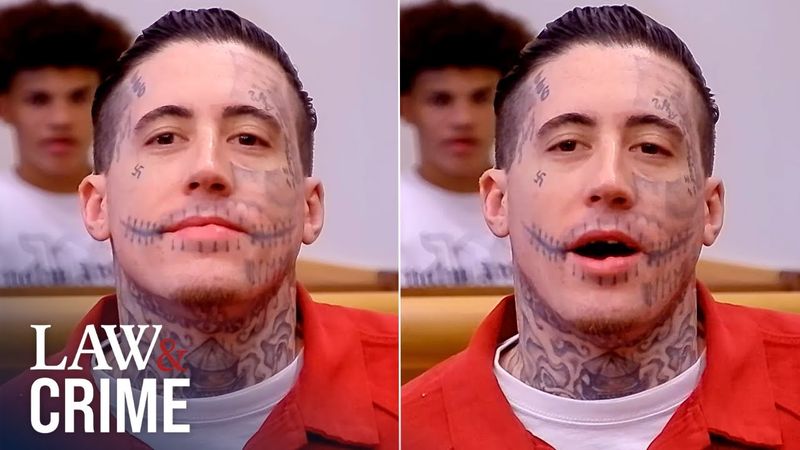
Download information and video details for Wade Wilson Interrupts Judge at Sentencing
Uploader:
Law&Crime TrialsPublished at:
8/27/2024Views:
788.5KDescription:
Video Transcription
Yes, I think this is your portion.
It is.
Does your client wish to address anything in this hearing?
I don't think so.
Okay.
All right.
Mr. Wilson nodded his head no.
Judge, this is a letter from the adoptive parents of Mr. Wilson.
It's been five years since the worst of this began.
You can't possibly understand how sorry we are for the families affected by this tragedy.
We cannot change the past, but we wish we could.
On that fateful day five years ago, not only were the lives and the dreams of two women lost with their families left behind in shock and grief, but another family was left shocked and grieved over a different kind of loss.
It's easy to recognize the victims and their families and to feel profound sympathy for all they suffered and lost.
One group that isn't often recognized as those also suffering is the family of the accused.
Our journey of loss didn't happen all in one day, as theirs did, but it was heartbreaking nonetheless.
Wade was a joyful child, loved his parents and sisters, and was loved immensely in return.
But over the teen years, and then especially in the early years of adulthood, Wade began to slip away from us, becoming withdrawn, erratic, and depressed at first.
Then as addiction was added to mental illness, he became frankly paranoid and delusional,
and the sense of loss became increasingly sharp.
He was in the system for years trying to get help for his mental anguish and for his addiction.
They put a tiny Band-Aid on it and then sent him back into the world without a diagnosis, medication, and without follow-up care.
We tried to hold the pieces together, but had no idea how to find the support Wade needed to be the person he was inside.
The system failed him in that fateful day in 2019,
We lost the last piece of the son we loved and all the hopes for his future.
In those tragic moments when the cancer of severe mental illness and addiction won, we lost our son, grandson, brother, nephew, and uncle.
So we understand the despair, anguish, loss, and hatred for someone or something that takes away someone you love.
Because despite everything, Wade is still our son, and we love him.
The hopes and dreams of his life are already lost, but the human is still in there somewhere, tortured beyond what most of us can even begin to imagine.
Taking his life will not bring back those two beautiful women.
There is no justice on earth for that kind of loss.
Taking another life only adds to the tragedy.
Please see it in your heart not to kill our son and make our innocent family suffer even more.
The system designed to help those who suffer and are lost
failed him.
That system is broken and would be only further broken if it took Wade's last breath.
That broken system owes Christine, and it owes Diane, and it owes their families, and it owes our family.
It owes us all the peace that it did not provide to Wade.
Candy and Steve Wilson.
Thank you.
We would rest.
All right.
Did I just ask that you colloquy the defendant to ensure that he doesn't want to speak at this hearing?
Well, Mr. Wilson, you have an opportunity just like during any of the other phases of... Well, let me just finish real quick.
Any other phases during the case, if you want to address the court, I would permit you to do that.
Obviously...
and everything's recorded, but you would have that opportunity if you wish.
No one can prevent you from addressing the court if you wish to, and no one can make you address the court if you don't want to.
So it is a decision that's solely left up to you if you want to address the court or not.
Not today.
Later, when I come back, I will.
Today, no, I won't.
Okay.
Thank you.
State calls Dr. Thomas Coyne.
All right, sir.
Raise your right hand.
You swear a firm testimony you give will be the truth, the whole truth, and nothing but the truth.
I do.
You can take the standing.
May I inquire, Your Honor?
You may.
Good morning, sir.
Good morning.
Please state your name for the record.
Sure.
Thomas Coyne, C-O-Y-N-E.
Dr. Quain, did you testify in the guilt phase of this trial regarding the autopsies that you conducted?
I did, yes.
What is your educational background?
Sure.
I completed my undergraduate degree at Rutgers University, followed by medical school at Robert Wood Johnson Medical School, which is also at Rutgers University.
At that same time, I completed a Ph.D. in toxicology.
After medical school, I completed a residency in general pathology or anatomic pathology at the hospital of the University of Pennsylvania.
At that same time, I also completed a fellowship or subspecialty training in neuropathology.
And last, I completed a subspecialty training in forensic pathology at the Miami Dade Medical Examiner Department.
And so right now, I'm currently board certified in anatomic pathology, neuropathology, and forensic pathology.
Since we're here discussing the brain, specifically the defendant's brain in this case, would you describe what is neuropathology?
Specifically, it is the study of brain disease in all forms.
And so we assess the brain from all ages, from fetal stages through old age.
And we look for both normal features as well as all different types of features of disease, ultimately to find out if there was any pathology that may explain why a person died.
Now, when you were a part of this neuropathology program, could you just explain what the practical part of that program entailed?
Sure.
There's several different practical components.
One area is working directly with surgeons as well as neurologists in a hospital
in diagnosing disease in patients who are living.
And so we would review a person's most often their biopsies with a comprehensive medical team looking at a person's presentation as well as their clinical findings, radiological findings, and then add in our pathological findings.
From a medical examiner perspective, we look at the actual brain in deceased persons.
My job is to look at the brain to see if there is any underlying disease or injury that may explain why that person died.
How long have you worked as a medical examiner?
Since 2014.
And as part of your duties as a medical examiner, do you conduct autopsies on a regular basis?
I do, yes.
Approximately how many autopsies have you conducted?
Close to 4,000 now.
Now, as part of your autopsies that you perform, are you equipped to examine the brain and determine whether the brain shows any signs of atrophy or any kind of injury?
Yes.
Specifically, my neuropathology training allows me to do that.
And in every autopsy, do you examine the brain?
I do, yes.
I examine both brains at autopsy, and I also receive brains from offices and other universities throughout the country to examine brain for disease.
And do you testify or have you testified as an expert specifically just for the brain?
Yes.
And can you just describe that?
I couldn't tell you exactly how many times.
I've probably in my career testified over 50 but less than 100 and been deposed a number of times as well.
In all instances, I'm generally called upon to testify as both a forensic pathologist as well as a neuropathologist and at times as a toxicologist.
But I have been called on probably greater than 25 times specifically just to testify as a neuropathologist.
Similar videos: Wade Wilson Interrupts Judge at Sentencing
Face Tattooed Killer Wade Wilson Gets Sentenced to Death
Judge Gives Death Sentence to TikTok Famous Killer Wade Wilson
TikTok Famous Killer Wade Wilson Files Lawsuit After Getting Death Sentence

Top 8 Moments From Wade Wilson's Murder Trial

Substitute Teacher Arrested on Statutory Rape of a Child