When the Director Uses REAL Bullets
Download information and video details for When the Director Uses REAL Bullets
Uploader:
Director's Cut.Published at:
10/24/2025Views:
4.5MDescription:
Video Transcription
This is Alexey Kravchenko.
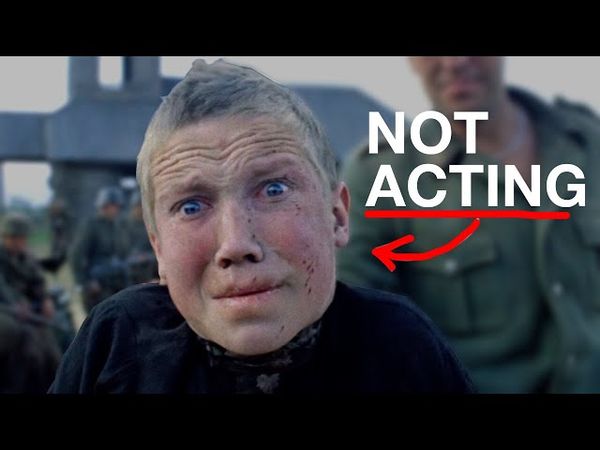
He's 14 years old, and he's also not an actor.
This is his first time on a film set.
And this is not CGI.
These are real bullets that are flying above his head.
And these?
These are real explosions that they're running from.
And this is not a film set.
They're swimming through an actual marsh with real deadly parasites.
This is a film unlike anything you've ever seen.
Spielberg reportedly screened it before the making of Schindler's List, and Tarantino described it as the greatest World War II movie ever made.
And what's even more insane is the story of how they made it.
Very few people wanted this film to exist.
It took nearly a decade and a very, very specific moment in history.
This is Come and See.
Chapter one, the brutality of war.
Belarus, it's 1943.
This innocent boy has just found something that will change his life forever.
His name is Floria, and he's just dug up a weapon from a dead soldier.
Little does he know, he's about to witness some of the most horrific things ever done to humanity.
We follow him as he goes from extremely eager to join the war to being harshly affected by it, and finally having the strong will to end it.
The film then builds to a systematic massacre of an entire village.
Civilians are herded into a barn based off actual accounts.
The doors are barred, and the building is set on fire.
And quite famously, the film includes these direct shots into the actor's face, where there's no escape from their misery.
But Come and See is not like other war films.
We don't follow a superheroic soldier or see any of the famous battles.
Instead, the film takes place within villages and families and children.
And the film does not revolve around heroics, but the idea of human suffering and what war does to innocent people.
It is equally horrifying every single time you see it.
Yet at the same time, it's such a cinematic masterpiece.
Everything in this movie brings you to full immersion in a way that modern cinema hasn't been able to quite replicate.
And the story of how they made the film is just as interesting, if not more interesting, as the film itself.
Chapter 2.
The Three Forces and Pre-Production
There are three people that contributed most to this film that I think we should go over.
First, let's discuss Elam Klimov, the director of the film.
He was born in 1933 in Stalingrad, in what was then the Soviet Union.
From an early age, he would experience the horrors of war, which he would use later in Come and See.
During one of the city's most devastating battles, he, his mother, and his baby brother were forced to flee via raft
through a burning river into the mountains.
The city was ablaze up to the top of the sky.
The river was also burning.
It was night.
Bombs were exploding, and mothers were covering their children with whatever bedding they had, and then they would lie on top of them.
As a young boy, I had been in hell.
This experience through hell would live with Klimov forever.
Yet despite these beginnings, he eventually found his way into film.
He started his career with comedies and satires.
Nearly every film that he's made has faced some form of interference, delays, or even bans from the Soviet authorities.
Yet despite the censorships, he would go on to make these types of films, until 1979 when something terrible happened.
His wife, Larissa Shapitko, also an acclaimed filmmaker, had died in a car accident.
And to say that her death devastated Klimov is a gross, gross understatement.
Shortly after her death, he fell into a deep depression, turned to alcohol, and created a 25-minute documentary honoring her legacy.
And even more notably, he never made another comedy again
All of his subsequent films became tragedies, but Larissa would leave him with an important philosophy that would guide his final masterpiece.
Make every film as if it's your last.
He had wanted to make Come and See for years, but Soviet censors were repeatedly blocking his project.
But he refused to compromise, and he knew the film was too important, that if he were to make it, it had to be done right.
Finally, in 1985, something incredible happened.
This is Hattin.
It is a bone-chilling recount of the Hattin Massacre, a massacre in which the Nazis locked an entire village into a barn and then set the barn on fire, with half of the inhabitants being children.
The occupation of Belarus was one of the most brutal campaigns of World War II.
over 600 villages met the same fate.
The book was formed from a collection of testimonies from those who somehow survived.
This is the writer, Ales Adamovic.
In June 1941, when the war came to Belarus, he was just 13 years old.
After the war, Adamovic became a writer.
Him and his co-authors would travel across Belarus collecting real survivor testimonies.
He ended up co-writing the novel Hatin,
which would become one of the primary sources for Come and See.
Several directors were pitched to adapt to stories, but Adamovich refused them all.
He insisted that there was only one director who could do the material justice.
Together, they would create something
that didn't glorify war or turn it into an adventure story, but showed as it truly was.
But even with Adamovich and Klimov's clear vision, the film remained censored for years until 1985, when the 40th anniversary of Victory Day finally gave them the opening they needed.
They had the green light, but they still needed one more piece.
The boy.
Oleksii Kravchenko was not an actor.
In fact, he didn't care about the film world at all.
He had only showed up to the audition to support his friend who wanted the lead role.
Kravchenko went along for moral support, nothing more.
And it turns out he ended up being chosen to prepare Kravchenko for the role
Klimov put him on a strict hunger diet.
For days at a time, the 14-year-old would only drink water and run long distances to lose weight.
Klimov was also deeply concerned about the potential psychological toll the film would take on the lead.
To protect Kravchenko, Klimov brought in a psychotherapist trained in hypnosis.
The plan was to hypnotize Kravchenko during the most violent scenes so they wouldn't traumatize them.
But after testing, they discovered that Kravchenko was not susceptible to hypnosis.
Kravchenko would later describe the shoot as the happy recollections of my childhood.
After the film wrapped, Kravchenko did not act again for another 13 years.
Chapter Three, Making Hell on Earth.
From the very start, Klimov had one guiding principle, tell the truth.
Klimov's goal was to capture as much realism as possible.
Each member of the cast and crew felt a huge responsibility to those who had died.
As Klimov said,
I have the will to tell the story for truth, even if it takes nine months to make the movie, and even if no one watches it.
The production designer Viktor Petrov initially tried using pyrotechnics for the explosions.
But when Klimov saw the results, he wasn't satisfied.
The explosions didn't sound real.
They didn't feel real.
So Klimov made the ultimate decision that would shock everyone.
To use real explosives and live ammunition.
This created an atmosphere of real terror among the actors.
In one scene, Kravchenko and a cow were placed in the middle of a field while live rounds were fired around them.
Kravchenko was so terrified that he found himself clinging to Klimov after, asking, is there anything else?
Klimov told him to go back into the scene.
The entirety of the film was shot on location in Belarus.
Everything was real.
Even the extras, the villagers, were real survivors or descendants of survivors from the Belarusian fire villages.
to prepare the villagers unless Adamovich gathered them in a circle and read chapters from his book.
He recounted the testimonies of those who had survived the horrors of war.
Many of the villagers had heard stories from their parents or grandparents.
Some had survived the war as children.
The entire crew was under constant stress.
But as the production designer later said, all the hardships helped us.
Everyone was under constant strain and it had a powerful effect on the crew.
God himself was helpful to us for the fog not lifting, for the special effects to work, for the crowd scenes with the locals and army personnel to work in harmony.
Chapter four, truth.
And yet, despite all this gore and destruction that this movie depicts, it's surprisingly beautiful.
I love you.
I love you.
Thank you.
This is Roger Deakins, widely considered to be the greatest cinematographer of all time.
And he's labeled Come and See as mandatory viewing.
Conrad Hall used to say he was really trying to create beauty with ugliness.
You know, he wanted to make ugly films that were beautiful, which seems a total contradiction.
But, you know, how do you film something that is...
so brutal that engaged the audience with it.
That's the key to the film, in a way, that the horror is something you imagine right until the end, when obviously you see the real footage.
And then Klimov is basically saying, I could have shown you something much worse.
After a screening in East Germany, a former soldier who had been stationed in Belarus approached Klimov and said, everything you showed is true.
that I tried to forget about it and never told anyone.
Now, when my children see this film, I don't know what to tell them.
And for some reason, even decades later, the film seems more relevant than ever before.
As the writer Joseph Brodsky once said, in a real tragedy, it is not the hero who perishes, it is the chorus.
Thank you for watching, and I'll see you very, very soon.
Similar videos: When the Director Uses REAL Bullets
On the Road to Berlin | WAR MOVIE | FULL MOVIE (2015)

Black Eyed Peas Mashup - Ne Prosto Orchestra Pop Disco Party
In Russia - в России
LITTLE BIG - GO BANANAS (Official Music Video)
King Lear - Grigori Kozintsev - Jüri Järvet - 1970 - Multiple Subtitles - Restored 2021 - 4K