
Why Iran is Rapidly Dying
Download information and video details for Why Iran is Rapidly Dying
Uploader:
RealLifeLorePublished at:
11/11/2025Views:
516.2KVideo Transcription
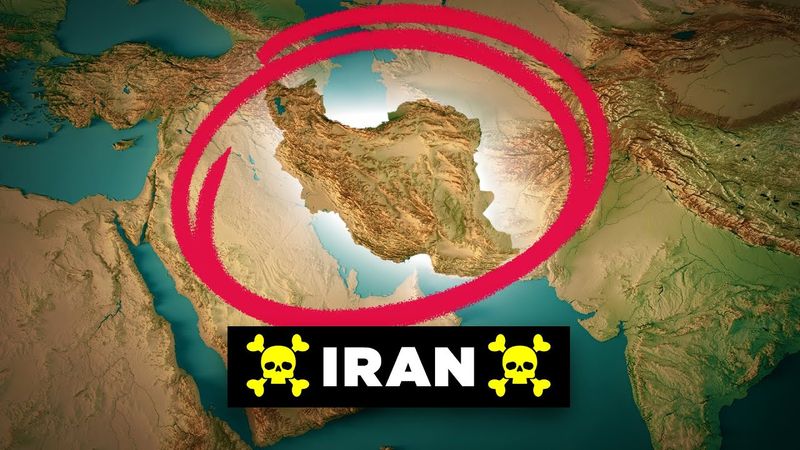
Iran, as a nation, is arguably facing its greatest civilizational crisis that it has seen in centuries now.
Geopolitically speaking, Tehran has suffered continuous setback after setback over the last couple of years in its decades-long confrontation with Israel, the Islamic Republic's top declared enemy.
Its overseas proxies that it has spent billions of dollars and decades of time building up and arming, like Hezbollah in Lebanon, Hamas in Gaza, and the Assad regime in Syria, have all been either effectively crippled or completely destroyed, exposing the Iranian heartland to direct hostile foreign attacks for the first time in decades.
U.S. and Israeli warplanes were subsequently able to relentlessly bombard the country's sensitive military and nuclear research sites with impunity.
An American-mediated peace agreement between Armenia and Azerbaijan simultaneously threatens to establish a continuous corridor of NATO-Turkish influence across Iran's northern border in the South Caucasus.
blocking off Iran from being able to maintain a direct land corridor with their ally Russia.
While growing instability in the east with the wild Taliban regime in Afghanistan is resulting in unpredictable violent border skirmishes after the government accused its Afghan population of collective disloyalty and spying for Israel during the war.
And Tehran's decision to begin forcefully deporting millions of undocumented Afghans from the country across the border
after the government accused its Afghan population of collective disloyalty and spying for Israel during the war.
And yet, despite all of these enormous ongoing external crises, Iran's greatest contemporary problem that threatens its entire existence is not geopolitical, but internal and environmental.
Because in just a short amount of time, Iran might very well become the very first major society in the modern world to legitimately begin running out of water for its own people.
And because Iran is such a huge country with more than 92 million people, that's not just a huge problem for Iran, but a huge problem for the entire rest of the world as well.
The situation has gotten so bad that it is now acutely visible even within the capital and the seat of the government's power in Tehran, which is also Iran's largest city.
Roughly 10 million people live within the city limits of Tehran today.
About 11% of the country's total nationwide population, and yet, Tehran now consumes roughly a quarter of all of Iran's water supplies.
70% of Tehran's water supply is usually provided by a series of nearby dams and their reservoirs at Amir Kabir, Lar, Mamlu, and La Tian.
But as of September of 2025, all four of their reservoirs are at critical and unprecedentedly low levels.
The usual level of annual rainfall that Tehran experiences is about 260 millimeters.
But in 2024, the capital only experienced a fraction of this at 140 millimeters, while preliminary estimates for 2025 suggest an even more catastrophic level of rainfall at just 100 millimeters.
With that in mind, these reservoirs around Tehran combined typically hold a long-term average of 618 million cubic meters of water within them.
But in 2024, they had dwindled down to just 485 million cubic meters remaining.
And as of September 2025, they've withered away even further to just 258 million cubic meters of water remaining, meaning that half of Tehran's stored water reserves disappeared in just a single year.
Even worse, the La Tian Dam reservoir in particular, which usually holds about 95 million cubic meters of water, has shrunk by more than 90%, and now contains just about 9 million cubic meters still remaining.
The underground aquifers beneath the city have also begun collapsing and running dry after decades of chronic overuse, resulting in a rapidly accelerating rate of subsidence that has been seen to
Tehran sinking into the ground beneath it by several millimeters a year recently, threatening the capital's infrastructure and buildings.
Over the summer of 2025, the water crisis got so bad that the Iranian government was forced to just completely cut the taps in the capital for half a day as the temperature soared to more than 100 degrees Fahrenheit, resulting in high energy demand from air conditioners on the city's grid that resulted in power cuts and rolling blackouts on top of the water cuts.
Months beforehand in late 2024, the Iranian government was already demanding that offices, schools, and even banks in the capital all had to be shut down on particularly bad weather days in order to conserve power.
While officials were cautioning that if nothing was done to ration their energy, Tehran could become forced to adopt a four-day work week during the summer when demand on the grid was particularly intense.
The government has already started rationing the water supply in the capital by cutting off households' water supply for three to six hours a day.
And in some cases, the water pressure has gotten so low that it now fails to reach some high rises in the city, forcing their residents to carry bottled water or buckets up to their apartments for all of their water needs instead.
The crisis has gotten so bad in Tehran that questions have even been raised about the city's long-term habitability.
While the government has even announced that it's currently investigating relocating the capital away from Tehran to somewhere else that doesn't have as many water and infrastructure related issues.
Iran's current sitting president, Massoud Pazeshkian, has publicly stated that he has proposed relocating the country's capital further away to the south, somewhere near to the Persian Gulf, in order to be closer to strategic trade routes in the area.
But the problem is that the water crisis is not just a problem that's unique to Tehran.
It is a problem that is facing the entire country from north to south and from east to west.
Everywhere across the country,
Reservoirs are running dry and lakes are disappearing.
The Iranian regime's own news agency, IRNA, reported in early October of 2025 that 19 of the country's largest reservoirs are currently on the verge of complete dryness, and that three of them, left unnamed in the report, have already hit 0% remaining capacity.
More than half of the dams across the country now hold less than 40% of their overall capacity.
Lake Urmia, once the largest lake in the entire Middle East that was in northwestern Iran, has nearly completely dried up, leaving behind nothing but a salty, dusty crust.
More than 280 cities across the country now face extreme water stress, like the city of Yazd, whose water supply ran out entirely as recently as March of 2025, which led to the city having to be entirely supplied by water tankers and bottled water for nearly a week until the taps could be restored.
Rural communities across the country have been even more badly struck, as hundreds of villages now rely completely on tanker trucks after their wells have run dry.
Cities across the country are literally sinking as their underground aquifers have been completely depleted, while cracks are forming in rail lines connecting the country's major cities together.
Some Iranian officials have even warned about a looming Day Zero in Tehran and in other cities across the country.
the day when the taps for millions of people may run dry completely.
It has gotten so bad that it has started to become exploitable by hostile foreign actors.
Israel's Prime Minister, Benjamin Netanyahu, released a video in August of 2025 that directly encouraged the Iranian people to rise up and revolt against their conditions.
He said at the time, quote, End quote.
Even though Netanyahu was the absolutely wrong man to make such a pitch to the Iranian people, he wasn't wrong about the fact that the water crisis has become the Iranian government's greatest strategic vulnerability.
It is exacerbating the country's complicated ethnic fault lines as minority groups accuse the regime of prioritizing water access for the Persian majority.
And it is all a complicated story of government corruption and graft.
terrible policies, climate change, and geopolitical developments and intrigue that have led Iran to the brink of water bankruptcy today.
And to understand how the country got here, we have to go back in time to the late 1940s when Iran was still ruled as an absolute monarchy by the Shah.
In 1949, the Iranian Shah Mohammad Reza Pahlavi took a visit to the city of Las Vegas in the United States.
He was there on official business to observe the marvel of the Hoover Dam that the Americans had constructed across the Colorado River, which created a vast reservoir behind it in Lake Mead that enabled the desert metropolis of Las Vegas to survive and to thrive.
The Shah was interested in modernizing his own country, and building monumental dams and reservoirs in the similarly arid Iranian climate was of a very deep interest to him.
He returned back to Iran from the Mojave Desert with a new ambition, and with technical assistance and engineers that were provided to him by the Truman administration.
who brought modern irrigation and drilling technologies that enabled Iran's farmers to begin draining their ancient aquifers at an unsustainable rate.
Iran, as a country, has a very uneven distribution of water resources found across the country.
Across a strip of land in the north of Iran near the Caspian Sea, the annual rainfall levels are high and average about 1,280 millimeters per year.
similar to the levels that are seen in wet environments like New York City, which makes this whole area a lush, dense, green forest that looks nothing like most Westerners' popular perception of Iran.
But across the central plateau of Iran that's the heartland of the Persian people and across the southern lowlands, annual rainfall will rarely ever exceed more than 100 millimeters.
And it's also extremely seasonal.
The rainy season across these other parts of Iran usually only lasts between October and March.
and that'll leave the land extremely dry for most of the rest of the year.
In some places, the entire year's worth of rainfall might fall during sudden torrential storms that last only a few days.
As a result, the Shah and his engineers wanted to modernize Iran
redistribute the availability of water throughout the country by diversions and dams to regulate water flows.
But he also ordered the establishment of water-hungry industries like petrochemical and steel plants to be constructed in the drier parts of the country within the central plateau in the Persian majority region at places like Isfahan and Fars, which tied the fate of Iran's heavy industries to geographic areas that lacked meaningful water supplies of their own.
and were over-reliant on diversions of water from other parts of the country.
Later in the early 1960s, the Shah implemented a series of land reforms in the country that redistributed Iran's large feudal agricultural estates to smaller farmers and families that promoted their adoption of mechanized farming with state incentives.
Millions of Iranian peasants were granted new land to farm with their new mechanized equipment.
But it also led to a breakdown in Iran's traditional system of irrigation that had lasted for thousands of years before it that were called qanats.
Qanats are effectively underground aqueducts that the Persians had perfected over millennia to transport water across the arid and hot central plateau.
But these qanats that had supplied Iranian cities with water for countless generations
began to be steadily abandoned in the early 1960s, as the new peasant farmers began switching over to motorized deep wells en masse in order to access the country's below-ground aquifers, which had only limited supplies of water that takes thousands of years to naturally replenish and recharge.
The process of abandoning the country's traditional water management system in exchange for new and misunderstood technologies had already begun.
But it would dramatically skyrocket to wildly unsustainable levels after the Islamic Revolution overthrew the Shah in 1979 and established the modern theocratic Islamic Republic in its place.
After radical Iranian students stormed the U.S. Embassy in Tehran and took 66 Americans as hostages,
diplomatic relations between Iran and the United States collapsed, and the U.S. initiated a trade embargo against Iran that has continued for decades ever since, restricting the country's access to the mechanized equipment and parts that it came to rely upon for its agriculture and irrigation beforehand during the Shah era.
And at almost the exact same time, Iraq launched a full-scale invasion of Iran in 1980 that sparked the devastating eight-year-long Iran-Iraq War, which led to the introduction of food and resource rationing in Iran as the theocracy's first supreme leader, the Ayatollah Rufele Khomeini, began advocating for a policy of radical self-sufficiency and food sovereignty in a world that appeared overwhelmingly hostile to his new regime.
He began ordering a radical expansion in Iran's dams, wells, and agricultural infrastructure all in the name of this self-sufficiency.
Before the 1979 revolution, there were fewer than 80,000 wells across the country.
But within just three years after the rise to power of the Ayatollahs, that number would more than double.
While hundreds of new dams were being actively planned as well, most of them concentrated across the arid central plateau region.
After the long war with Iraq came to an inconclusive end in 1988, the regime's personal army, the Islamic Revolutionary Guard Corps, or the IRGC, was suddenly left without a clear military purpose.
And so, the government under then-president Akbar Hashemi Rasmunjani adopted a new purpose for the IRGC that they called the Reconstruction Jihad.
adapting the IRGC to construction and development in order to maintain their influence and morale.
A new engineering firm run by the IRGC was established that was called the Khatam al-Anibia Construction Company, which quickly became the regime's go-to contractor for building dams, tunnels, and other water transfer projects.
Another company called the Iran Water and Power Resources Development Company, or the IWPCO, was also founded as a state-owned design firm by Regime Insiders.
While an incredibly powerful and opaque consulting and lobbying firm also run by Regime Insiders was founded, called Mahab Golds.
All three of these companies were effectively run by the exact same people with close ties to the regime, and they collectively formed a closed loop with no external checks and balances.
The IWPCO company would design and commission dam projects that were usually based on old, outdated Western blueprints and rarely ever considered any environmental studies.
The Mahab Gold's company would then lobby the government for their approval.
And then the Khatam Al Anibia company would be immediately awarded the no-bid contracts to actually build the projects and was shielded from any political oversight.
This network of IRGC and regime-operated firms and companies that all worked together in tandem eventually came to be called the country's Water Mafia, and the rapid expansion of dam and water projects came to be seen as avenues for enriching themselves rather than benefiting the country.
Over the next few decades, the Water Mafia constructed hundreds of dams all across the country, usually without any environmental assessments or any long-term planning at all.
Water from rivers were diverted by the Water Mafia to feed IRGC-owned factories, plants, and heavy industries at the expense of agricultural and municipal supplies to further enrich themselves.
Some of the most infamous water megaprojects the Islamic Republic carried out following the war with Iraq
include the 550,000-hectare project that began in 1996 in the western provinces of Kyrgyzstan and Elam.
Enormous amounts of land were confiscated by the government and the Karun River was diverted to feed industrial farms controlled by regime-linked insiders.
A mega-dam along the Karun River called the Gotvand Dam
was completed in 2011, despite ignored warnings by environmentalists that there would be enormous salt formation at the site if it went ahead.
As predicted, once the dam's reservoir was filled, it began leaching salt into the river and dramatically raised salinity levels further downstream for Arab minority communities in Kyrgyzstan.
inflaming their attitudes against the non-Arab-dominated regime.
All attempts to seal up the salt layer have failed ever since, which has left behind a huge saltwater lake in the reservoir behind the dam that is steadily choking off and killing much of the natural irrigation supply of water downstream in Khuzestan, which is usually one of Iran's most naturally agriculturally productive regions.
Despite them directly causing this environmental catastrophe, however,
the IRGC-linked water mafia profited tremendously from the estimated $3.3 billion cost that it took to build the dam.
Perhaps the single best illustration out of hundreds of examples across the country showing how the regime managed these misguided projects.
By 2012, Iran had built 316 dams in the country.
And within just six more years, by 2018,
That number would more than double to 647 dams.
Many of the country's highest water-consuming industries like nuclear sites and steel plants were all built deep within the central plateau that's surrounded by the country's mountains for strategic defense reasons.
But the consequence of that is that these industries are all located very far away from open waters, which has forced them to draw heavily on the country's limited rivers and aquifers.
which has only accelerated the reduction in resources that were already scarce to begin with.
The Zayanda Rud, the largest river found in the central plateau of Iran, has been so heavily diverted for water-hungry steel and petrochemical plants and for other provinces like Yazd, that it has been reduced to only a seasonal mudflat now and routinely runs completely dry, which has plagued the city of Isfahan,
the third largest city in the country with a crippling decrease in what used to be their primary natural water source.
Lake Ervia, which used to be the largest lake in the entire Middle East, has almost completely dried up and died after dams constructed along the rivers that fed it throttled the lake's supply and its ability to replenish itself, leading to increased dust storms that are worsening respiratory problems and prompting increased levels of migration from the region.
The amount of irrigated agricultural land around Lake Urmia has more than doubled since the 1979 Islamic Revolution, from 300,000 hectares then to around 700,000 hectares today, which was supplied by increasingly diverting the lake's rivers.
But the problem is that the watershed around Lake Urmia only provides about 4 billion cubic meters of water per year to work with.
And in order to properly irrigate all of the farmland that's been built up around the lake today,
It requires between 4.5 to 5 billion cubic meters.
Unable to acquire all of the water that they needed from the region's rivers, desperate farmers, often illegally without any permits or environmental reviews, began resorting to drilling illegal wells deep into the region's underground aquifers in order to access the water they needed.
And processes just like this that have been draining Iran's aquifers dry have been taking place across the country for decades now.
Desperate farmers experiencing the diversion of their rivers for IRGC-linked industrial applications resorted to widespread and often illegal well drilling to compensate.
Between 2002 and 2015, the number of registered legal wells in Iran almost doubled from 460,000 up to 794,000.
And there are believed to be tens of thousands of additional illegal and undocumented wells that have been dug as well.
Recent studies based on the Open Data Center of Iran, which itself is based on official and international statistics, currently ranks Iran fifth in the world for the rate of groundwater depletion.
Out of Iran's original 500 billion cubic meters worth of fossil water that it had stored in its below-ground aquifers,
It is estimated that about 200 billion are now gone forever, and most of the remaining 300 billion cubic meters are saline, which is useless for agricultural irrigation.
Iran's overconsumption and depletion of its groundwater resources has gotten so drastic that despite a 50% increase in the number of wells in the country over the past two decades,
the rate of groundwater extraction has actually declined by about 10% over the same timeframe, as they've simply begun running out.
To put it another way, despite Iran representing only about 1% of the global population, Iran is responsible for about 9% of worldwide groundwater extraction.
As a consequence of this, half of Iran's aquifers are now estimated to be in a critically low state.
And six of the country's major cities, including the capital, Tehran, are among the top 43 cities globally that are suffering the highest rates of land subsidence, or sinking.
To give you some perspective as to how bad the subsidence problem is becoming in Iran, the global critical threshold for subsidence is regarded as a sinking rate of four millimeters per year.
In many parts of Iran, the current rate of land subsidence is exponentially higher than that at about 10 centimeters per year.
And in some parts, it is reaching as high as 31 centimeters per year.
In the capital city of Tehran, the groundwater levels have dropped by more than 12 meters just in the past two decades, which is causing critical land subsidence.
But perhaps no other city in the country has suffered as severe of
consequences from below-ground aquifer over-extraction as the city of Isfahan, Iran's third largest city, home to more than 5 million people.
Over the past few years, Isfahan has extracted an average of between 1.1 and 1.2 billion cubic meters of water from its aquifers that's primarily been used for agriculture.
This has been going on for so long now that there is estimated to be a 23 billion cubic meter void of air beneath the city now across an area of about 2,700 square kilometers, which in other terms means that there's essentially a 10 meter wide void beneath the ground throughout most of the city that is causing enormous subsidence issues.
The current governor of Isfahan reported to the Guardian newspaper in September of 2025, the nine of the city's primary metro stations, 274 of its fire department junctions, 328 of its mosques, 37 of its libraries, three of its main hospitals,
and 258 of its schools are located in areas with particularly high rates of subsidence.
And at least 40 of the city's schools have already been evacuated, and many of them have been condemned and demolished as a result.
And worse still, the water infrastructure that the country has built is also just absurdly inefficient by global standards.
further straining the country's increasingly dire water supply.
As much as 90% of Iran's usable water is all dedicated to agriculture, despite agriculture taking up less than 12% of the country's GDP.
Iran's irrigation efficiency, the percentage of irrigation water that's actually used by the crops, is abysmally low at just about 30%, well behind its neighbors like Iraq and Turkey, who maintain rates at more like 50%.
Iranian cities, on average, lose between 25 and 30% of their municipal water supply simply because of leaks, mismanagement, and outdated infrastructure, compared to cities in the global north that lose less than 10% of theirs on average.
International financial sanctions and trade embargoes that have been imposed on Iran over the regime's nuclear weapons program, their financing of international terrorism, and their support for regional warfare has all highly restricted the country's access to modern technology.
which has blocked critical upgrades to their water infrastructure and enabled these inefficiencies to manifest and fester.
The Iranian regime often likes to blame these sanctions as the primary factor for their infrastructure's decay.
But after a considerable amount of the sanctions were relieved after the Obama-era nuclear deal was made in 2015,
The regime simply threw almost all of the extra cash they received into just more dam building and water transfer projects than enriched themselves, rather than adopting genuine reforms that would have helped assuage the crisis.
Because of all these inefficiencies and their reckless use of water for massive agricultural purposes to achieve self-sufficiency,
Iran consumes roughly double the amount of water per year as neighboring Turkey does, despite the two having a very comparable population.
And despite that, the per capita availability of water with Iran has dramatically plummeted since the time of the 1979 Islamic Revolution as well.
Based on a study conducted by Sadiq Deccan in 2009, the per capita water availability in Iran in 1979, immediately before the revolution,
was estimated to be about 4,500 cubic meters per year per person.
But now in the 2020s, the per capita water availability in the country is estimated to sit at just about 1,100 cubic meters per person per year, a quarter of what it used to be prior to the revolution.
Compounding the regime's own policy mistakes towards water in the country is also the pace of climate change, which is impacting Iran harder than most other countries.
Already dry and hot, Iran is only getting drier and hotter the more the time goes on.
Over the past three decades, the average temperature experienced in Iran has risen by 1.8 degrees Celsius, roughly four times warmer than the global average over the same time period.
The country has been locked in a near continuous drought for the past five years that's lasted since 2020, and which has seen a 30% reduction in the country's annual rainfall, all of which is reducing the ability for the country's depleted rivers, lakes, and aquifers to be able to naturally replenish themselves.
And it's only going to continue getting even worse from a climate change perspective, too.
Even if Iran addresses the necessary reforms that they need to make in order to curb their water overconsumption, there is little they can do in the face of a warming climate that is currently projected to increase their mean annual temperature by a further 2.6 degrees Celsius.
And that'll also include a further 35% drop in their annual rainfall levels over the next few decades.
It is, of course, ironic that Iran, one of the world's top petrostates, is one of the greatest contributors to greenhouse gas emissions and climate change, and one of the most vulnerable countries to its consequences.
Renewable energy still makes up less than 1% of Iran's total energy mix, and all of the rest is still made up by oil and gas, which makes Iran one of the highest per capita emitters of CO2 emissions in the world.
Then, to make the situation even worse, compounding on the regime's own mismanagement, the international sanctions, and climate change, is the fact that the Taliban next door in Afghanistan have been throttling Iran's water supply even harder.
One of the greatest rivers that flows into Iran is the Hari River, which begins upstream in the mountains of Afghanistan before flowing downstream and making up the international border with Iran and Turkmenistan.
The Hari River is the primary water source for the city of Mashhad in the far northeast of Iran, the country's second largest city that's home to more than 3.5 million people.
But since the Taliban returned back to power again in Afghanistan in 2021, they've begun constructing a new, huge hydroelectric power station here that they're calling the Pashtun Dam.
which Iranian authorities fear will cut off the Hari River's water supply from Mashhad once it's completed, exacerbating the nationwide water crisis even further, because it means that Iran's own already overstressed water supplies elsewhere will need to be diverted towards Mashhad in order to compensate.
Iranian state media has already warned that the Taliban's filling of the Pashtan Dam, which began in 2024, has led to the water supply nearly drying up completely in the reservoir behind the Dusti Dam,
further downstream that's shared between Iran and Turkmenistan.
Worsened even further by the fact that the Khorasan province where Mashhad is located in has become the driest of all of Iran's provinces in terms of rainfall deficit.
Afghanistan has never signed a treaty with either Iran or Turkmenistan regulating water flows along the Hari River.
And so, the Taliban argues that they can basically do whatever they want to do with the river's waters further upstream.
But Afghanistan and Iran have signed a legal agreement that's supposed to regulate the flow of water on another major river further south called the Helmand River, which similarly begins within the Afghan mountains and flows into the Sistan Basin just across the border within Iran, which historically sustained the Hamun wetlands.
After decades of failed negotiations, Iran and Afghanistan eventually signed the Helmand River Water Treaty in 1973, which guaranteed that Afghanistan would allow at least 820 million cubic meters of water annually downstream the river to Iran.
Shortly afterwards, though, Afghanistan experienced a communist revolution in 1978 that threw the country into a half-century of continuous chaos, while Iran experienced the Islamic Revolution the very year after that prevented either side from ever really focusing its attention on the issue for decades.
Ever since, both sides have periodically accused the other of violating the agreement.
But after the Taliban returned back to a stable position of power again in 2021, they almost immediately started damming and diverting the river for their own purposes despite the treaty.
Like with the Kamal Khan Dam that the Taliban recently inaugurated in February of 2025.
Afghanistan, too, is a country that has been hard hit by drought and climate change in recent years, which has led the Taliban regime to argue that they have no other choice but to reduce the deliveries of water downstream to Iran in order to satisfy their own needs first.
With the completion of the Qamil Khan Dam along the Helmand River early in 2025, Iranian authorities have claimed that they've only received around 100 million cubic meters of water through the river across the year.
a tiny fraction of the 820 million cubic meters per year that the 1973 Water Treaty ostensibly guarantees them.
Ecologically, the results have immediately become apparent.
The Hamun wetlands within Iran that are fed by the Helmand River have almost completely dried up to nothing already, fueling dust storms, wrecking regional agriculture, and driving even more internal migration.
All of this activity by the Taliban on the Hary and Helmand rivers is worsening Iran's water crisis even further, and it's fueling the rising tensions that are emerging between the two countries.
In 2023, Iranian and Taliban soldiers briefly clashed with each other near the Helmand River, and as of 2025, Iran has attempted to exert pressure on the Taliban by rolling out an enormous deportation campaign of Afghan migrants and refugees who are residing in the country.
Iran claims that the deportation campaign is due to their unsubstantiated claims that the Afghan community in the country acted as spies for Israel during their brief 12-day war over the summer.
But the real reason they're doing it is out of enormous desperation to try and
pressure the Taliban into releasing water downstream the Helmand and Hari rivers, to give them some kind of relief, and as a side effect, to reduce the numbers of people that they need to actually supply with water.
Within just a single month, Iranian authorities had already forcefully deported around 1.1
million Afghans from the country across the border into Afghanistan, in what the UN has described as potentially being the largest forced movement of population during this entire decade.
The entire Afghan population in Iran before this deportation campaign began was around 4 million strong.
and Iran has declared their intention to fully expel all of them, meaning that there are millions more that Iran is currently in the process of deporting to Afghanistan right now, escalating the tensions between themselves and the Taliban even further.
The consequences of everything here have combined to make Iran on the brink of catastrophic water bankruptcy.
And that is exacerbating one of Iran's other greatest vulnerabilities, its ethnic fault lines.
Iran is a highly diverse ethnic state that resembles the pattern of most historical empires.
It consists of a core of Persians in the center of the country across the central plateau, and a ring of various ethnic minorities around it across the frontiers and peripheries, including large numbers of Azeris, Kurds, Lurs, and Arabs in the west, and Baloch in the southeast.
The crippling reduction in water coming through the Helmand River into the southeast of Iran is fueling the cause of Baloch separatism.
where a violent insurgency is growing increasingly difficult for the government to contain and control.
In Khuzestan, a province in the west of Iran that is home to a considerable Arab minority, Arab communities have accused the government of favoring the lures by diverting the Karun River that runs through their territory, while they also blame the government for having contaminated the Karun River with salt through the misguided construction of the Ghatfand Dam
further upstream.
In neighboring Loristan, where the Lur minority lives, the Lur community has often accused the government of stealing their water from the nearby Persian-majority city of Isfahan through diversion projects like the Beheshtabad and the Kuhrain canals.
While in the northwest,
the vanishing of Lake Urmia has sparked tensions between the country's Kurdish and Azeri minorities, who've historically shared the lake and its resources that are now lost.
If the country's water crisis continues to get worse than it's already become, it could easily begin to exacerbate these ethnic tensions within the country to a boiling point.
And so far, the Iranian regime has proven completely incapable of coming up with any actual solutions to the crisis.
The Iranian Ministry of Energy has proposed a grandiose plan of building out desalination plants along the Persian Gulf and the Caspian Sea, connected to a vast web of pipelines that'll transfer desalinated water into the most stressed areas of the interior, like Isfahan, Kerman, and Yazd.
But constructing this project will cost untold billions of dollars and take many years to build out.
And the regime has neither the purse nor the time to adequately do this.
The rampant corruption within the halls of government mean that any investment for these projects will almost certainly be siphoned off before they're ever able to begin.
The real solutions that Iran desperately needs to implement are internal reforms that'll actually curb the
rampant over-exploitation of the country's water resources, like actually enforcing limits on the number of the country's wells, reducing subsidies for farmers that are prioritizing water-intensive crops like rice, and abandoning the idea of full agricultural self-sufficiency, re-diverting the billions of dollars they spend a year on proxy forces and regional warfare against the Israelis and the Americans,
and, above all else, reallocating water use from heavy industry to public and municipal uses instead.
All of which are a massive uphill battle to overcome against the deeply entrenched interests of the IRGC and regime insiders who profit tremendously off of the current system at the expense of literally everyone else.
And despite all of Iran's catastrophic ongoing problems with its water supply, the country's regime is still choosing to pour enormous resources into rebuilding their nuclear weapons program instead.
Just a few days before I released this video, Iran's president, Massoud Bezeshkin, said that the country would be rebuilding their nuclear research sites that were destroyed by American and Israeli bombing attacks stronger than ever before.
while few comments have been made at all by the government on solving the continuing water crisis.
Government dysfunction is not a unique phenomenon to Iran, however, and closer to home in the United States, the government shutdown has recently just become the longest ever in American history.
While all perspectives covering the shutdown have acknowledged its record length and impact on millions of Americans,
Left-leaning coverage of it has often framed Americans as being pawns in the worst shutdown, emphasizing plummeting public confidence and broader dysfunction.
By contrast, right-leaning outlets have often used sensationalist language like record shutdown and dramatic consequences, highlighting specific program failures like food stamps while cautioning how the shutdown will negatively affect the Trump administration's agenda,
with the DEA and ICE at risk of losing personnel and momentum.
The way that public perception and narratives around ongoing conflicts and breaking news can become distorted by the biases of mainstream media is extremely important to understand today.
And to help me stay on top of issues like this, I use this video's sponsor, Ground News.
Crown uses a website and app on a mission to help you better understand the news you see every day.
It works by pulling in thousands of articles every day from all around the world and organizing them by story.
And then for every story, they provide you with the key information you need, like political bias, historical reliability, and ownership structure of the sources reporting.
All to help you understand why news outlets are saying what they're saying about something.
But I think that the most fascinating feature of Ground News is Blind Spot, where you can see the major stories that people on the other side of the political aisle are seeing, but you're not.
For example, in the context of internal US politics, the right is currently talking about how a federal judge recently ordered the White House to restore sign language interpreters at press briefings
after they halted them following Trump's reelection, while the left is talking about how the Supreme Court justices have appeared skeptical that Trump's tariffs are actually legal.
I genuinely believe that ground news is a seriously useful tool in today's increasingly polarized media environment.
I use it all the time myself for research whenever my videos touch on politically charged subjects, which are basically all of them.
It's an extremely useful tool for gaining and understanding a nuanced view of the news, and you can get access right now for a whole 40% off when you scan the QR code here on your screen, clicking the button, or following the link that's down below in the description at ground.news slash reallifelore.
You'll also be greatly helping to support my channel at the same time, so thank you if you sign up, and as always, thank you so much for watching.
Similar videos: Why Iran is Rapidly Dying
Why The US & Venezuela Are On The Brink of War
How The US & Iran Became Arch-Enemies

Почему Израиль уничтожил ядерную угрозу Ирана

Почему протесты в Украине во время войны — это надежда на свободу
Iranians reel from Israeli strikes targeting high-ranking military officials and scientists