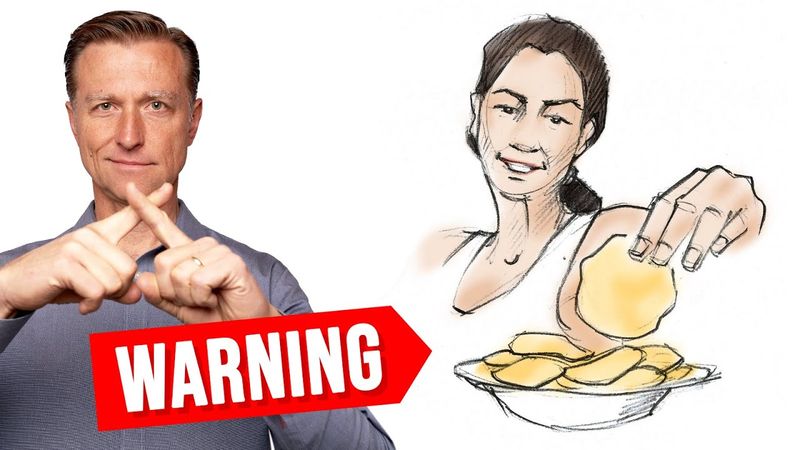
You May Never SNACK Again after Watching This
Download information and video details for You May Never SNACK Again after Watching This
Uploader:
Dr. Eric Berg DCPublished at:
6/21/2022Views:
1.3MDescription:
Video Transcription
warning you may never snack again after watching this video i'm going to tell you why snacking is a very interesting and important topic to talk about why do people snack well they want to prevent overeating right they snack for appetite control but what's really interesting about that is the snacking increases insulin which triggers hunger about an hour and a half to two hours later so snacking increases appetite
and encourages overeating now why do people snack is it always because they're hungry maybe because they're craving maybe but people snack for different reasons stress
depression, anxiety, for social reasons because other people are doing it, they're at some social activity.
Sometimes people eat just because it's there, it's available.
And sometimes people snack because of previous foods that they ate
maybe earlier in the day or the night before, which is creating a craving.
For example, I used to be addicted to Doritos.
If I ate Doritos, I could not just eat one.
I ate the whole bag and then the next day I wanted Doritos.
The same thing when I got into this whole Ben and Jerry addiction where I was consuming a pint of Ben and Jerry every night before bed, I couldn't wait till the next day until I had that ice cream.
So I have a question for you.
What is worse, snacking or...
a high carb diet.
Now, when I'm talking about these two different factors, I'm talking about if you're on a high carb diet and you're not snacking versus just snacking in general.
Well, I believe if you compare these two factors, snacking is worse than a high carb diet.
Now, when I weighed 211 pounds some years ago, my face was round.
I had a lot of blood sugar issues
And I was eating pretty good, but I was consuming an apple with peanut butter mid-morning and mid-afternoon.
And that was the only thing that I then changed, okay?
I cut out that snack and I dropped down to 180 pounds.
And I'm still convinced that it was the snacking that was creating the problem.
So I think it would be a very good experiment.
If you're new to my channel and you snack,
just to try this one experiment don't change any of the foods that you're eating just push those foods to the meal and have just three meals a day but nothing in between and just see what happens but my theory is that snacking is worse than a high carb diet now of course i recommend a low carb diet and no snacking but i think that if you compare these two factors this is worse
was an interesting study i will post that down below that concluded that snacking is the only independent factor that contributes to weight gain in children and at first i was thinking about well you know it's probably the amount of junk food they eat and things like that but the more that i looked at that the snacking variable made more sense
especially since growing up in the 70s i remember all of us consuming a tremendous amount of junk food but we definitely did not snack as much as people do now but snacking definitely started increasing in 1977 and it gradually increased through the 80s and the 90s to the point where we are now where about 97 percent of children um are snacking now
But at least in the early 70s, people did not snack as much.
We had three meals a day, and we did not nearly have the obesity that we have now.
Now, there are really two main ways that you stimulate insulin.
There's actually three, but we're going to just talk about two.
One is eating a high-carb diet.
Number two is eating.
Eating in general triggers insulin.
So it's high carbs,
and eating and i'm just going to put snacking just because if you're eating three meals and adding two snacks you're really creating this repetitive frequent spike in insulin all day long and you don't give your pancreas a chance to come down and reset it would be like exercising six times a day versus you know a few times a day or even one time a day so anything that triggers insulin too much
eventually creates insulin resistance.
Insulin resistance is a state where you have a lot more insulin being pumped out by the pancreas, but it's not being received on the receptor end.
So we have certain parts of our body that are low on insulin, but other parts of our body that have way too much insulin.
so with someone with insulin resistance if they ever tested insulin itself they would probably find they have too much insulin in the blood that's called hyperinsulinemia and so when you have insulin resistance you usually have too much insulin unless you're a diabetic for a period of time and the pancreas gets burned out and then the insulin starts going down down down now normally insulin inhibits
the formation of your liver making sugar, okay?
That's called gluconeogenesis.
So when you have insulin that goes up, okay, your liver stops making this new insulin, right?
So you can eat sugar from your diet and have a high blood sugar, or your liver can actually make insulin out of non-carbohydrate sources, like from protein or fat or even ketones,
and then your liver can start making insulin, even though you're not consuming any sugar.
The question is, how can you have too much insulin in the blood and still have a high level of this liver making new sugar?
Well, that's because you have insulin resistance.
It's not working.
The feedback loops tell the pancreas, we're not receiving the signal, pump out
more and more insulin okay so for those people who have insulin resistance which i really think it's the majority of the population they have an increased gluconeogenesis so the liver is pumping out a lot of sugar this explains too why you go on a ketogenic diet and your blood sugar is still high you're on a low carb diet
But in the morning, your blood sugar is too high.
What is up with that?
Well, that's just because you have insulin resistance.
Let me just quickly go through the things that occur when you have too much insulin in your body.
It affects your cognitive function.
Your memory starts to go downhill.
You get brain fog.
You lose focus.
Your mood is altered.
You start getting depressed, anxiety, irritable.
It increases your cancer risk by two times, okay?
So it doubles your cancer risk.
You gain weight, especially in the midsection, your visceral area.
It increases your risk of getting cardiovascular disease and stroke and diabetes and high blood pressure and PCOS.
your muscles become weak, your appetite increases.
So eating makes you hungry.
Like I said before, about an hour and a half later, you start developing amyloid plaquing in your brain, which is kind of a precursor for Alzheimer's.
You definitely get a fatty liver.
your vision becomes altered where you can't see as well kidney issues and neuropathy which is problems with your nerves and the bottom of your feet there are two foods that don't trigger insulin we know that carbs will do it we know that an excessive amount of protein will increase insulin but the two foods that don't trigger insulin are fat and fiber okay and i'm not talking about all the new synthetic fibers that they're putting in all these keto treats i'm talking about fiber from vegetables i'm not talking about the fiber from
grains which basically have a lot of carbohydrate in them i'm talking about the fibrous leafy greens okay so this is what i'm going to recommend from this video okay so obviously you want to stop snacking as a first action maybe you push your snack to the meal as a dessert okay just do that i promise that will you'll do better okay you'll at least go in the right direction
And then the step two would be starting to go on a low carb diet, which will lower insulin and decrease the impulse to snack.
Number two, start increasing the fat in your diet, especially at the end of the meal to help your body become more satisfied so you can fast longer and avoid the snacking.
Trying to handle the snacking issue on a low-fat diet is very, very difficult.
But remember, fat won't trigger insulin, so it can help you with this insulin resistance.
All right, number three, start increasing the fiber in your diet.
I'm not talking about some added fiber that you would add to a meal that is not part of food.
I'm talking about...
vegetable fibers okay like start consuming more salads if you consume the salad before a meal that actually can buffer the insulin response because it buffers the carbohydrates the glycemic index so you can also add the fat to the fiber okay so let me show you in this next slide right here
Let's say you have a salad with olive oil.
This is a very good combination to help correct the insulin resistance.
Or celery with peanut butter as the thing you do right after the meal.
That can help you with insulin resistance.
Celery has actually mostly water and fiber with virtually no sugar.
And then you add the nut butter to that.
whole cream and berries.
Now, if you have the option to do raw milk, whole cream, go with that.
It's much healthier.
I've just released a video on that and I will put that link down below.
But if you mix whole cream and blend that with berries, it makes an incredible dessert.
Or you can make whipping cream out of the whole cream.
and add the berries.
You can also add ghee and butter to your vegetables as another way to decrease insulin resistance.
Another way to decrease insulin resistance is to start exercising.
Exercise has been proven to decrease insulin resistance.
Plus, you're burning off this extra sugar that your liver is making from gluconeogenesis.
I just want to mention this one thing.
Sometimes people eat because they have low blood sugars.
Well, what do you think is causing the low blood sugar?
It's the high insulin.
It's pushing your blood sugars down.
And so when you eat that snack to satisfy your low blood sugar, insulin kicks right in, and now you're back with low blood sugar again.
It's a never-ending cycle.
so the way you fix low blood sugars is you cut out the carbs and you do what i'm talking about right here now there's other things you can do as well to speed up the process vitamin b1 i like nutritional yeast as my source of natural b1s make sure it's not fortified potassium we
Potassium is a really key mineral to help with that.
Chromium is another mineral, but it's a trace mineral that can help with blood sugars.
Zinc is very, very important for the pancreas and the cells that make insulin, and then magnesium and vitamin D. Now, I hope I increased your awareness on the devastating consequences of snacking, but there's some more information to know about related to snacking, and I put that up right here.
Check it out.
Similar videos: You May Never SNACK Again after Watching This
You're Taking the WRONG Vitamin B12! (Best & Worst Forms Revealed)

How To Make Your Home Stand Out With Staging Tips - Before And After Pics
AVOID This If You Have High Blood Pressure
No-Cook Sattu Bars Recipe ! Ready to Eat Protein Energy Bars | No Sugar | Weight Loss Indian Snack

The SUGAR Expert: Everything You Need To Know About Glucose Spikes (& 5 HACKS TO PREVENT THEM)